
18 Sage Green Kitchen Ideas (Fresh)
Sage green is the kitchen color that behaves like a neutral and feels like a garden. It is soft enough to live with for a decade, interesting enough to end the all-white era, and it flatters wood, brass, marble and black without arguing with any of them. These sage green kitchen ideas cover the full range, from a complete cabinet repaint to a single sage island, a shelf of green ceramics, or a renter-friendly layer of textiles. Start with the shade, pick your commitment level, and let the calmest color in the house do the heavy lifting.

Read This Before You Paint Anything Sage
Test the shade in your own light before you commit. Sage is a shape-shifter: a gray-based sage reads calm and silvery in north light, while a yellow-based sage goes warm and olive under evening bulbs. Paint two cabinet doors or a large board, live with it for two days, and check it morning, noon and night. Half the disappointed sage kitchens on the internet are simply the right color in the wrong light.
Decide how much of the room the color gets. Sage green kitchen ideas scale from a full cabinet run to a single island or a row of lower cabinets, and the middle options often look most designed, because the green becomes a deliberate block rather than a flood. Keep counters and walls quieter as the green coverage grows, so the eye has somewhere calm to rest.
Warmth is the whole game. Sage turns cold and institutional next to blue-grays, chrome and stark white, and turns rich next to warm whites, natural wood, brass and cream stone. The same undertone logic makes sage work in bathrooms, which is why the palette in these sage green bathroom ideas translates so directly: same greens, same warm partners, different room.
Finally, plan the finish like a grown-up. Cabinets want a satin or semi-gloss enamel that wipes clean, proper degreasing and sanding before paint, and hardware removed rather than painted around. A weekend of prep is the difference between a finish that lasts ten years and one that chips by Christmas.
1. Go All-In With Sage Cabinets
The full commitment: sage on every cabinet, uppers and lowers, with white or pale stone counters drawing the line. It works because sage is muted enough to act as architecture rather than decoration, wrapping the room in one calm field that makes wood floors and steel appliances look deliberate. This is the look designers keep choosing over basic neutrals — the current wave of sage green kitchens designers are picking for 2026 leads with exactly this full-run confidence. Choose shaker or simple slab doors; busy profiles fight the color’s calm.

2. Split It Two-Tone: Sage Lowers, White Uppers
The most forgiving way into green: sage on the lower cabinets, warm white on the uppers. The dark-enough base grounds the room, the pale uppers keep it bright, and the horizon line between them makes ceilings feel taller. It is also the easiest scheme to reverse or extend later. If you fall deeper in love, the uppers can follow; if not, the balance already looks finished.

3. Make the Island the Only Color Block
White or wood perimeter cabinets with one sage island is the designer’s compromise, and it rarely looks like one. The island becomes the room’s single piece of furniture-color, especially handsome with a stone top and seating on one side. It is also the cheapest full-impact repaint: one structure, a weekend, and the whole kitchen reads green without a single upper cabinet being touched.

4. Pair Sage With Warm Brass Hardware
Brass and sage are the pairing of the decade for a reason: the metal’s warmth pulls the green’s yellow undertone forward, so the cabinets read richer and the hardware reads like jewelry. Brushed or aged brass beats polished — the softer finish matches sage’s muted mood. Carry the same brass to the faucet and a pendant or two, and the scheme looks planned from every doorway.

5. Lay Butcher Block Counters Against the Green
Wood counters are sage’s oldest friend. The honey tones warm the green, the green keeps the wood from reading rustic-cliché, and the whole combination feels like a country kitchen that happens to have excellent taste. Butcher block on the perimeter, or just a generous section beside the range, gives you the effect for less. Oil it faithfully and it will out-glow every stone in the neighborhood.

6. Use Pale Stone Counters for Contrast
If wood feels too rustic, pale stone is the other classic partner: white quartz or marble with soft veining sharpens sage’s silhouette and pushes the room modern. The contrast is crisp without being cold, provided the stone’s white leans warm. Run the same stone up as a backsplash slab and a sage kitchen turns quietly luxurious, with the green doing the work that pattern usually does.
7. Keep the Backsplash Quiet
With colored cabinets, the backsplash should whisper. Warm white subway tile, handmade-look zellige in cream, or a simple stone slab lets the sage stay the story while adding texture at eye level. Save pattern and bold tile for white-cabinet kitchens. One exception earns its place: a slightly deeper sage tile, tone-on-tone with the cabinets, which reads as texture rather than a second color.

8. Try Deep Sage for a Moody Moment
Not all sage is pale. A deep, olive-leaning sage on a range alcove, a hood surround, or a full wall of tall cabinets creates the moody, tailored moment that lighter greens cannot. Balance it with cream walls, brass, and plenty of light, natural or layered. Deep sage is the version skeptics convert for: it reads as architecture, almost like paneling, and hides cooking splashes with uncommon grace.

9. Pick Pale Gray-Sage for a Small Kitchen
Small kitchens should not fear sage; they should choose its palest, grayest register. A silvery sage on full-height cabinets unifies the wall into one calm surface, erasing the visual breaks that shrink a room, while white counters keep the light moving. These sage green kitchen ideas behave especially well small, because the color is a neutral with a personality. The editing discipline in these small kitchen decor ideas — clear counters, one palette — makes the green read bigger, not busier.
10. Layer Natural Wood Shelves and Beams
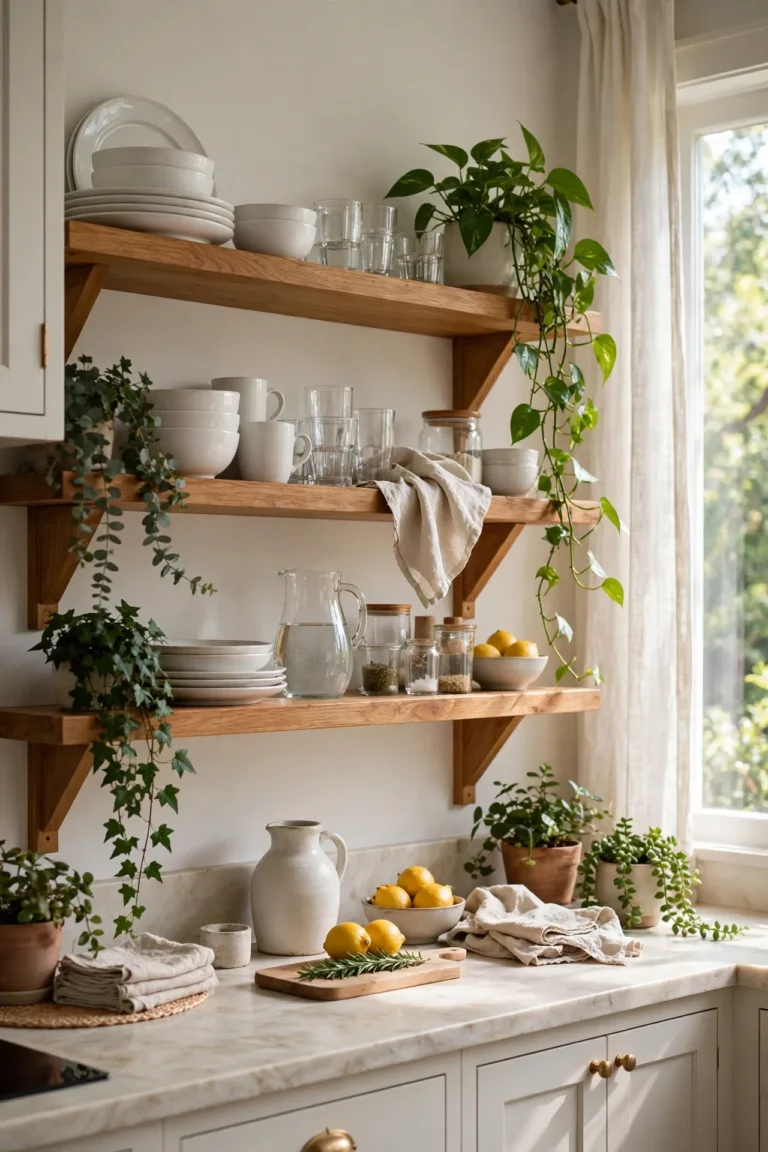
Sage loves raw wood the way gardens love fences. Open shelves in oak or pine against sage cabinets, a wood range hood, or even faux beams warm the green and keep it organic. The shelves also break up long cabinet runs, giving the eye a place to land. Styling rules matter here — the groups-and-gaps approach in these open shelving kitchen ideas keeps wood shelving looking curated next to colored cabinets.

11. Add Glass-Front Uppers in Sage
Glass-front upper cabinets painted sage give you color with transparency: the green frames your white dishes and glassware like a gallery. They lighten the upper wall, which helps two-tone and full-run schemes alike, and they reward tidy stacking with a display effect. Keep interiors painted the same sage or a warm white, and reserve them for the prettiest everyday things you own.

12. Pair Sage With an Apron-Front Sink
A white apron-front sink set into sage cabinets is the modern farmhouse postcard, and it earns the fame: the crisp white front brightens the green, the green makes the sink’s classic shape feel current. A brass or black bridge faucet finishes the composition. If a cabinet repaint is not happening this year, this single pairing still works in reverse — the sink first, sage later.

13. Weave In Rattan, Baskets and Linen
Sage kitchens need texture to stay soft, and woven materials supply it: rattan bar stools, a basket for produce, linen towels and a runner in cream or flax. These natural fibers sit in the same earthy family as the green, so the room layers without new colors arriving. It is also the fastest refresh on this list — an afternoon of textiles can make a two-year-old sage kitchen feel newly styled.

14. Go Sage Without Painting: The Rental Route
Renters and the paint-shy can still have the look. Sage appears beautifully in the movable layer: a sage kettle and toaster, ceramic canisters and crocks, bar stools, a runner, cafe curtains, even a sage-painted secondhand hutch or cart that leaves with you. Concentrate the color in one zone — the counter run or the eating corner — so it reads as a decision. Peel-and-stick sage tiles behind the stove add one bolder, still reversible, note.
15. Use Black Accents for a Modern Edge
If brass feels too traditional, matte black is sage’s other partner: black pulls, a black faucet, black lantern pendants. The contrast is sharper and more graphic, pushing the kitchen contemporary while the green keeps it warm. Black works best in small, repeated doses — hardware, lighting, one appliance — rather than large surfaces, which can turn the soft green stark.
16. Layer Living Green Against the Painted Green
Plants against sage cabinets create the tone-on-tone depth designers love: herbs on the sill, a trailing pothos over the uppers, eucalyptus in a crock on the island. Living greens are brighter and bluer than the paint, so the layers read as a garden palette rather than a match. It is also a cheap test — if plants against your current cabinets please you, the painted version likely will too.

17. Extend Sage to the Pantry or Butler’s Nook
A walk-in pantry, a coffee nook, or a short run of utility cabinets painted sage turns overflow storage into a designed moment, and it lets a white main kitchen borrow the color at lower risk. Paint the interior of one glass-front cabinet or the back panel of open shelves sage for the smallest possible version: a green glow behind white dishes that guests notice and cannot quite name.
18. Light Sage Warmly After Dark
Sage lives or dies by evening light. Cool bulbs drag it toward gray-blue and undo the day’s charm, so choose warm white around 2700K everywhere: pendants, under-cabinet strips, the lamp on the counter. Under-cabinet light washing down sage doors is especially kind, deepening the color exactly where you work. Test your chosen paint chip under the bulbs you actually own before the first cabinet is painted.

Frequently Asked Questions
Is sage green a good color for kitchen cabinets?
Yes, and unusually practical. Sage sits between neutral and color, so it hides everyday dust and splashes better than white, pairs with nearly every counter and metal, and suits farmhouse, modern and traditional kitchens alike. Its one demand is warmth around it: warm whites, wood and brass keep it calm and green, while cool grays and chrome can turn it cold.
What colors go best with a sage green kitchen?
Warm white and cream lead, then natural wood tones, brass or matte black as the metal, and pale warm stone for counters. For accents, dusty blue, clay and washed brick red sit comfortably in small doses. The combinations to avoid are cool gray counters and blue-white paints, which fight sage’s warm undertone and make it read muddy.
What are the best sage paint colors for cabinets?
Look for gray-based sages with a warm undertone; they are the ones that stay calm in changing light. Popular designer picks include Sherwin-Williams Evergreen Fog for a soft mid-sage, Benjamin Moore October Mist for a silvery pale version, and Farrow & Ball’s muted greens for depth. Whatever the brand, sample on a door, not a chip, and judge it at night under your own bulbs before painting the room.
Will a sage green kitchen look dated in a few years?
Sage has cycled through kitchens for over a century because it behaves like a neutral, and neutrals date slowly. The risk is not the color but the styling around it: heavily themed accessories date faster than cabinet paint. Keep the bones classic — shaker doors, stone or wood counters, simple hardware — and a sage kitchen will read as tasteful long after louder trends have left.
Can I use sage green in a small kitchen?
Absolutely. Choose the palest gray-sage shades, run the color on full-height cabinets to unify the walls, and keep counters light and clear. Sage green kitchen ideas often work better in small rooms than strong colors do, because the green adds identity without visual weight. If even pale sage feels brave, start with the island or the lower cabinets only.
Make It Yours
Your sage kitchen can be a full repaint or a kettle and a runner — the color forgives every commitment level. Pick your shade in your own light, warm it with wood and brass, and start where your budget and bravery meet. When one of these sage green kitchen ideas feels like your room, save your favorites to your kitchen board on Pinterest so the plan, and the paint shortlist, are waiting for you on your next free Saturday.