Japanese Bedroom Ideas for a Calm Minimal Look
What Is a Japanese Bedroom?
A Japanese bedroom is a calm, minimalist sleeping space inspired by traditional Japanese homes. It emphasizes low-height living, natural materials, flexible use of space, and visual simplicity.
Instead of heavy furniture, it typically features:
- Tatami mats
- Futon bedding
- Shoji screens
- Neutral color palette
This design supports rest and mindfulness, making it ideal for creating a serene, screen-free environment.
Why Japanese Bedroom Design Matters
Japanese bedroom design isn’t just aesthetic—it’s rooted in Zen Buddhism and the philosophy of wabi-sabi, which values simplicity, imperfection, and intentional living.
Benefits:
- Creates a visually calm environment
- Reduces clutter and mental fatigue
- Works well in small apartments and condos
- Encourages better sleep through simplicity and grounding
For urban North American homes, it combines practicality with aesthetic serenity.
Core Elements of a Japanese Bedroom
Tatami Mats
Traditional floor coverings made from woven rush grass over straw or composite bases.
- Provide gentle cushioning, temperature regulation, and a distinctive natural scent.
- Options for US & Canada: authentic tatami panels, tatami-style foam mats (apartment-friendly)

Futon Bedding
Foldable mattresses placed directly on the floor or tatami. Stored during the day to allow multi-use space.
Modern adaptations:
- Thicker cotton or latex futons
- Futon-on-slat systems for airflow
- Low platform beds with futon-style mattresses
Shoji Screens
Sliding panels made from wood frames and translucent paper.
- Soften light, divide spaces, and maintain openness
Uses in Western homes:
- Closet doors
- Room dividers
- Decorative window panels
Love free-spirited design? Check out our ideas to bring a relaxed, coastal vibe to your living space.
11 Futon Bedroom Ideas for Small Modern Homes
29 Bedroom Picture Wall Ideas for Stylish Homes

Low Furniture & Floor Seating
Avoid tall, bulky furniture. Common pieces include:
- Low platform beds
- Floor cushions (zabuton)
- Minimal side tables
Natural Colors & Materials
Palette: beige, off-white, soft browns, light wood, muted green/gray
Materials: wood, bamboo, cotton, linen, paper

Types of Japanese Bedroom Styles
| Style | Features | Ideal For |
| Traditional Washitsu | Tatami flooring, futon bedding, shoji doors, minimal décor | Cultural authenticity seekers |
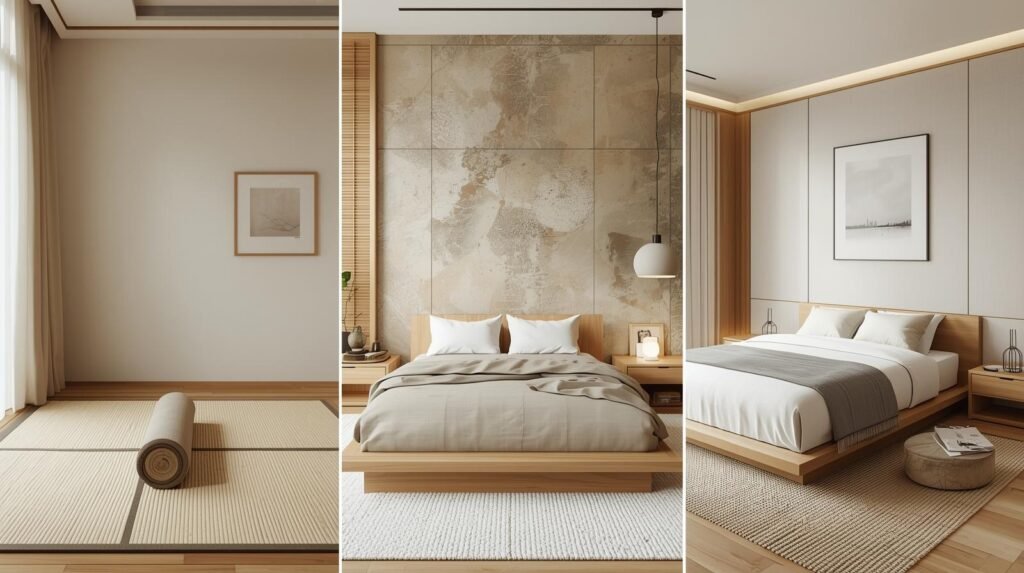
| Modern Japanese | Low platform bed, tatami-inspired rugs, simple lighting | North American homes |
| Japandi | Japanese + Scandinavian design, warm minimalism, practical furniture | Pinterest-inspired designs |
| Ryokan-Style | Inspired by Japanese inns, layered bedding, tokonoma accents | Luxurious yet simple setup |

Japanese Bedroom vs Western Bedroom
| Feature | Japanese Bedroom | Western Bedroom |
| Bed height | Floor-level or very low | Raised bed |
| Flooring | Tatami or natural mats | Carpet or hardwood |
| Furniture | Minimal, multi-use | Larger, fixed |
| Visual style | Calm, uncluttered | Decorative |
| Space use | Flexible | Single-purpose |

How to Design a Japanese Bedroom (Step-by-Step)
- Declutter Completely – Remove unnecessary furniture and décor. Negative space is essential.
- Choose the Right Flooring – Tatami panels or tatami-style foam mats; light wood flooring with neutral rugs.
- Decide on Futon vs Bed – Futon for authenticity and flexible space; low platform bed for comfort.
- Simplify Furniture – Bed or futon, one small side table, hidden storage if needed.
- Use Soft, Indirect Lighting – Paper lanterns, floor lamps, warm LED lights.
- Add Minimal Accents – One or two elements only: single art print, ceramic vase, or small indoor plant.

Is a Japanese Bedroom Comfortable?
Pros:
- Firm support helps posture
- Cooler sleep surface
- Flexible room usage
Cons:
- Thin futons may feel hard at first
- Daily folding and airing required
Tip: Start with hybrid setups (thicker futon or low bed) and adapt over time.
Tatami & Futon Maintenance (US & Canada)
- Lift futons daily for airflow
- Ventilate the room regularly
- Avoid placing tatami directly on concrete
- Alternatives: Modern tatami with synthetic cores are allergy-friendly and easier to maintain

Cost & Budget Expectations
| Budget Level | Typical Cost Range | Focus |
| Budget | <$1,000 | DIY setup, local furniture |
| Mid-Range | $1,000–$3,000 | Imported futons, custom shoji, rugs |
| Luxury | $3,000+ | Designer furniture, premium bedding & decor |
Common Mistakes to Avoid
- Over-decorating with “Asian-themed” items
- Using glossy or synthetic materials
- Ignoring ventilation needs
- Mixing too many styles
Is a Japanese Bedroom Right for You?
Ideal if you:
- Live in apartments or condos
- Prefer minimalism
- Want a calm, screen-free sleep space
- Value function over decoration
Not ideal if you:
- Need extensive storage
- Prefer plush, high beds
FAQs
Do Japanese people still sleep on the floor?
Yes, many use futons, though beds are increasingly common.
Are tatami mats healthy?
Breathable and comfortable, but ventilation is important to prevent moisture.
Is a Japanese bedroom good for small apartments?
Absolutely. Minimal furniture and flexible space make it ideal.
Can I have a Japanese bedroom without tatami?
Yes. Wood floors with tatami-style rugs work well.
What colors are best for a Japanese bedroom?
Neutral tones: beige, cream, light brown, soft gray.
Is sleeping on a futon bad for your back?
A quality futon supports proper alignment; adaptation may take time.
Is Japandi the same as Japanese style?
No. Japandi blends Japanese minimalism with Scandinavian design.
Conclusion
A Japanese bedroom is more than a style—it’s a lifestyle choice emphasizing simplicity, natural materials, and flexible use of space. Whether you choose a traditional washitsu or a modern Japandi setup, these principles transform your bedroom into a calm, functional, and serene retreat. Focus on negative space, quality materials, and minimalist design to create a sleep sanctuary that enhances both comfort and mindfulness.