27 Genius Twin Bedroom Ideas That Look Expensive but Feel Cozy
Do you think making a room look fancy always costs a lot of money? I used to think the same — until I spent years studying interior design and working with dozens of real bedroom makeovers on tight budgets. Here is what I learned: the most expensive-looking rooms are never actually the most expensive rooms. They are the most thoughtfully designed rooms.
According to the American Society of Interior Designers (ASID), over 68% of homeowners say their bedroom is the room they most want to improve — yet most people overspend on the wrong things and underspend on the details that actually matter. In this guide, I am going to show you exactly which details matter, why they work from a real design perspective, and how to pull them off without breaking the bank.
These 27 ideas work for kids rooms, guest rooms, small apartments, and rental spaces. Let us get into it.
The Luxury Hotel Look: Use Symmetry to Make Both Sides Match Perfectly
Why Symmetry Works in a Twin Bedroom
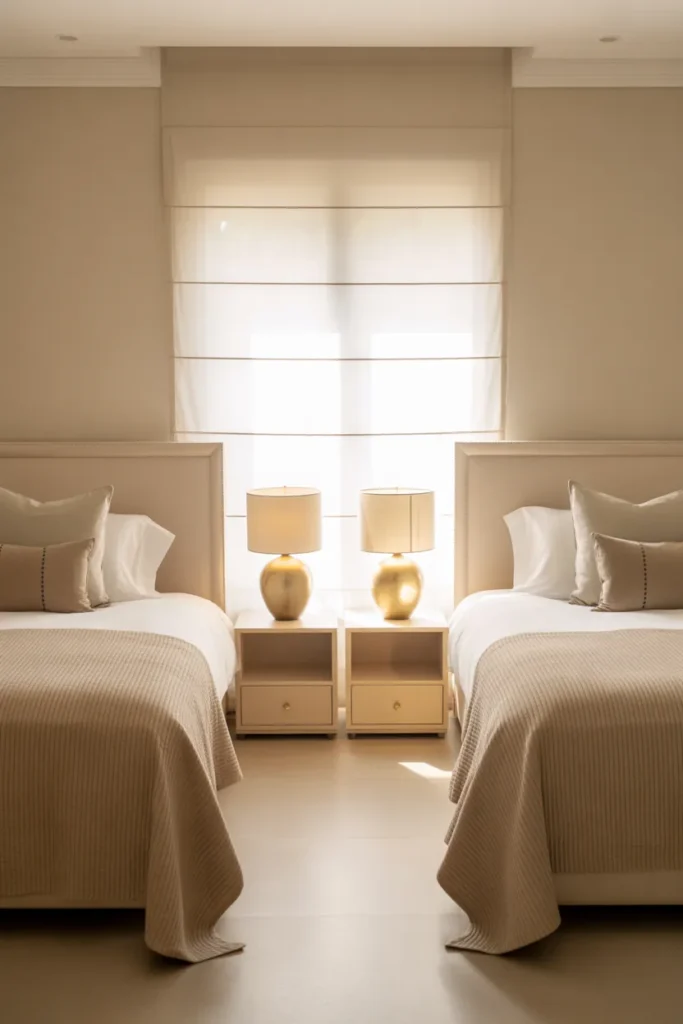
Have you ever walked into a five-star hotel room and felt instantly calm and impressed — even before you noticed any specific detail? That feeling comes almost entirely from symmetry. When both sides of a room mirror each other perfectly, your brain reads the space as safe, ordered, and high-quality. It is a psychological response that interior designers use deliberately in every professional project.
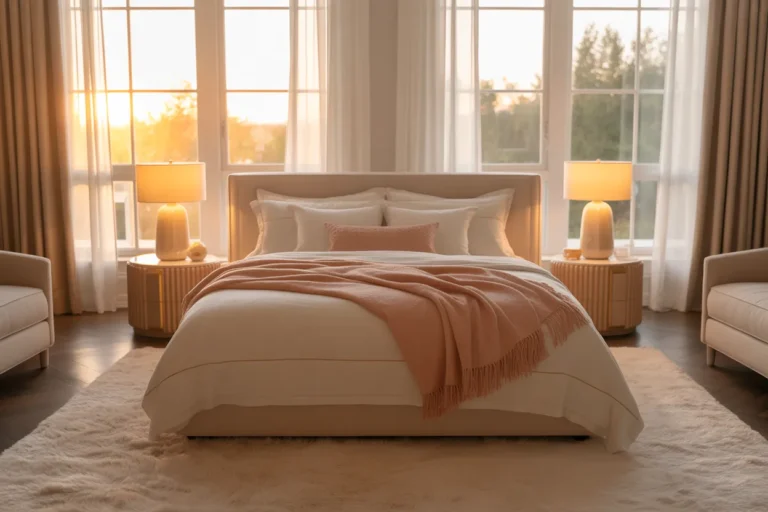
For a twin bedroom, symmetry is even more powerful because you naturally have two beds to work with. Place a nightstand in the center between the two beds or one on each outer side. Use matching lamps of the exact same height and style. Keep the bedding identical on both sides — same duvet, same pillows, same arrangement. When you step back and look at the room, your eye moves smoothly from left to right without any jarring visual interruptions.
How to Do It on a Budget
You do not need expensive furniture to achieve this. A matching set of basic white bedside lamps from any home store ($15–$30 each) combined with identical bedding from the same collection will do the job completely. The key is consistency, not cost. Even IKEA furniture looks genuinely high-end when it is placed symmetrically and styled with intention.
Pro Tip: Take a photo of your room and look at it on your phone screen. Asymmetry is much easier to spot in a photo than with the naked eye standing in the room.
Upholstered Headboards: The Single Fastest Way to Elevate Any Bed
The Design Science Behind Soft Headboards
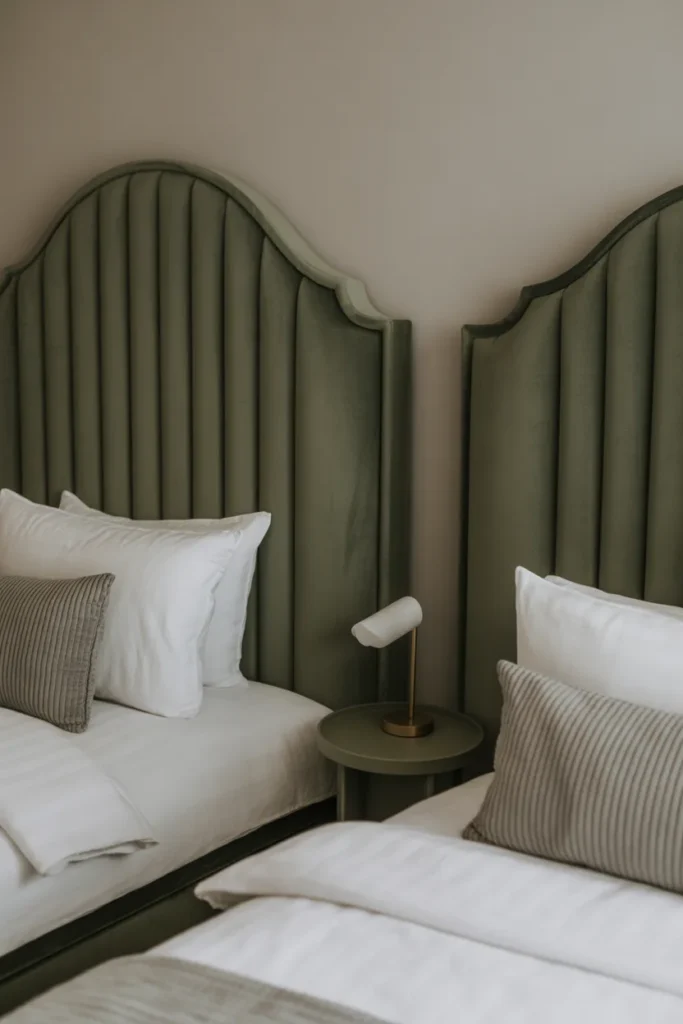
Upholstered headboards work so well for one very specific reason: they add visual weight to the bed. In interior design, visual weight refers to how substantial and grounded a piece of furniture looks. A plain metal or basic wooden headboard has very little visual weight — it looks thin, lightweight, and almost temporary. A thick, fabric-covered headboard looks solid, permanent, and intentionally chosen.
This is why even a modest bed frame with a beautiful upholstered headboard looks more expensive than a costly bed with a plain one. The headboard is literally the first thing your eyes land on when you enter the room. Make it count.
Fabric Choices and What They Communicate
- Velvet ($80–$200 for a twin headboard): Communicates luxury, richness, and formality. Best for rooms with jewel-tone or neutral color schemes.
- Linen ($60–$150): Communicates relaxed sophistication. Perfect for coastal, Scandinavian, or casual elegant styles.
- Boucle ($120–$280): The current designer favourite. Adds incredible texture and a contemporary feel that looks very current and expensive.
- Faux leather ($50–$120): Clean, modern, and easy to wipe down. Great for kids rooms or guest rooms that see heavy use.
Budget Hack: You can DIY an upholstered headboard for under $40 using a piece of plywood, foam padding, and fabric from a craft store. Dozens of tutorials are available online and the results are genuinely impressive.
Neutral Color Palette: The Foundation Every Expensive Room Is Built On
Why Neutral Colors Look More Expensive
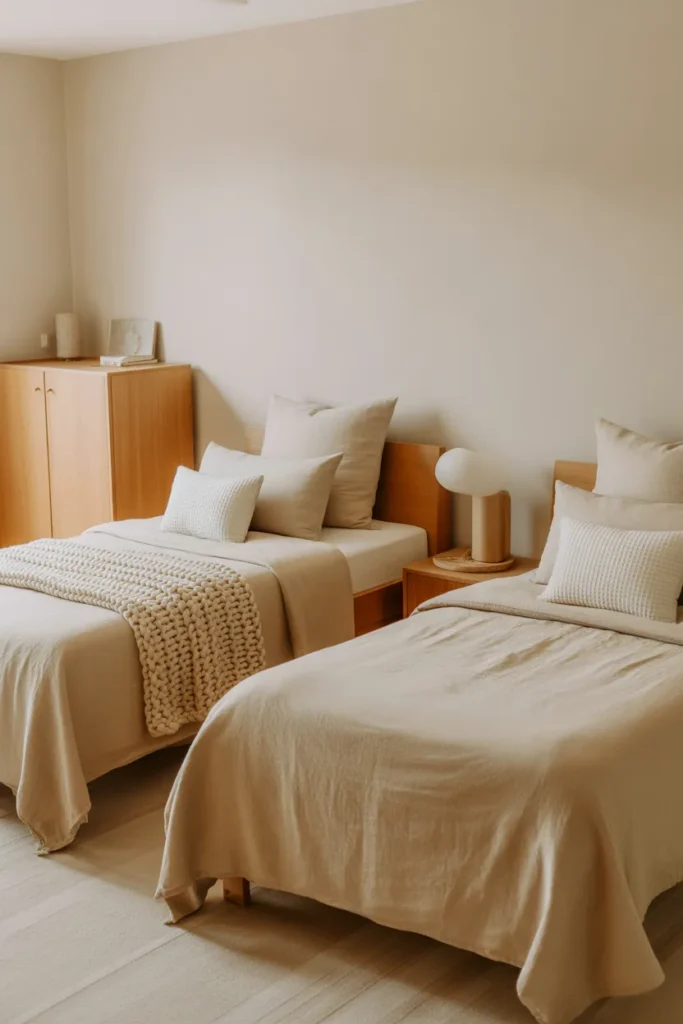
There is a reason why every luxury hotel, high-end showroom, and professionally designed bedroom defaults to neutral colors. It is not laziness or lack of creativity — it is strategic. Neutral colors do three things simultaneously that no other color family can do: they reflect light evenly, they make spaces feel larger, and they create a visual calm that allows other design elements like texture, form, and material to become the stars.
Bright or saturated colors compete with everything around them. They demand attention constantly and make it very difficult to add layers and depth to a room. Neutral colors, on the other hand, act like a quiet backdrop that makes every other element in the room look better than it would on its own.
The Best Neutral Combinations for Twin Bedrooms
- Warm whites + natural linen + light oak wood: Creates a soft, organic, spa-like atmosphere
- Soft grey + charcoal + white: Clean and modern, works beautifully with metal accents
- Cream + warm beige + terracotta accents: Warm and inviting, feels grounded and earthy
- Off-white + sage green + natural rattan: Fresh and contemporary, very popular right now
The key to keeping neutrals from feeling boring is texture variation — which we will cover in depth in Tip 22.
Layered Bedding: The Trick That Makes Every Bed Look Magazine-Ready
Understanding the Professional Bedding Formula
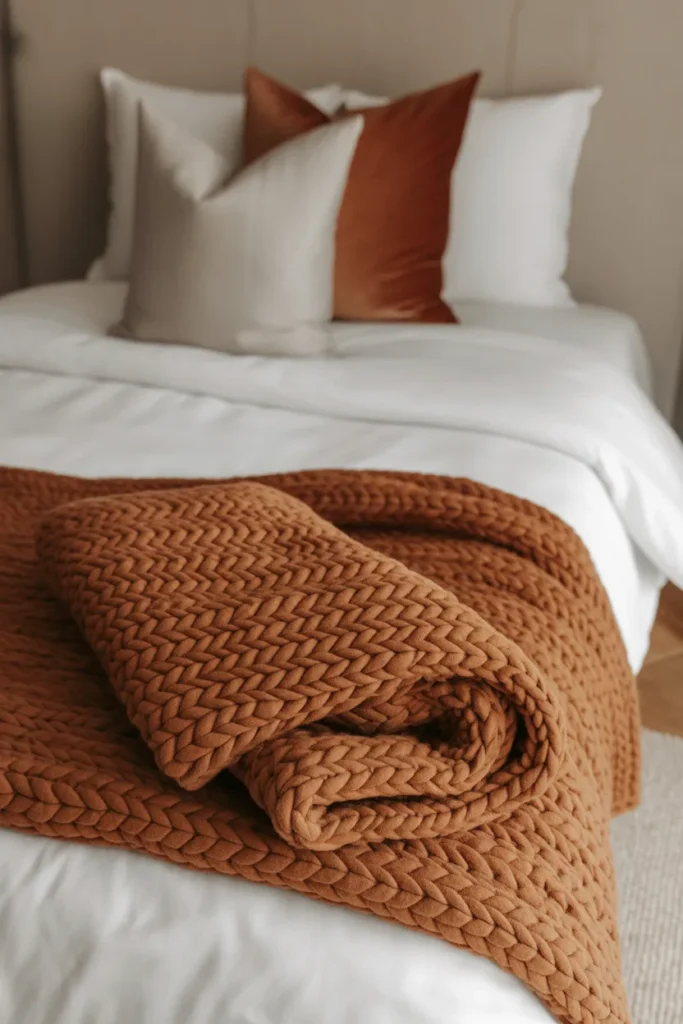
Interior stylists and hotel designers use a specific formula when dressing beds for photoshoots and high-end spaces. Understanding this formula means you can recreate the look exactly, every single time, without any guesswork.
The 5-Layer Formula:
- Fitted sheet — crisp cotton or linen, tucked tightly
- Flat sheet — folded back over the duvet at the top by about 6 inches
- Duvet or comforter — your main visual layer, should be thick and full
- Throw blanket — folded in thirds and draped across the lower third of the bed
- Pillow arrangement — two sleeping pillows at the back, two Euro shams behind them, one or two accent pillows at the front
Material Mixing for Maximum Luxury
The reason layered beds look so rich is not just the layers themselves — it is the intentional mixing of different materials within those layers. Try pairing:
- Smooth percale cotton sheets with a chunky waffle-knit throw
- A solid linen duvet with a velvet accent pillow
- A crisp white base with a warm amber or terracotta throw
This contrast between smooth and textured, crisp and soft, is what makes the arrangement look genuinely luxurious rather than just bulky.
Love free-spirited design? Check out our ideas to bring a relaxed, coastal vibe to your living space.
Love free-spirited design? Check out our ideas to bring a relaxed, coastal vibe to your living space.
21 Couple Bedroom Ideas for a Romantic Space
14 Lake House Bedroom Ideas for Relaxing Vibes
29 Bedroom Picture Wall Ideas for Stylish Homes
Statement Accent Wall: One Wall Does All the Work
Choosing the Right Wall and the Right Treatment
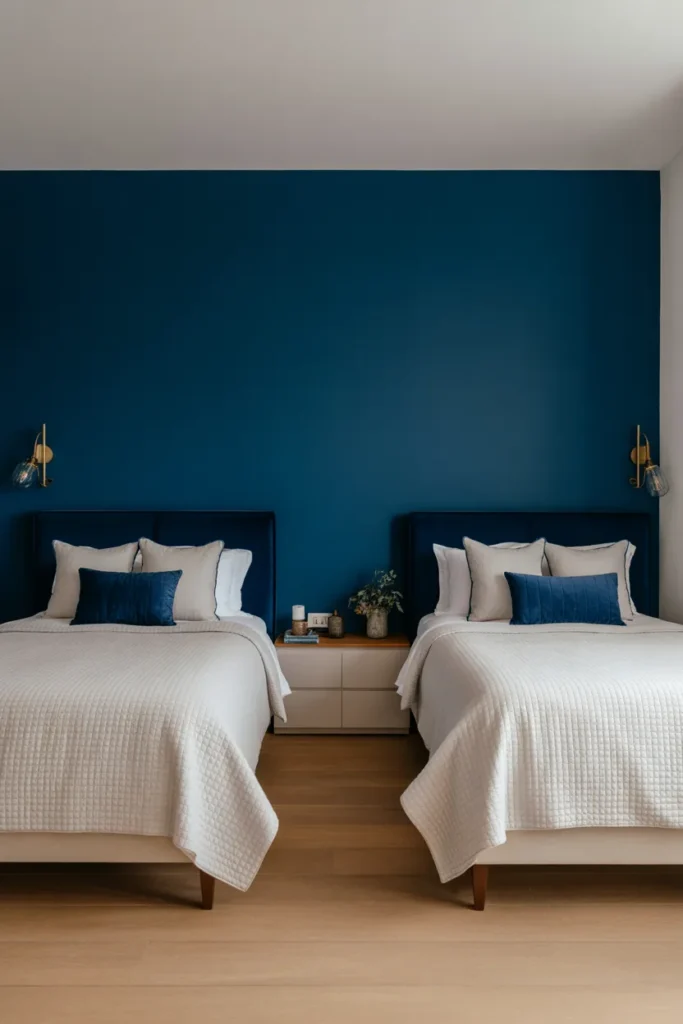
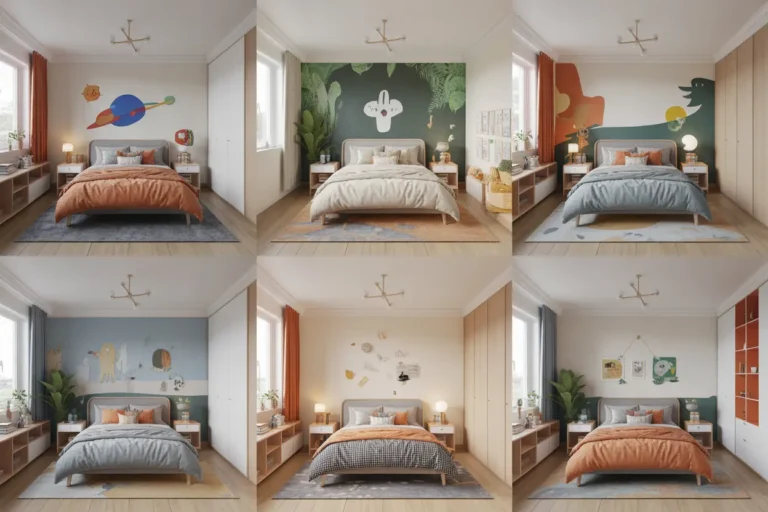
An accent wall works on a simple principle: give the eye one clear focal point, and the rest of the room feels intentional and designed even if it is relatively plain. In a twin bedroom, the wall behind the beds is always the right choice because it frames the beds and draws attention to the most important furniture in the room.
The treatment you choose should reflect the overall personality of the space:
Limewash paint ($40–$80): An ancient technique that creates a soft, mottled, organic texture that looks completely unique and very expensive.
Deep paint color ($30–$60 for a gallon): The most affordable option. Navy, forest green, deep burgundy, and warm charcoal all work beautifully. Use a paint with a slight sheen — eggshell or satin — rather than flat for a more premium look.
Wallpaper ($50–$200 per roll): Adds pattern, depth, and genuine visual complexity that paint alone cannot achieve. Botanical prints, subtle geometric patterns, and textured grasscloth are all excellent choices.
Wood slat panels ($80–$300 for a wall): Currently one of the most popular designer treatments. Creates incredible depth and warmth and photographs beautifully.
Matching Bed Frames: The Foundation of a Cohesive, Professional Look
Why Mismatched Frames Undermine Everything Else
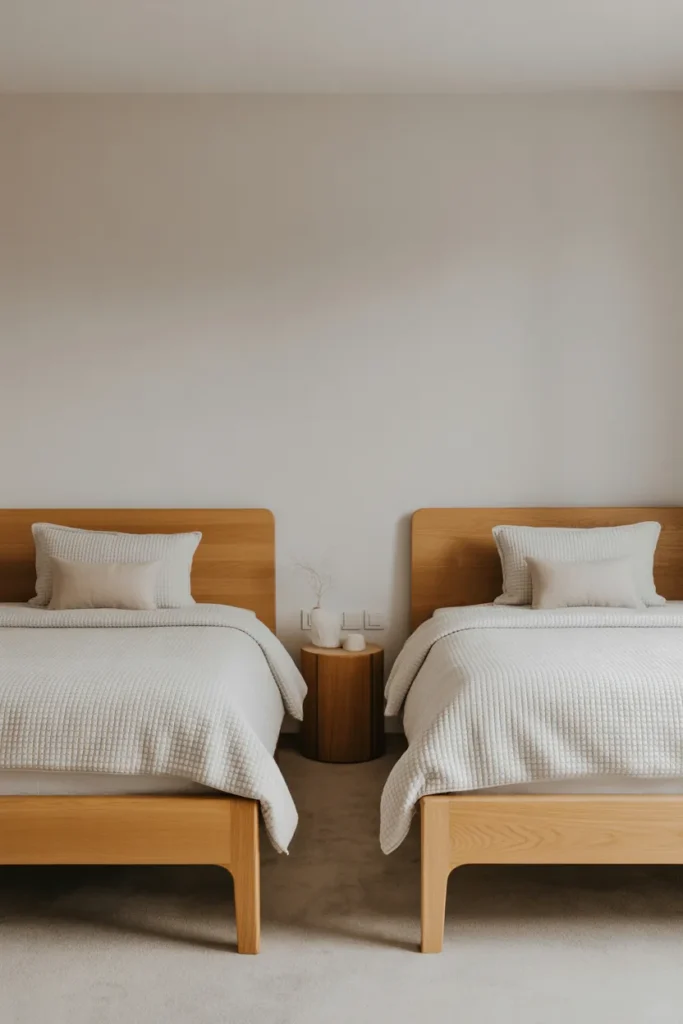
You can have beautiful bedding, perfect lighting, and stunning artwork — but if the two bed frames in your twin room do not match, the room will always look slightly off. Mismatched frames create visual competition. The eye bounces back and forth between the two different pieces rather than reading the room as a unified, designed space.
This is one of the most common mistakes in twin bedroom design and one of the easiest to fix. Identical frames create an immediate sense of order and intentionality that elevates everything else in the room around them.
Frame Styles and What They Work Best With
- Natural wood frames (oak, pine, walnut): Warm, organic, versatile. Works with almost any color palette and is particularly beautiful in Scandinavian or bohemian rooms.
- Upholstered platform frames: Soft, contemporary, luxurious. Pairs perfectly with layered bedding and neutral palettes.
- Black metal frames: Crisp, modern, versatile. Works in both minimalist and maximalist rooms and photographs extremely well.
- Rattan or cane frames: Relaxed, natural, beachy. Best in light, airy rooms with natural textures throughout.
Budget Range: Decent matching twin frames can be found for $100–$250 each. At this price point, the key is choosing simple, clean designs rather than ornate ones — simplicity always looks more expensive in frame design.
Individual Reading Lights: A Small Detail That Signals Genuine Thoughtfulness
Why Personal Lighting Transforms a Shared Room
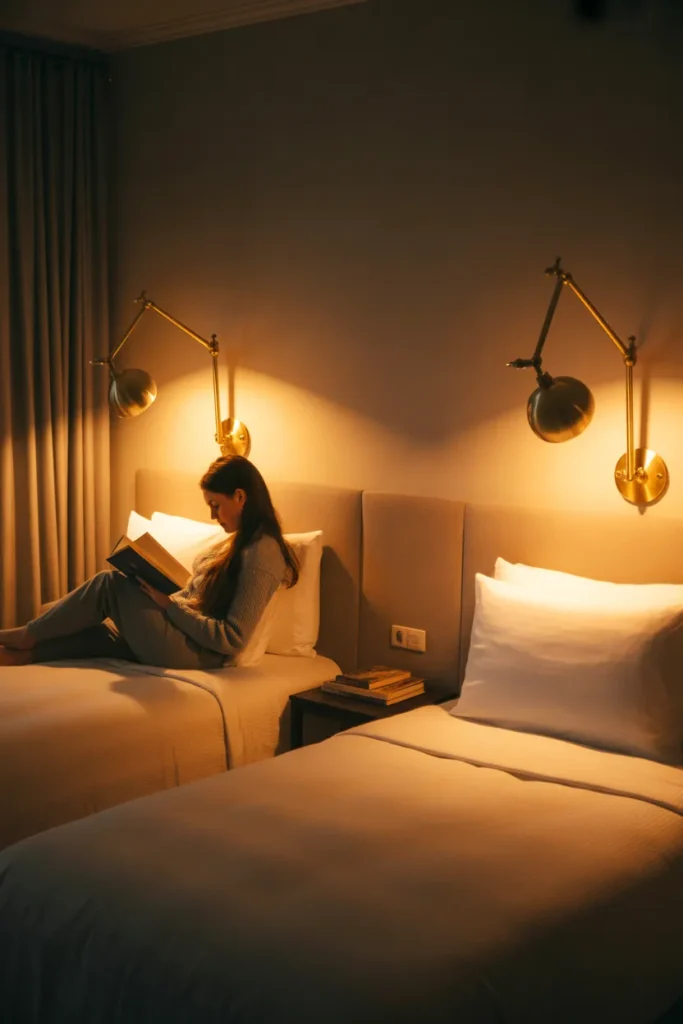
One of the things that makes a shared bedroom feel genuinely comfortable rather than just functional is the sense that each person has their own space and their own autonomy. Individual reading lights are the single most effective way to create this feeling. When each bed has its own dedicated light source, each person has control over their own environment — and that sense of individual consideration is exactly what makes high-end hotel rooms feel so special.
Beyond the psychological impact, individual reading lights also dramatically improve the quality of the room’s overall lighting scheme. Rather than relying on a single harsh overhead light, you create multiple warm light sources at different heights and positions, which adds depth, warmth, and dimension to the entire space.
Best Options at Different Price Points
- Budget ($15–$40 each): Clip-on reading lights or simple plug-in wall sconces. Functional and decent-looking.
- Mid-range ($40–$100 each): Hardwired or plug-in swing arm wall sconces in brass, black, or nickel. These look genuinely expensive and make a significant visual impact.
- Investment ($100–$250 each): Designer-style articulating wall lamps. These are the ones you see in high-end interior design magazines and they are absolutely worth the investment if your budget allows.
Area Rug Between the Beds: The Most Underrated Design Move in Any Bedroom
The Role of a Rug in Defining Space
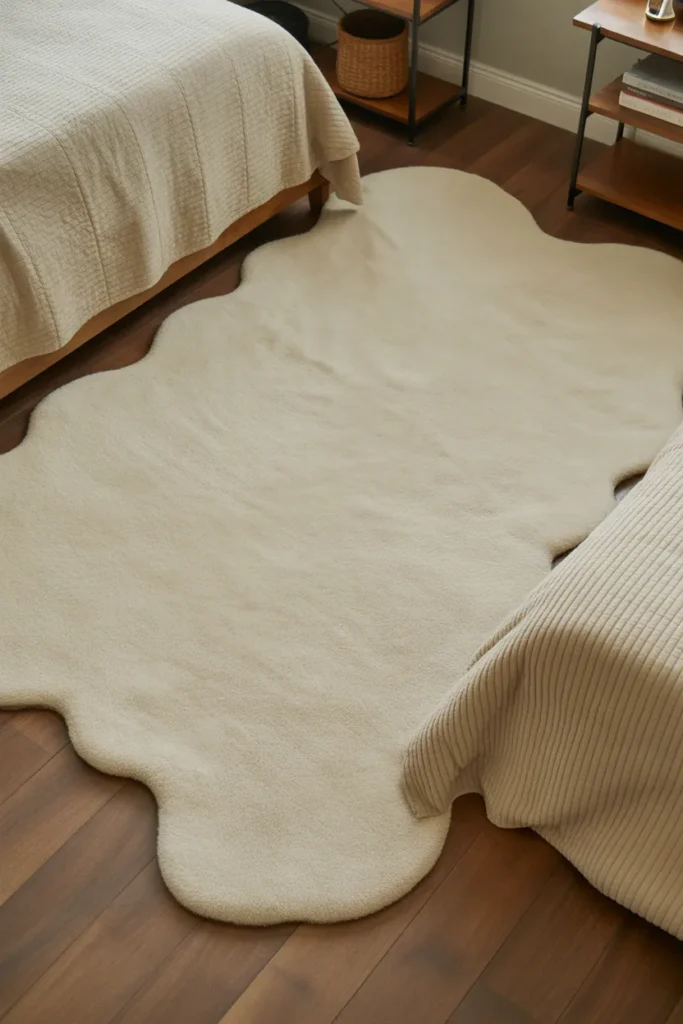
Interior designers refer to rugs as “anchor pieces” — and for good reason. A rug does not just cover the floor. It defines a zone within the larger room, gives furniture something to relate to spatially, and adds a layer of warmth and texture that no other element can provide. In a twin bedroom, a well-chosen rug placed between and partially under both beds does all of these things simultaneously.
Without a rug, the space between two twin beds looks like a gap — an awkward empty stretch of floor that makes the room feel unresolved. With a rug, that same space becomes the center of the room — a warm, inviting pathway that connects the two beds into a unified composition.
Rug Sizing: The Most Important Thing to Get Right
The most common rug mistake in twin bedrooms is choosing a rug that is too small. A small rug looks like an afterthought. For a twin bedroom, the rug should ideally extend at least 18–24 inches beyond the sides of each bed and reach partially under the foot of both beds. A typical twin bedroom works well with a 5×8 or 6×9 foot rug placed centrally between the beds.
Material Recommendations:
- Wool rugs: Best quality, most durable, softest underfoot. ($150–$600)
- Polypropylene/synthetic rugs: Budget-friendly, very durable, easy to clean. Great for kids rooms. ($50–$200)
- Natural fiber rugs (jute, sisal): Beautiful texture, very on-trend, best in low-traffic areas. ($80–$300)
21 Couple Bedroom Ideas for a Romantic Space
Storage Bed Frames: Eliminating Clutter Is the Most Powerful Design Move
Why Clutter Is the Enemy of Luxury
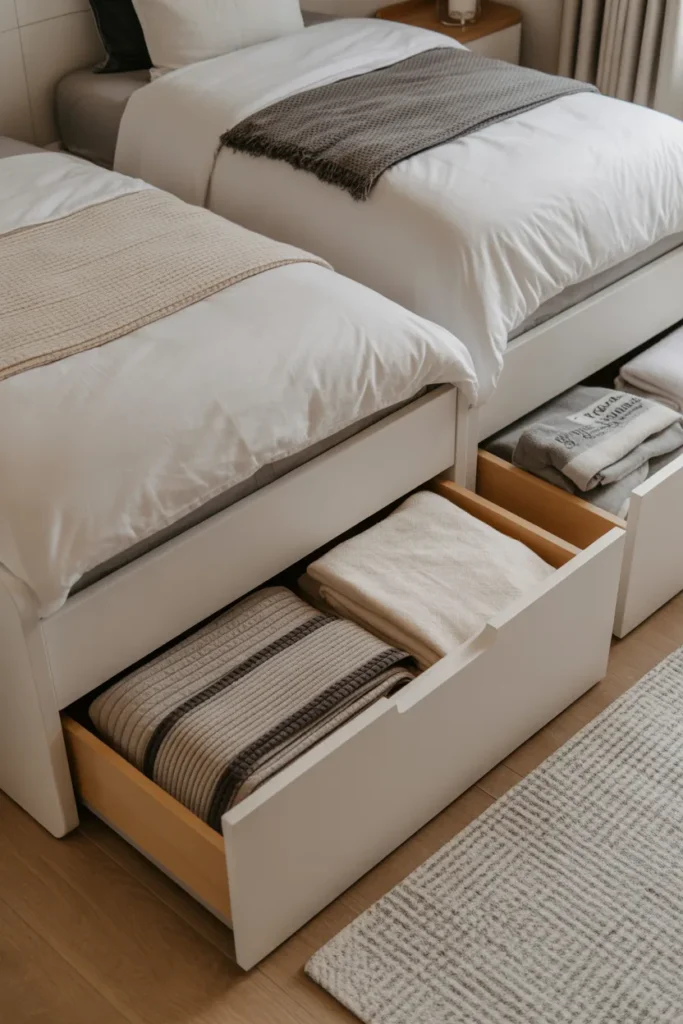
This is one of the most important principles in interior design: a clean room always looks more expensive than a cluttered one, regardless of how much the furniture costs. You can furnish a room entirely from budget stores, but if it is impeccably organized and clutter-free, it will look high-end. Conversely, you can fill a room with expensive pieces and it will look cheap and overwhelming if it is messy and disorganized.
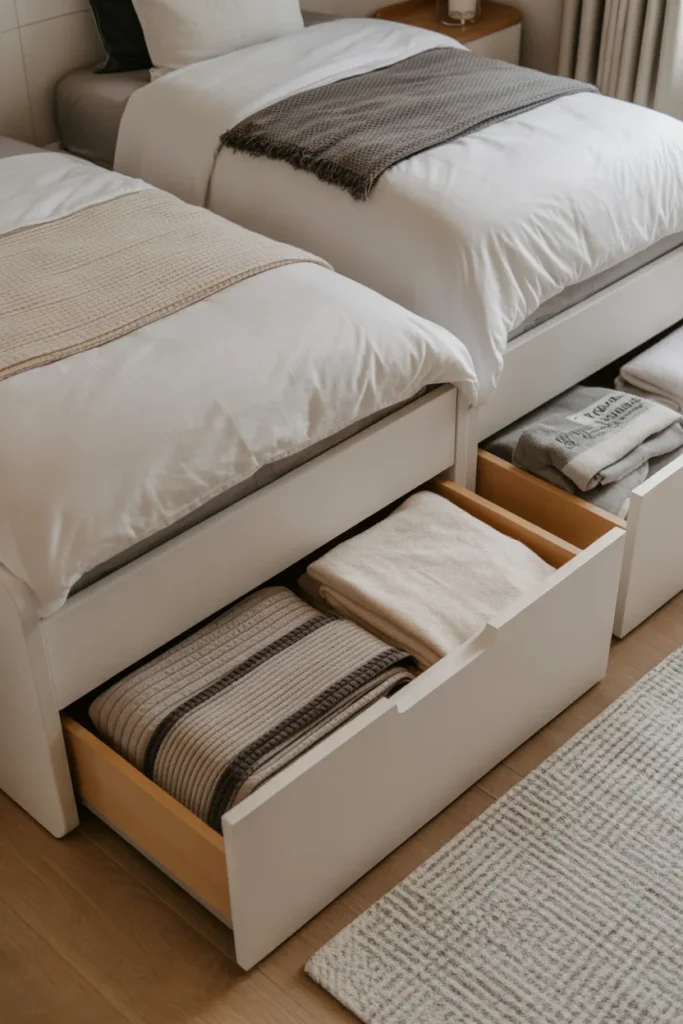
Storage bed frames address the most common source of bedroom clutter — the things that end up under the bed. Extra blankets, seasonal items, shoes, toys — all of these things have a way of migrating under beds and making the room look messy every time someone peers into the space from a low angle.
Types of Storage Beds and What Works Best
- Drawer storage beds: The most practical option. Usually 2–4 drawers on the sides of the bed that pull out easily. Perfect for clothes, blankets, and toys.
- Hydraulic lift storage beds: The entire mattress platform lifts up to reveal a large storage cavity underneath. Maximum storage capacity but slightly more expensive.
- Ottoman storage beds: A softer, upholstered option where the base opens as a single large compartment. Looks beautiful but slightly less practical for daily access.
Price Range: Good quality storage twin beds range from $200–$600. The investment pays for itself almost immediately in reduced need for additional storage furniture.
Floating Shelves: Vertical Storage That Makes Any Room Look Larger
The Psychology of Wall-Mounted Storage
When storage comes off the floor and goes onto the wall, something interesting happens to the perception of the room. The floor becomes more visible, which makes the room feel larger. The wall becomes more dynamic and layered, which makes it look more designed. And the overall composition of the room becomes more vertical, which draws the eye upward and makes the ceiling feel higher.
Floating shelves achieve all of this while also providing genuinely useful storage and display space. In a twin bedroom, placing one or two floating shelves above each bed creates a symmetrical, intentional look that makes the beds feel framed and considered within the overall room design.
Styling Floating Shelves for Maximum Impact
The way you style your shelves matters enormously. Random objects placed without thought look like clutter even when they are off the floor. Intentionally curated arrangements look like design. Follow these guidelines:
- Group items in odd numbers — three objects look more natural than two or four
- Vary heights — mix tall objects with short ones for visual rhythm
- Include at least one living element — a small plant or a cutting in a vase adds life
- Leave empty space — a shelf that is 70% full looks curated; a shelf that is 100% full looks cluttered
- Keep the color palette tight — stick to two or three colors maximum per shelf
Wall Sconces: The Design Move That Separates Good Rooms from Great Ones
Why Wall-Mounted Lighting Changes Everything
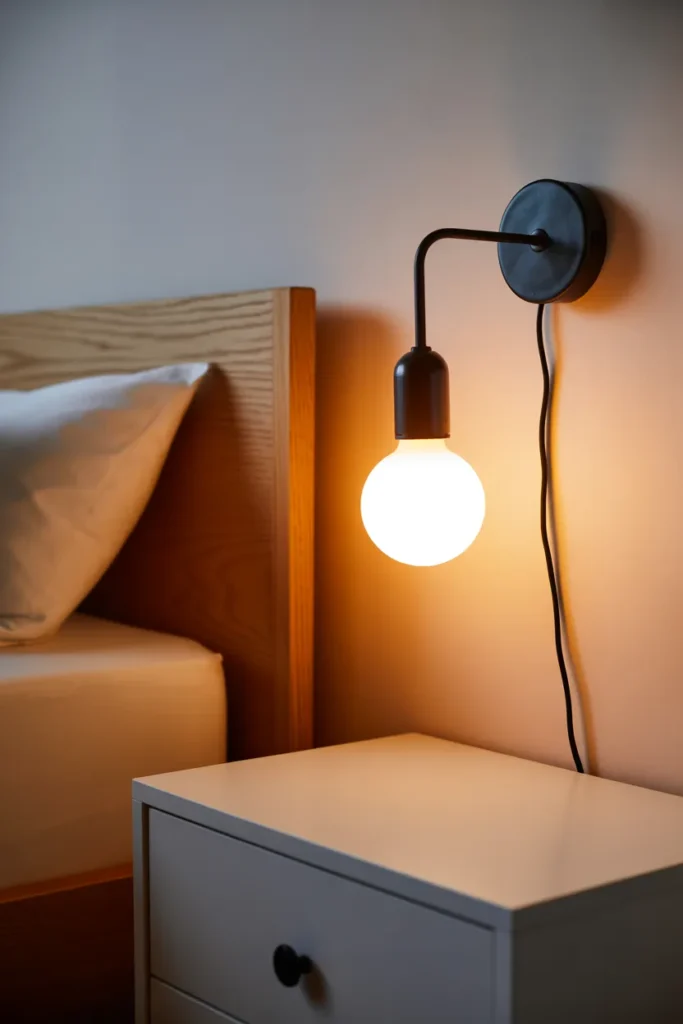
The transition from table lamps to wall sconces is one of the most impactful single changes you can make in a bedroom, and it is consistently underestimated by people who have not tried it. Here is what actually changes when you make this switch:
The nightstand surface becomes completely free — suddenly there is room for everything you actually need at hand without the room looking crowded. The light source moves to eye level when you are sitting up in bed, which is a dramatically more comfortable and flattering light angle than a lamp that sits lower. And the wall itself becomes more interesting — sconces add an architectural quality to the room that flat walls simply do not have.
Choosing the Right Sconce Style
- Plug-in swing arm sconces: The most practical option for renters or anyone who does not want to hardwire. Look for ones with fabric-covered cords that can be secured flat against the wall. ($40–$150 each)
- Hardwired wall sconces: The cleanest look — no visible cords at all. Requires an electrician to install but the result is flawless. ($60–$300 each)
- Battery-operated sconces: New technology means these are genuinely impressive now. Fully wireless, rechargeable, and dimmable. Perfect for rental spaces. ($30–$100 each)
Warm Ambient Lighting: The Cheapest Way to Make Any Room Feel Expensive
Understanding Color Temperature in Bedroom Lighting
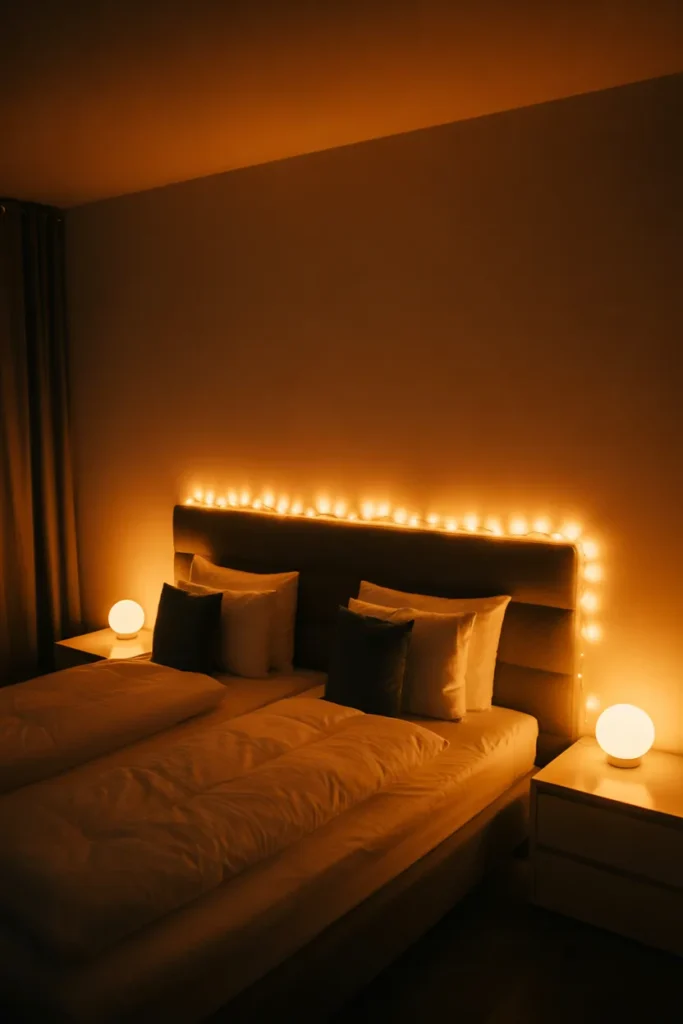
Lighting color temperature is measured in Kelvin (K), and it has a profound effect on how a room feels:
- 5000–6500K (Cool white/Daylight): Bright, crisp, energizing. Great for kitchens and offices. Terrible for bedrooms — makes the space feel clinical and harsh.
- 3000–3500K (Warm white): The sweet spot for most rooms. Friendly, bright enough to function, but warm enough to feel comfortable.
- 2200–2700K (Warm/Candlelight): The ideal range for bedroom ambient lighting. Creates that golden, soft glow that makes everything look beautiful.
Simply replacing your existing bulbs with 2700K equivalents is often the fastest and cheapest transformation you can make in a bedroom. A pack of four warm LED bulbs costs around $8–$15 and the difference is genuinely remarkable.
Layering Your Lighting for Maximum Atmosphere
Professional designers always use multiple light sources at different heights rather than relying on a single overhead fixture. In a twin bedroom, aim for at least three layers:
- Ambient layer: Overhead light or ceiling fixture for general illumination
- Task layer: Individual reading lights or sconces for each bed
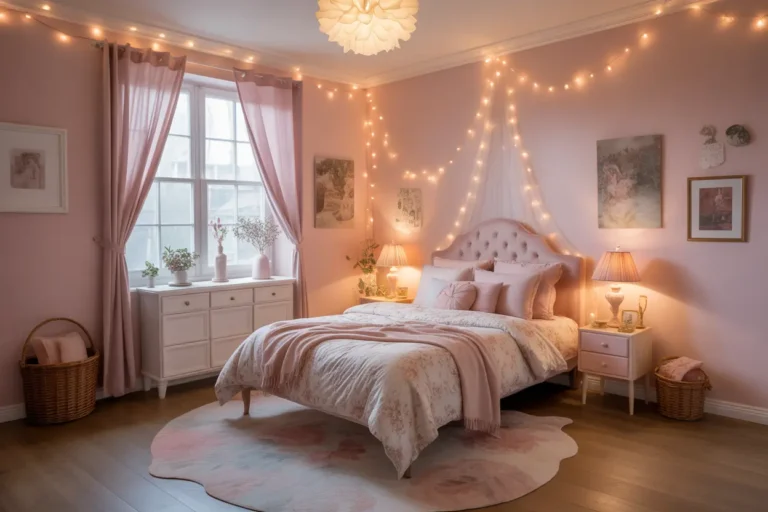
- Accent layer: Fairy lights, LED strips behind headboards, or a small table lamp in a corner
When you dim or turn off the overhead light and use only the lower, warmer layers, the room transforms completely.
Coordinated Artwork: Empty Walls Are the Fastest Way to Look Unfinished
The Art of Choosing Art Without Spending a Fortune
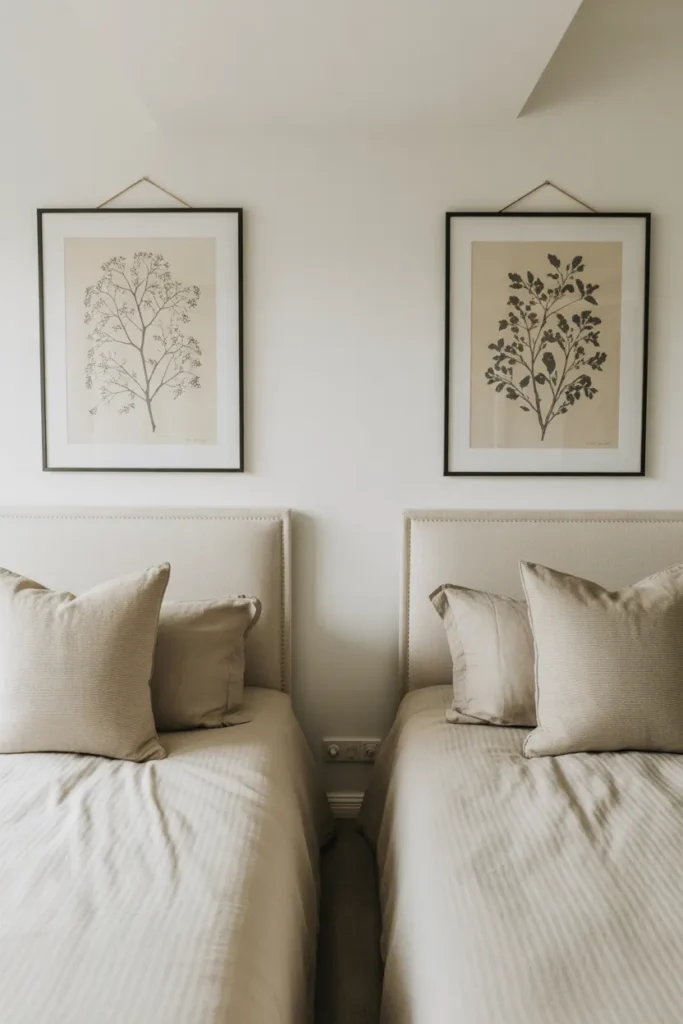
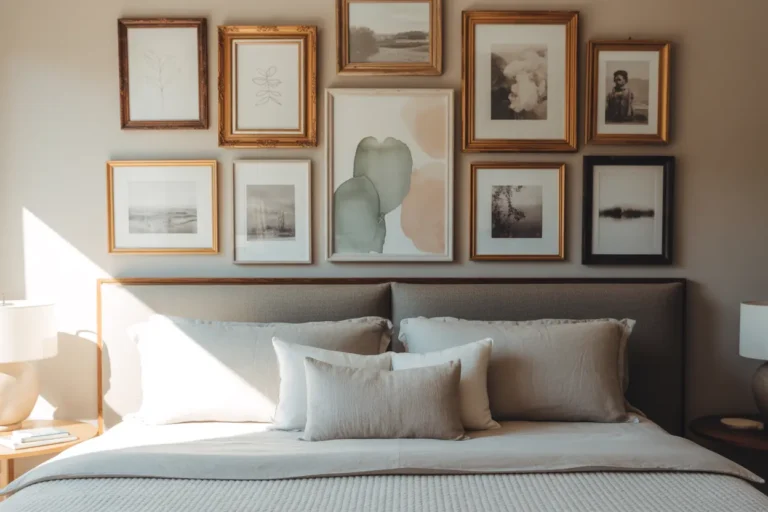
You do not need original paintings or expensive prints to make your walls look beautiful and considered. What you need is coordination — artwork that shares a common thread, whether that is a consistent color palette, a similar subject matter, a matching frame style, or a unified aesthetic sensibility.
Some of the most beautiful bedroom gallery walls I have seen have been assembled from free printable art (websites like Unsplash, Canva, and even the Metropolitan Museum of Art offer free high-resolution images), simple IKEA frames, and a consistent arrangement. The frames cost more than the art — and even simple frames in a consistent finish look genuinely polished.
Arrangement Rules That Always Work
- Above each bed: Hang one larger piece or a pair of smaller pieces centered above the headboard. The bottom edge of the frame should sit 6–8 inches above the headboard.
- Gallery wall: Works beautifully if you stick to one frame finish and keep a consistent 2-inch gap between all pieces.
- Salon style: A more eclectic, floor-to-ceiling arrangement. Looks intentional if the frames are all the same finish even when the art varies.
Canopy or Draped Fabric: Creating Private, Dreamy Sleeping Spaces
Why Canopies Work in Twin Bedrooms
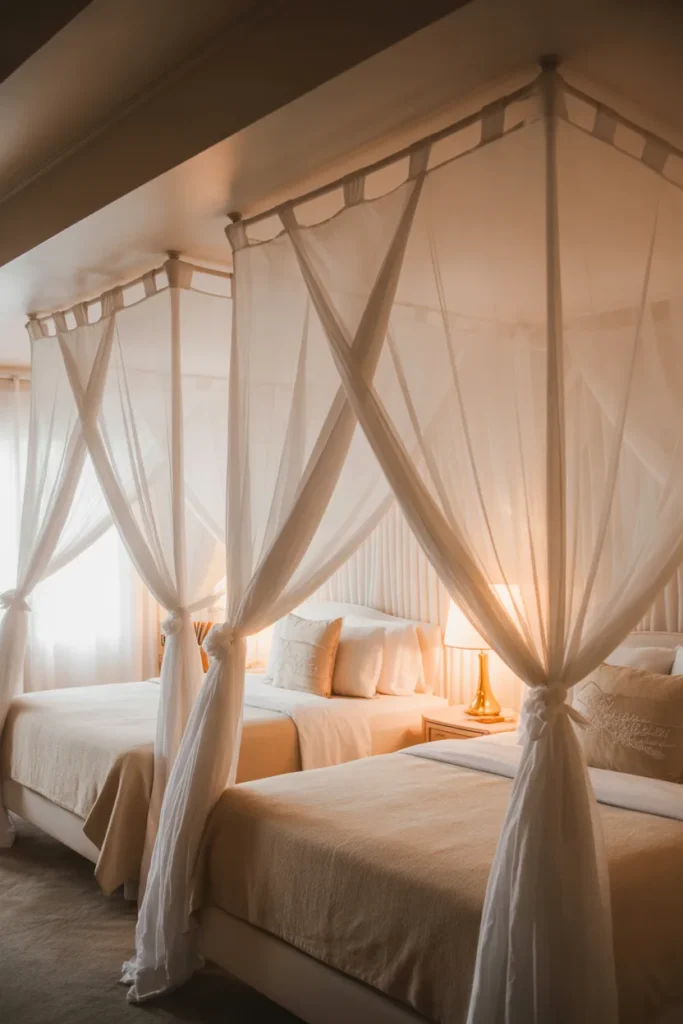
A canopy creates something that is genuinely difficult to achieve through any other design element: a sense of enclosure that makes the bed feel like a private sanctuary within the larger room. This is particularly valuable in shared twin bedrooms — both for children who want their own defined space and for adults who simply want that cocooning, hotel-suite feeling.
From a design perspective, a canopy also solves one of the most common problems in twin bedrooms — the ceiling. Most bedrooms have plain, white, unadorned ceilings that contribute nothing to the design. A canopy draws the eye upward, adds height and drama, and makes the vertical space of the room feel intentionally designed rather than ignored.
Simple Canopy Methods at Every Budget
- Ceiling-mounted curtain rod ($20–$60): The most flexible option. Mount a curved or straight rod from the ceiling above each bed and hang sheer panels from it.
- Canopy bed frame attachment ($30–$80): Many standard bed frames accept canopy attachments that clip to the four corners.
- Tension wire system ($15–$40): Run a simple wire from wall to wall above each bed and drape fabric over it for a minimal, modern canopy effect.
- Mosquito net canopy ($15–$35): The most affordable option and one of the most beautiful when done well. Particularly perfect for a romantic or bohemian aesthetic.
Accent Colors: Adding Personality Without Sacrificing Sophistication
The Rule of Three for Accent Colors
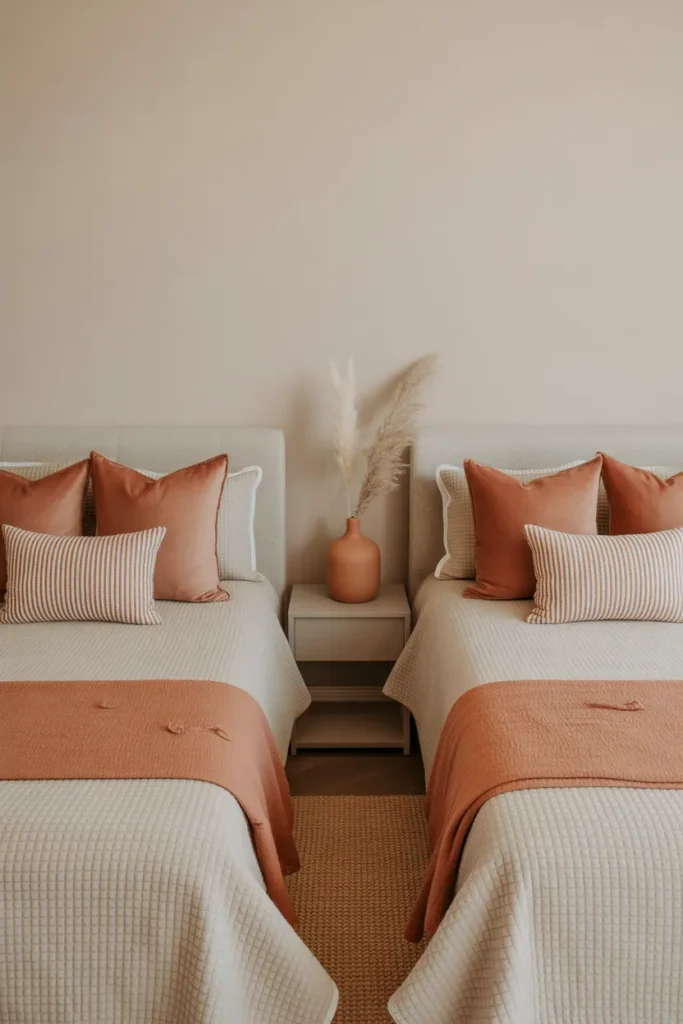
Professional designers generally work with a simple color formula: 60% dominant color, 30% secondary color, 10% accent color. In a twin bedroom with a neutral base, the accent color is your opportunity to inject personality, energy, and life into the space without disrupting the overall calm and sophistication of the palette.
The critical rule is restraint. One or two accent colors, used consistently and deliberately throughout the room, always looks more intentional and expensive than three or four colors scattered randomly. Choose your accent color and then find it everywhere — in a pillow, in a small vase, in an artwork detail, in the color of a lamp base.
Current Accent Colors That Read as Sophisticated Rather Than Cheap
- Terracotta and warm rust: Earthy, grounded, very current
- Dusty sage green: Quiet, fresh, works with almost every neutral
- Warm caramel and amber: Rich and inviting, particularly beautiful in rooms with natural wood
- Deep navy as an accent (in a predominantly neutral room): Classic, strong, timeless
- Dusty rose or blush: Soft and romantic without being juvenile
Bench at the Foot of the Bed: The Hotel Detail That Completes Every Bedroom
Why This One Piece Changes the Whole Room
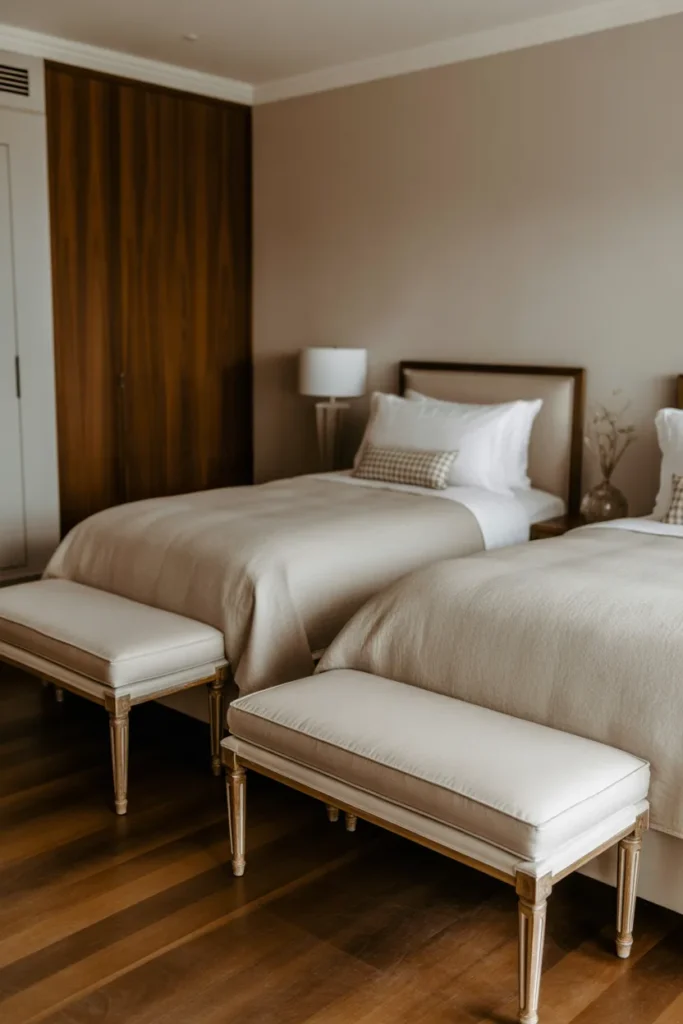
Interior designers often describe the foot-of-bed bench as the punctuation mark of a bedroom — the final detail that tells you a sentence is complete. Without it, a beautifully made bed looks somehow unfinished, like a sentence that trails off. With it, the entire composition snaps into focus and feels resolved, deliberate, and luxurious.
Beyond the aesthetic impact, a bench is also one of the most practically useful pieces of furniture you can add to a bedroom. It serves as a landing spot for bags when you arrive home, a surface for laying out the next day’s clothes, a place to sit while getting dressed, and an additional storage surface when needed.
Choosing the Right Bench Style
- Upholstered benches ($80–$300): The softest, most luxurious option. Choose a fabric that coordinates with your headboard or bedding for a cohesive, designed look.
- Wooden benches ($60–$200): Clean, natural, versatile. Works particularly well in Scandinavian or organic modern rooms.
- Storage ottoman benches ($80–$250): Combines the aesthetic of a bench with practical hidden storage. Particularly useful in smaller rooms.
- Cane or rattan benches ($70–$180): Light, textural, beautiful in coastal or bohemian spaces.
Natural Wood Elements: Bringing Organic Warmth to Any Bedroom Style
Why Wood Makes Rooms Feel Grounded and Expensive
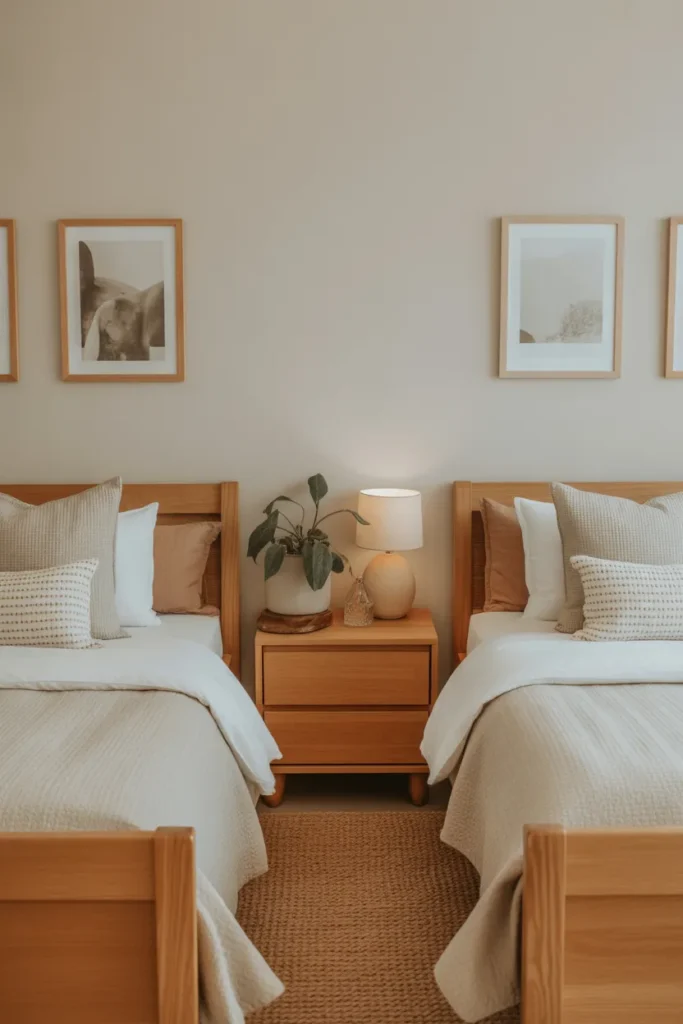
Wood is one of the oldest and most universally appealing materials in human environments, and there is genuine psychological research behind why it makes us feel calm, safe, and comfortable. Studies in environmental psychology have shown that exposure to natural materials — including wood — reduces stress hormones and promotes feelings of wellbeing. This is why spas, high-end hotels, and luxury homes consistently incorporate natural wood into their design.
From a purely visual perspective, wood adds warmth, texture, and organic variation that manufactured materials simply cannot replicate. Every piece of natural wood is slightly different — different grain patterns, different tonal variations — which gives it a richness and depth that feels genuinely premium.
How to Incorporate Wood at Every Budget Level
- Small accents ($10–$50): Wooden picture frames, a small carved decorative object, a simple wooden tray on the nightstand
- Mid-level investment ($50–$200): A beautiful natural wood nightstand, a wooden mirror frame, floating wooden shelves
- Larger investment ($200+): Wooden bed frames, a wood-paneled accent wall, custom built-in wooden shelving
The goal is to have at least two or three wooden elements in the room to create a consistent natural thread throughout the space.
Floor-to-Ceiling Curtains: The Oldest Trick for Making Small Rooms Feel Grand
The Science of Why This Works
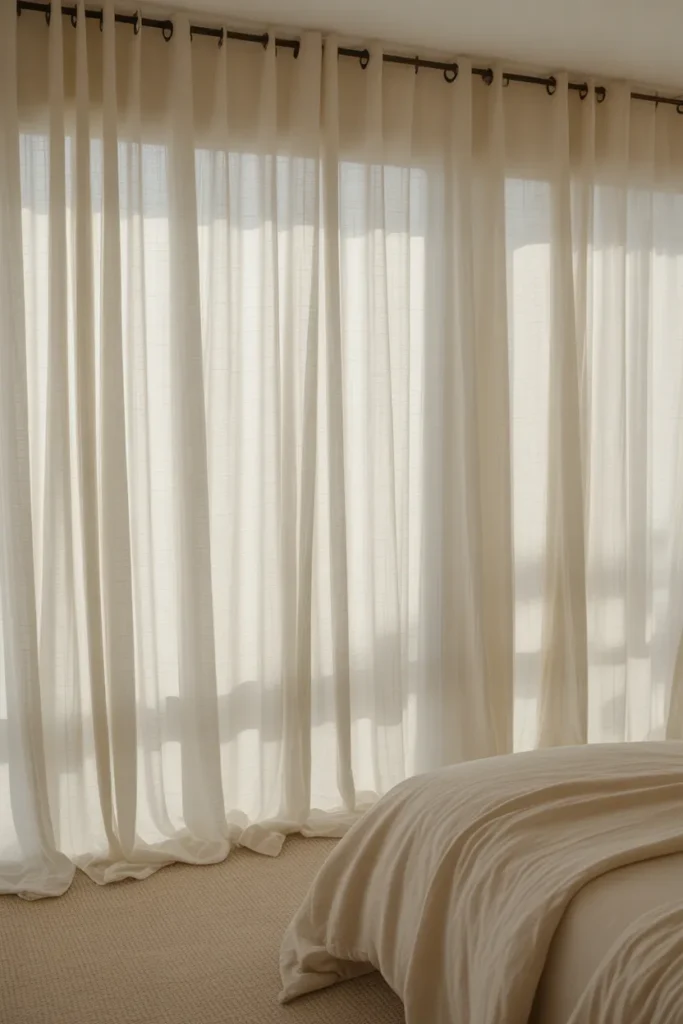
Floor-to-ceiling curtains create a powerful optical illusion based on a well-understood principle of human visual perception: our eyes use vertical lines to estimate the height of a space. When curtains hang from ceiling to floor in an unbroken vertical line, the brain reads the full height of the room as the height of the window — making the entire wall feel taller, grander, and more significant than it actually is.
This is why the placement of your curtain rod matters enormously. The standard advice is to mount the rod 4–6 inches above the window frame. Better advice is to mount it as close to the ceiling as possible — even directly on the ceiling for maximum impact. The difference between these two approaches is significant.
Getting the Details Right
- Rod placement: Mount as high as possible, ideally within 2–4 inches of the ceiling
- Curtain width: Each panel should be 1.5–2x the width of the space it covers when open — this fullness is what makes curtains look luxurious rather than skimpy
- Fabric choice: Linen for light and airy, velvet for rich and dramatic, sheer voile for soft and romantic
- Length: Curtains should either end exactly at the floor (clean and modern) or pool slightly on the floor by 1–2 inches (romantic and luxurious)
Common mistake to avoid: Curtains that hang only to the windowsill or slightly below. These always look like an afterthought and actively make the room look smaller and cheaper.
Scandinavian Minimalism: The Style That Makes Small Rooms Look Enormous
The Core Principles of Scandinavian Design Applied to Twin Bedrooms
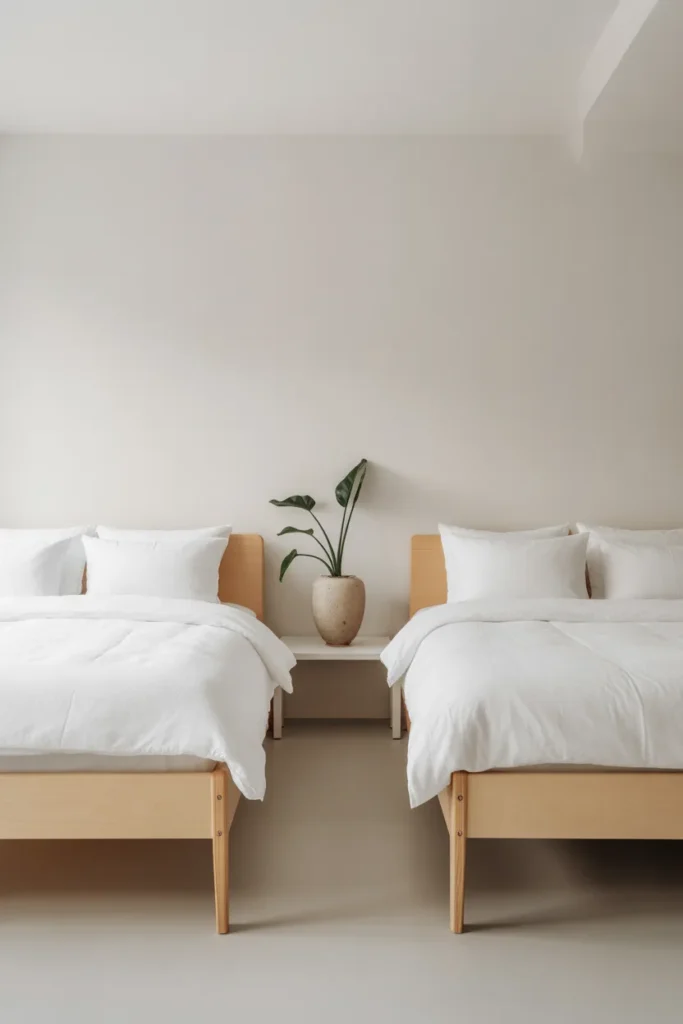
Scandinavian design is not simply about using white paint and removing clutter — though both of those things are part of it. At its core, Scandinavian design is about the radical prioritization of quality over quantity, and function over decoration. Every object in a truly Scandinavian room earns its place by being either genuinely useful or genuinely beautiful — ideally both.
In a twin bedroom, this philosophy translates to a few specific principles:
- Ruthless editing: Remove everything that does not serve a clear purpose or bring genuine visual pleasure
- Natural materials: Wood, linen, cotton, wool — natural textures in natural colors
- Functional beauty: Every object should work well and look good doing it
- Considered emptiness: Empty space is not a design failure — it is a deliberate choice that gives the eye somewhere to rest
Key Pieces for a Scandinavian Twin Bedroom
Light oak or birch bed frames, crisp white or oatmeal linen bedding, a single healthy green plant, simple ceramic lamp bases, and walls that are either pure white or a very soft warm grey. The result is a room that feels calm, intentional, and genuinely sophisticated — and that looks significantly larger than its actual dimensions.
Reading Corner: Dividing the Room Into Zones Creates a Luxury Feel
Why Zones Make Bedrooms Feel More Expensive
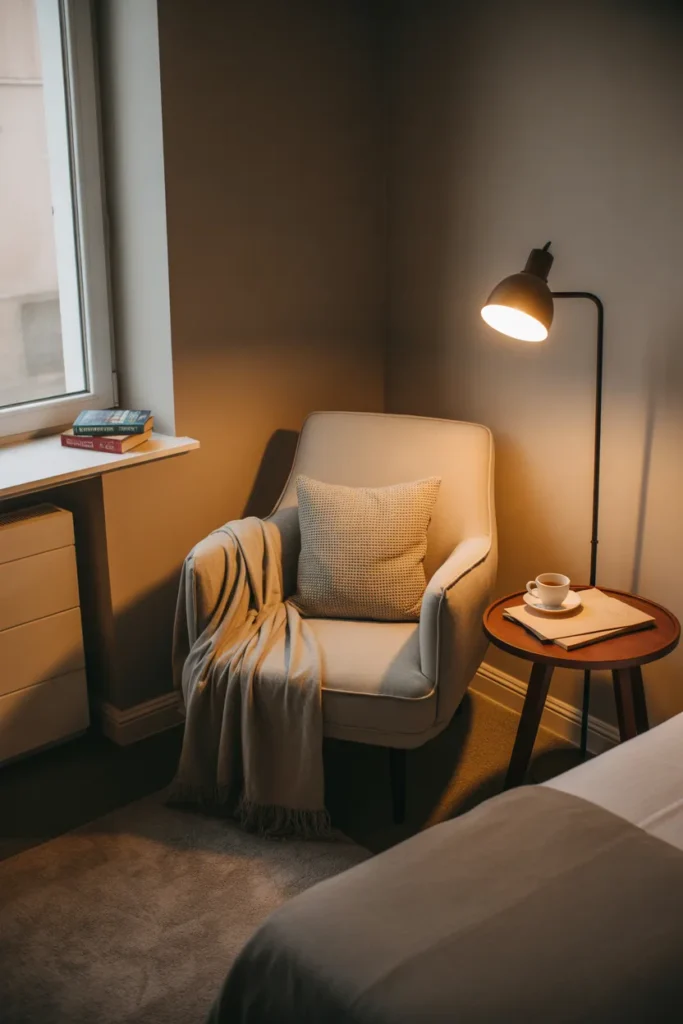
One of the key differences between a basic bedroom and a truly luxurious one is the sense that the room serves multiple purposes gracefully. A room that is only a place to sleep feels functional but not special. A room that has a sleeping area and a relaxing area — even if both areas are small — feels considered, layered, and genuinely high-end.
This is the principle behind creating a reading corner in a twin bedroom. It does not require a lot of space. A beautiful chair, a small table, and a warm lamp in a corner can transform the entire feeling of the room by making it feel like a suite rather than just a bedroom.
Creating a Reading Corner in a Small Space
- Chair options: A small armchair, a papasan chair for a more casual feel, or even a large floor cushion for a minimal bohemian approach
- Lighting: A floor lamp positioned over the shoulder, or a wall-mounted reading light above the chair
- Surface: A small round side table or even a simple wooden stool works perfectly
- Textiles: A soft throw blanket draped over the arm of the chair completes the look and makes the corner look genuinely inviting
Shared Headboard Wall Design: The Luxury Hotel Secret Most People Do Not Know
What Makes This Technique So Effective
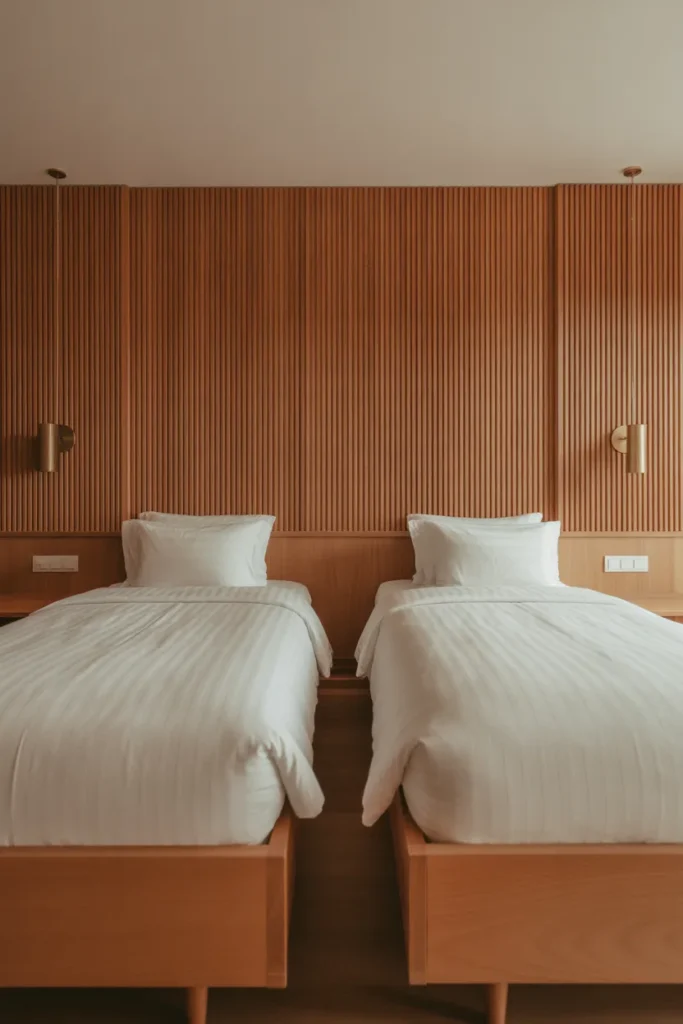
In most luxury hotels, twin beds are not treated as two separate pieces of furniture — they are designed as a unified composition. One of the most powerful tools for achieving this is the shared headboard wall: a single continuous design treatment that runs behind both beds and frames them as one intentional arrangement rather than two separate pieces placed side by side.
This approach does something remarkable to the room — it makes the entire wall behind the beds feel custom-built, as though the room was designed specifically for this configuration. It eliminates the awkward gap between two headboards that is one of the most visually unsatisfying aspects of typical twin bedroom layouts.
Ways to Create a Shared Headboard Wall
- Continuous wood panel: A single piece of stained or painted wood that spans the full width behind both beds. Can be mounted directly to the wall. ($100–$400 depending on size and material)
- Large padded upholstered panel: A wide fabric-covered board, either DIY or custom-made, mounted behind both beds. ($150–$600)
- Continuous wallpaper treatment: Running a bold wallpaper pattern behind both beds and framing it with simple molding creates a stunning shared backdrop. ($80–$300)
- Floating shelf system: A long floating shelf at headboard height, running the full width of both beds, serves as both a shared headboard visual and practical storage. ($60–$200)
Mixed Textures: The Technique That Separates Flat Rooms from Rich Ones
Understanding Texture as a Design Element
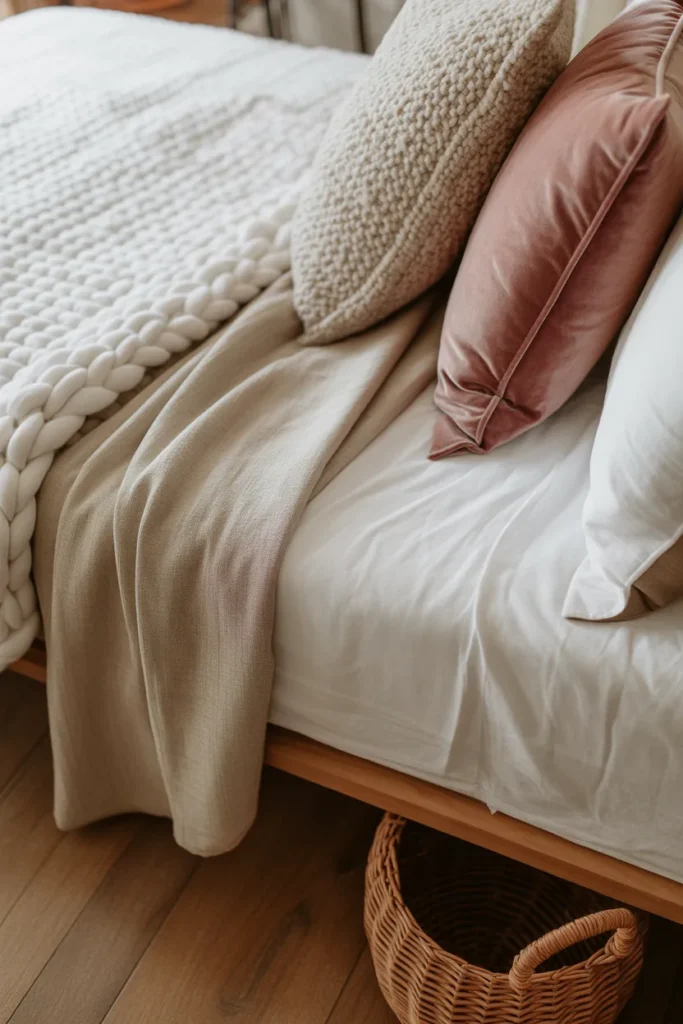
Texture is one of the most powerful and least discussed elements in interior design. Color gets most of the attention — and rightly so, because it has a strong emotional impact. But texture is what creates the sense of richness, depth, and sensory pleasure that makes a room feel genuinely luxurious rather than just visually pleasing.
Think about the difference between a room where everything is smooth and uniform — smooth walls, smooth cotton bedding, smooth wooden furniture — versus a room that mixes smooth cotton sheets with a chunky knitted throw, a velvet pillow, a rough-weave rug, and a smooth ceramic lamp on a raw wood nightstand. The second room has the same color palette but it feels dramatically richer and more interesting.
A Practical Texture Mixing Guide for Twin Bedrooms
On the beds:
- Crisp cotton base + waffle-weave duvet + chunky knit throw + mix of smooth and textured pillows
On the floor:
- Hard wood or tile floor + plush area rug (the contrast itself is part of the appeal)
On the walls:
- Smooth painted walls + one textured treatment (wood slats, limewash, grasscloth wallpaper)
In the accessories:
- Smooth ceramic vase + woven basket + metal lamp base + wooden frame
The rule is simple: aim for at least four different textures in any given room. Below four feels flat; above six or seven starts to feel chaotic.
Elevated Bunk Beds: The Smart Solution for Small Twin Rooms
Why Modern Elevated Beds Look So Different from Traditional Bunk Beds
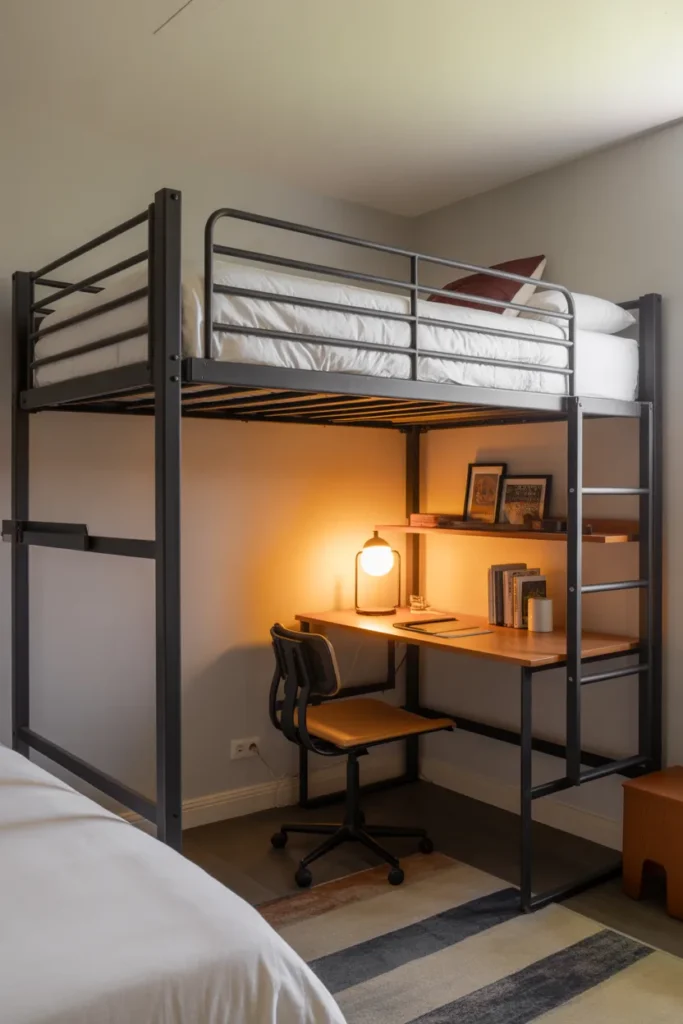
Traditional bunk beds have a reputation for looking childish and institutional — and for good reason. They are typically made of basic pine, have a utilitarian design, and prioritize function entirely over aesthetics. Modern elevated or loft-style beds are a completely different product.
Contemporary elevated beds treat the vertical stacking as a design opportunity rather than just a space-saving necessity. They use premium materials like solid hardwood or architectural steel, feature clean geometric lines, and integrate thoughtfully with the rest of the room’s design. When done well, an elevated bed system looks like a custom-built architectural installation rather than a piece of children’s furniture.
Making the Space Below the Elevated Bed Work Hard
The space created beneath an elevated bed is one of the most exciting design opportunities in a small twin bedroom:
- Study desk and chair: Creates a dedicated homework or work zone
- Small sofa or loveseat: Makes the area into a miniature living room or lounge
- Built-in wardrobe: Maximizes storage in a way that would be impossible with standard furniture
- Reading nook: Add a comfortable cushion, some pillows, and a string of warm lights for a magical enclosed retreat
Statement Lighting Fixture: When One Piece Changes the Entire Room
Why the Right Ceiling Light Is Worth Investing In
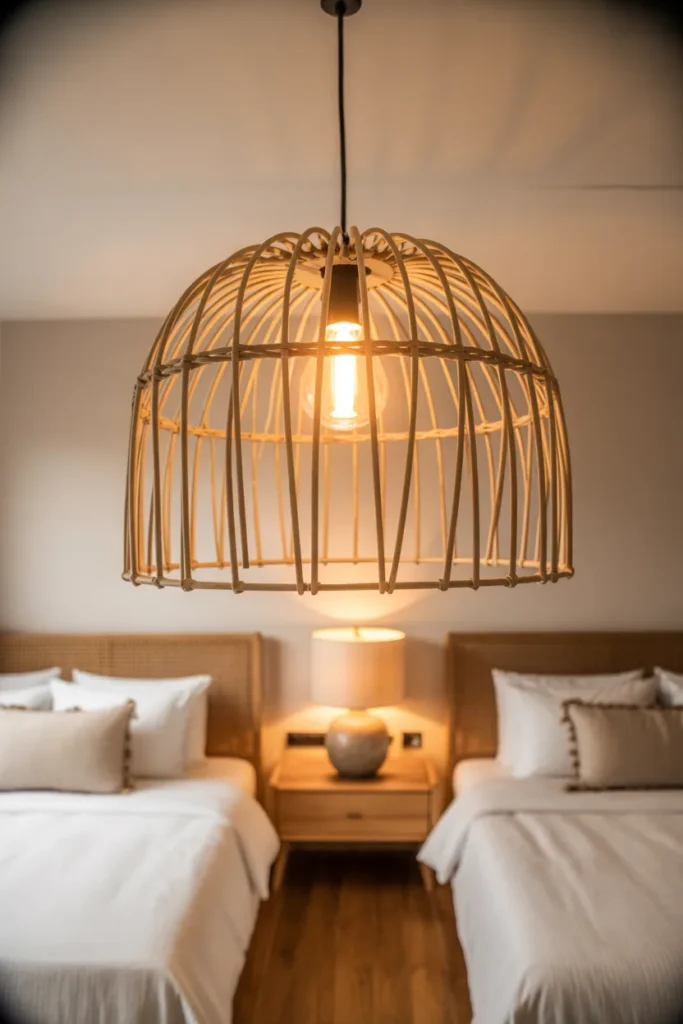
Most bedrooms have a ceiling light that was chosen by a builder or landlord — a basic flush-mount fixture that is perfectly functional and completely forgettable. Replacing this with a statement fixture is one of the highest-impact changes you can make to a room because the ceiling light is visible from every position in the space and sets the design tone for everything beneath it.
A statement light fixture signals immediately that the room was designed with intention and care. It tells the eye that this is not a default space — it is a considered one. And because ceilings are vertical surfaces that are mostly ignored in decorating, a beautiful fixture there feels genuinely surprising and impressive.
Statement Fixture Styles for Twin Bedrooms
- Rattan or woven pendant: Warm, organic, beautiful in coastal and bohemian spaces. ($60–$300)
- Geometric metal chandelier: Clean, modern, works in contemporary and industrial spaces. ($80–$400)
- Paper lantern pendant: Soft, Japanese-inspired, creates beautiful diffused light. ($30–$120)
- Cluster of globe pendants: Playful, contemporary, particularly beautiful in rooms with high ceilings. ($100–$500)
- Vintage-style filament bulb chandelier: Warm, characterful, works in almost any style of room. ($60–$250)
Built-In Nightstands: The Custom Detail That Makes Rooms Look Architect-Designed
Why Built-Ins Look More Expensive Than Freestanding Furniture
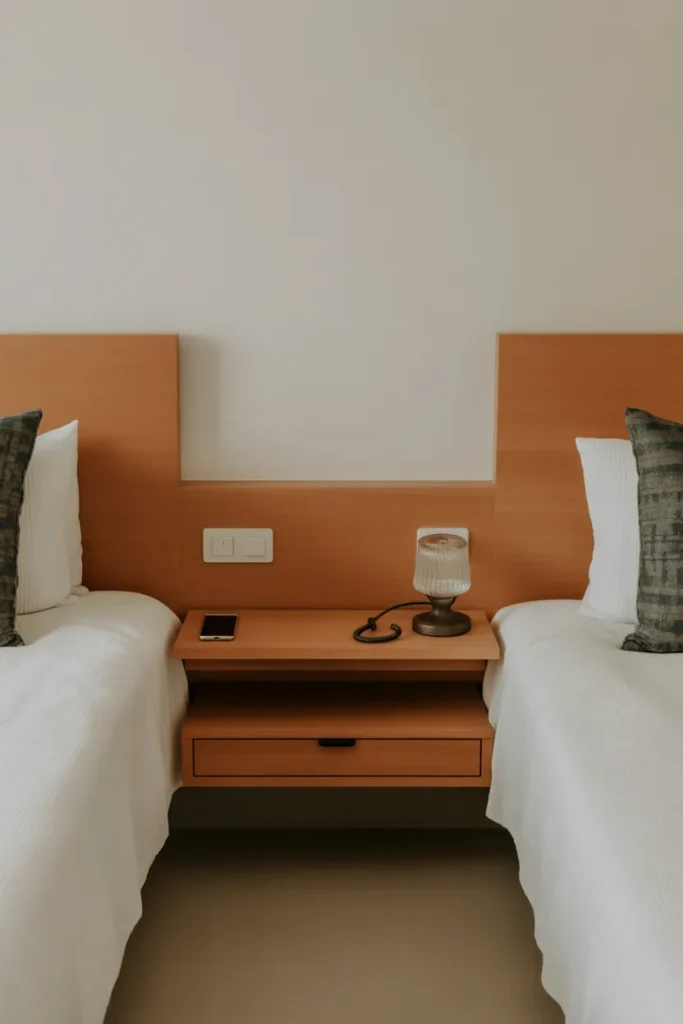
There is a fundamental visual difference between furniture that sits in a room and architecture that is part of a room. Freestanding furniture — even beautiful, expensive pieces — always look like they could be moved or replaced. Built-in elements look permanent, intentional, and custom-designed for the specific space. This is why rooms with built-ins consistently photograph better and feel more luxurious than rooms without them, even when the overall budget is similar.
Built-in nightstands take this principle and apply it to one of the most important functional elements of any bedroom. Instead of two separate tables sitting on the floor next to the beds, you have floating shelves or wall-mounted cabinets that appear to emerge from the wall itself — part of the architecture rather than an addition to it.
DIY Built-In Nightstand Options
You do not need to hire a carpenter to achieve this effect. Some highly effective approaches:
- Floating shelves positioned at nightstand height: Mount a deep floating shelf (at least 10 inches deep) at mattress height on the wall beside each bed. Add a drawer unit underneath if storage is needed. ($30–$80 per side)
- Wall-mounted bedside cabinets: IKEA and similar stores sell wall-mounted cabinet boxes that can be installed at exactly the right height. ($60–$150 per side)
- Custom MDF built-ins: A basic carpentry skill and a few sheets of MDF can create genuinely impressive custom built-ins for under $200 total.
Subtle Patterned Pillows: The Final Layer That Makes Beds Look Professionally Styled
Understanding How Pattern Scale Affects Perceived Quality
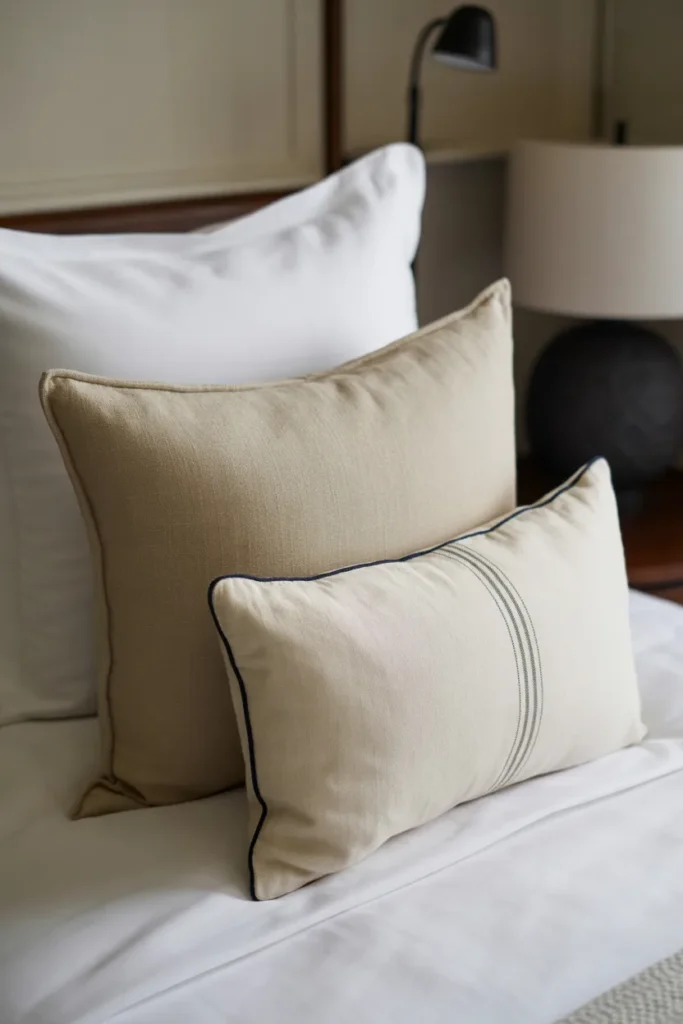
Not all patterns are created equal in interior design. Large, bold, high-contrast patterns tend to dominate a space and make rooms feel smaller and busier. Subtle, small-scale, low-contrast patterns do the opposite — they add visual interest and texture without demanding attention, which allows the eye to appreciate the overall composition of the room rather than fixating on a single element.
This is the principle behind choosing subtle patterned pillows for a twin bedroom. A thin stripe, a small geometric repeat, a muted botanical print, or a tone-on-tone texture pattern — these all add richness and depth to the bed without competing with the bedding or the overall room palette.
The Professional Pillow Arrangement for Twin Beds
For each twin bed, a simple professional arrangement:
- Two standard sleeping pillows in plain pillowcases (matching your sheet color)
- One Euro sham (26×26 inches) in a solid color that coordinates with the room palette
- One accent pillow in a subtle pattern
- One small lumbar pillow in a complementary solid or texture
This arrangement takes less than two minutes to assemble in the morning and makes the bed look like it was styled for a magazine shoot.
Personal Touches: The Element That Separates Beautiful Rooms from Memorable Ones
Why Genuine Personality Matters More Than Perfect Design
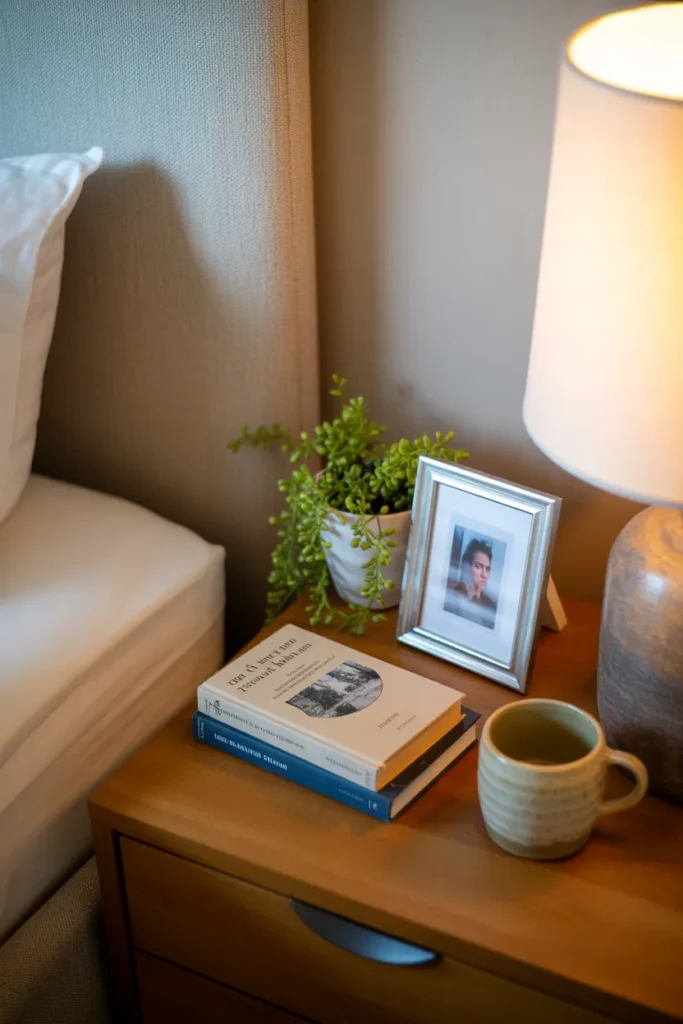
After 26 tips about symmetry, coordination, matching, and consistency, here is the most important principle of all: the best rooms are never perfect showrooms. They are spaces that feel genuinely alive — that tell you something about the people who inhabit them and make you feel welcomed and at ease rather than intimidated.
Personal touches are not in opposition to good design — they are the completion of it. A beautifully designed room without any personal element feels like a hotel room: impressive but ultimately impersonal. Add a framed photograph that matters to you, a small collection of objects gathered from places you have been, a plant that you actually tend to, or a book that you are genuinely reading — and the room transforms from a designed space into a home.
How to Add Personal Touches Without Disrupting Your Design
The key is curation rather than accumulation. Choose three to five personal items that genuinely mean something to you, display them thoughtfully in a way that respects the overall design of the room, and resist the urge to add more. Quality and intention always beat quantity in interior design — and this principle applies to personal items just as much as to furniture and textiles.
Frequently Asked Questions
How do you make twin beds look stylish together? Use matching bed frames, identical bedding on both beds, symmetrical lighting, and a shared color palette that runs consistently through both sides of the room. Symmetry is the single most powerful tool for making two separate beds look like one intentional composition.
Are twin beds suitable for adult guest rooms? Absolutely. Twin beds in a well-designed guest room can feel genuinely luxurious — particularly when each bed has its own reading light, quality bedding, and bedside storage. Many guests actually prefer the privacy of separate beds when sharing a room.
What colors make a twin bedroom look most expensive? Warm whites, soft creams, light greys, and muted earth tones consistently photograph and feel the most sophisticated. The key is choosing colors with some warmth in their undertone — pure cool whites and stark greys can feel clinical rather than luxurious.
How far apart should twin beds be placed? The minimum recommended spacing is 24 inches for comfortable movement. 30–36 inches is ideal — enough room to make the beds without feeling cramped and enough to walk comfortably between them. If space allows, 36 inches also accommodates a small shared nightstand between the beds beautifully.
Can twin beds work in a very small room? Yes, with the right approach. Wall-mounted lighting eliminates the need for nightstands. Storage bed frames eliminate the need for separate dressers. Floating shelves replace bulky bookshelves. Floor-to-ceiling curtains make the room feel larger. These combined strategies can make two twin beds work comfortably in a room as small as 10×10 feet.
What is the most impactful single change in a twin bedroom? Based on working with dozens of bedroom makeovers, the answer is consistently: lighting. Replacing a single harsh overhead bulb with warm 2700K bulbs and adding individual reading lights for each bed transforms the atmosphere of the room more dramatically than almost any other change — and it is often one of the least expensive.
Conclusion
Creating a genuinely expensive-looking twin bedroom is not about spending more money — it is about spending your money on the right things and understanding the design principles that make spaces feel luxurious rather than just functional. Symmetry, texture, layering, warm lighting, and intentional personal touches are the foundations of every beautiful bedroom regardless of budget.
Start with the elements that have the highest visual impact for the lowest investment: warm light bulbs, coordinated bedding, a cozy area rug, and floor-to-ceiling curtains. Build from there at whatever pace makes sense for your budget. The most important thing is to approach the process with intention — every choice should serve the overall vision of the room rather than being made in isolation.
With these 27 ideas as your guide, your twin bedroom will not only look like it belongs in a design magazine — it will feel like a space worth coming home to.