
15 Small Apartment Living Room Layout Ideas
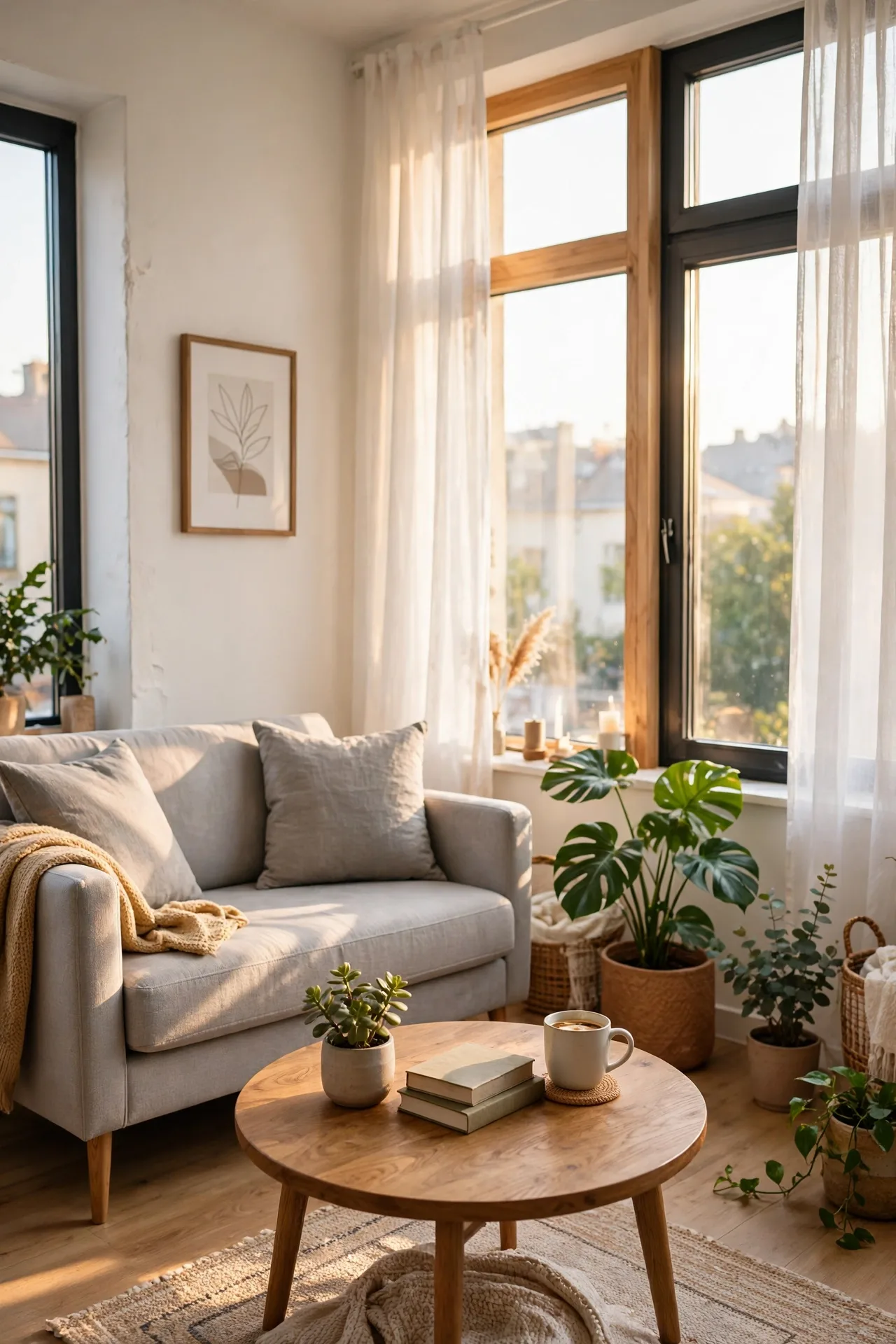
A small living room does not need more space. It needs a better plan. Most cramped apartment living rooms feel tight for the same reason: furniture pushed flat against every wall, a rug that is too small, and no clear place for the eye to land. When you fix the layout first, the same square footage suddenly feels open, calm, and easy to live in. These small apartment living room layout ideas are built around real apartment constraints — rental walls, one good window, a TV that has to go somewhere, and a walkway you cannot block — so every idea below works without knocking anything down.
Read This Before You Rearrange Anything
Start with measurements, not shopping. Measure the room, the doorways, and every piece you already own, then sketch the layout on paper before you move a single heavy item. Leave at least 30 inches for main walkways and about 18 inches between the sofa and the coffee table so the room stays comfortable to move through. A layout that looks good in a photo but blocks the path to the kitchen will annoy you every single day.
Pick one focal point and let everything else support it. In most apartments that means the largest window, the TV wall, or a fireplace if you are lucky enough to have one. The strongest small apartment living room layout ideas all share this discipline: seating faces the focal point, the rug sits under the seating, and nothing competes for attention from the corners. If two things fight to be the star, the room feels busy no matter how little furniture is in it.
Choose scale over quantity. One well-sized sofa beats a sofa plus a loveseat plus two chairs crammed into the same footprint, and a single large rug beats three small ones scattered around. Apartment Therapy’s tour of real small-space layouts shows the same pattern again and again: fewer, better-proportioned pieces make a room read larger than a crowd of small ones. If a piece does not earn its floor space, it goes.
Finally, plan for how you actually live, not how a showroom looks. If you eat dinner on the sofa, you need a real table surface within reach. A layout that serves your evenings, your guests, and your mornings will always feel bigger than one designed only to photograph well. For more small-space inspiration, see these small living room layouts from Apartment Therapy.
1. Float the Sofa Off the Wall
Pulling the sofa even six inches off the wall changes the whole room. The gap lets light and air move behind the seating, and the shadow line makes the wall feel farther away than it is. In a studio, a floated sofa does double duty as a soft divider between the living area and the sleeping or dining zone, giving you a “room” without building a wall. Add a narrow console or a row of plants behind it and the back of the sofa becomes a styled surface instead of a dead zone.
2. Anchor Everything With One Big Rug
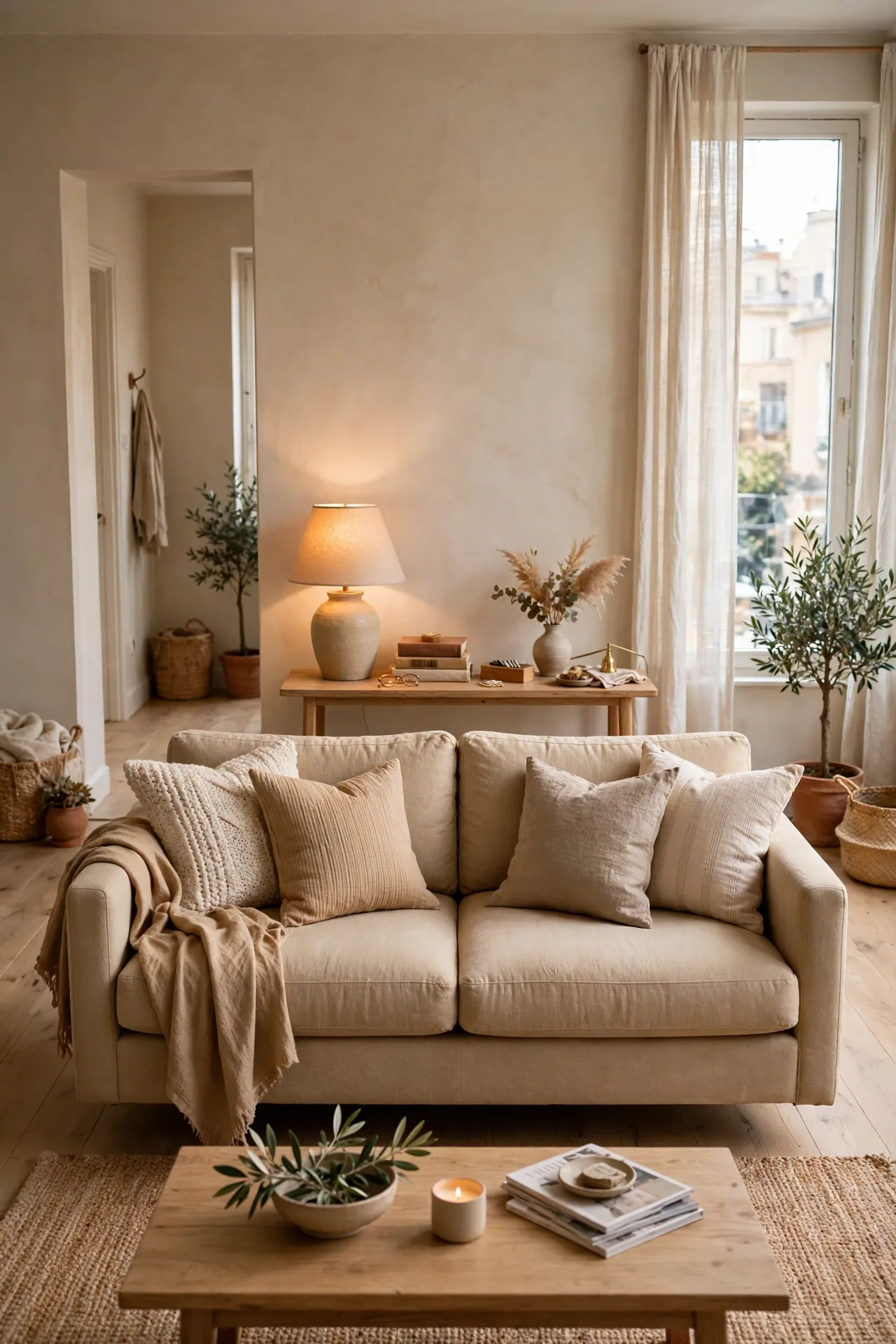
A rug that is too small is the fastest way to make a living room feel chopped up. Size up until at least the front legs of the sofa and chairs sit on the rug, and let it stretch nearly wall to wall if the room is narrow. One generous rug pulls scattered furniture into a single conversation zone and makes the floor read as one continuous surface, which tricks the eye into seeing more space.
3. Let the Window Be the Focal Point
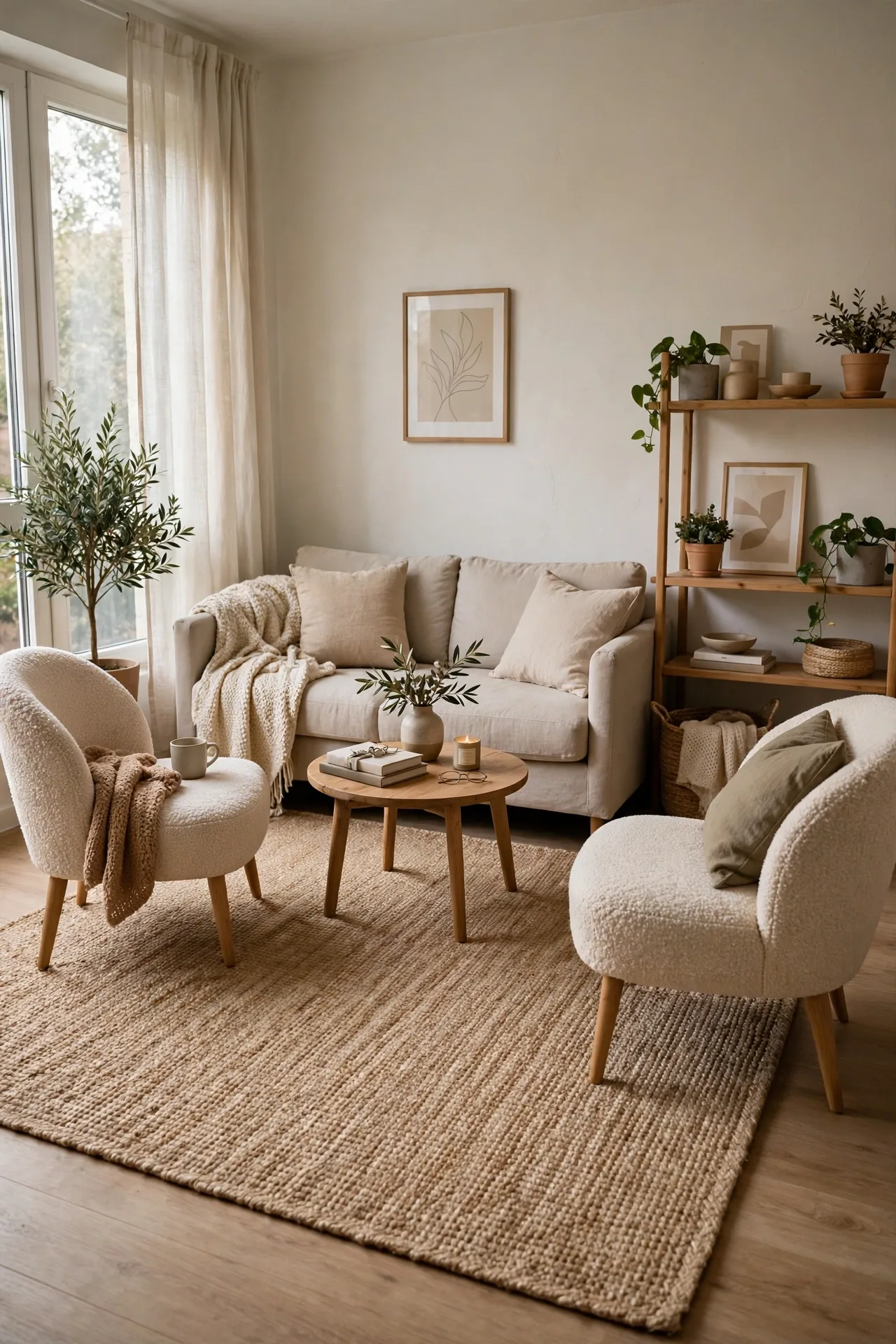
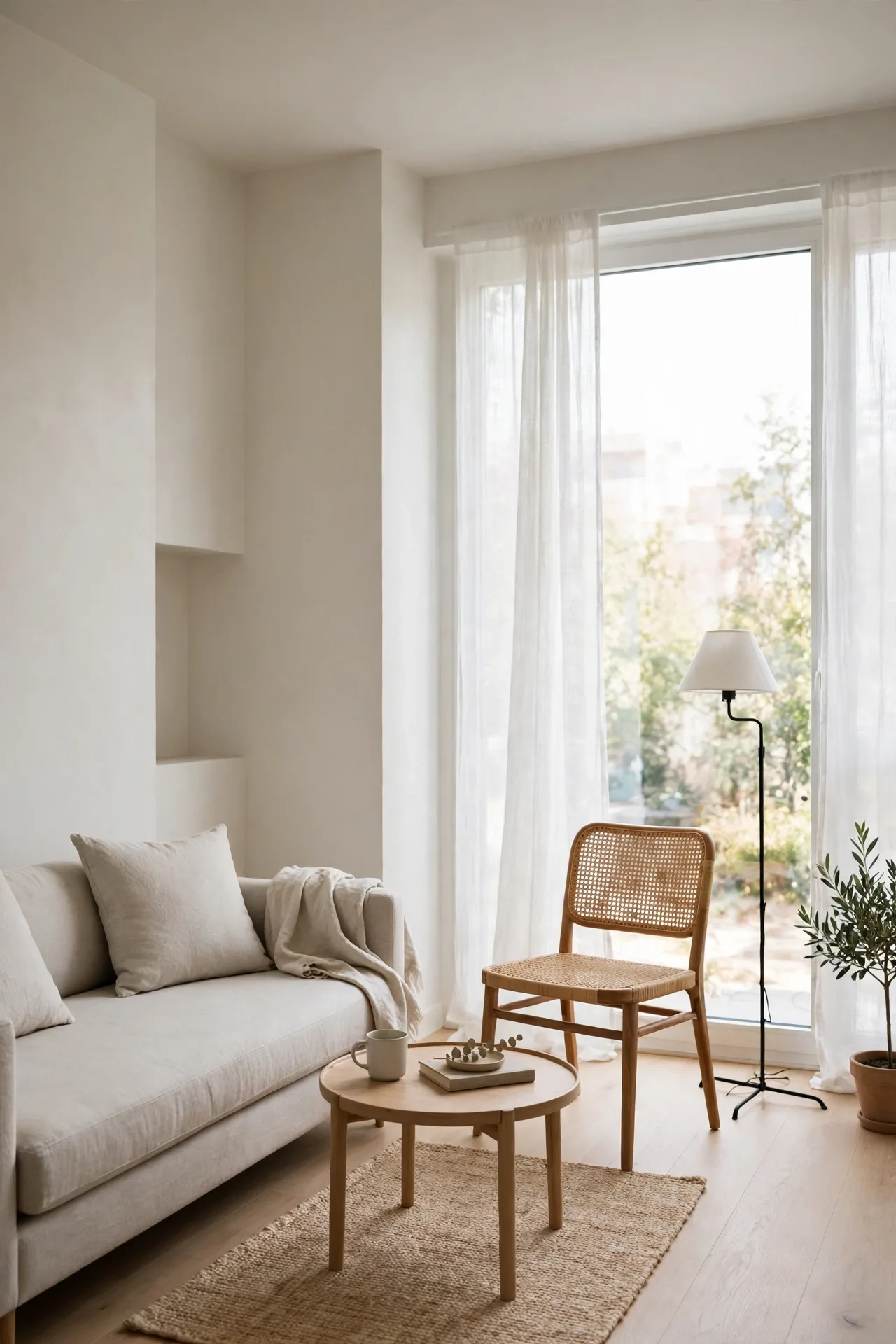
If your apartment has one great window, build the layout around it. Angle the seating so you face the daylight, hang curtains high and wide so the window looks taller, and keep the sill clear of bulky furniture. Natural light is the cheapest square footage you will ever add: a room arranged toward its window feels brighter and deeper than the same room arranged toward a blank wall.
4. Swap a Bulky Sofa for a Loveseat and Two Chairs
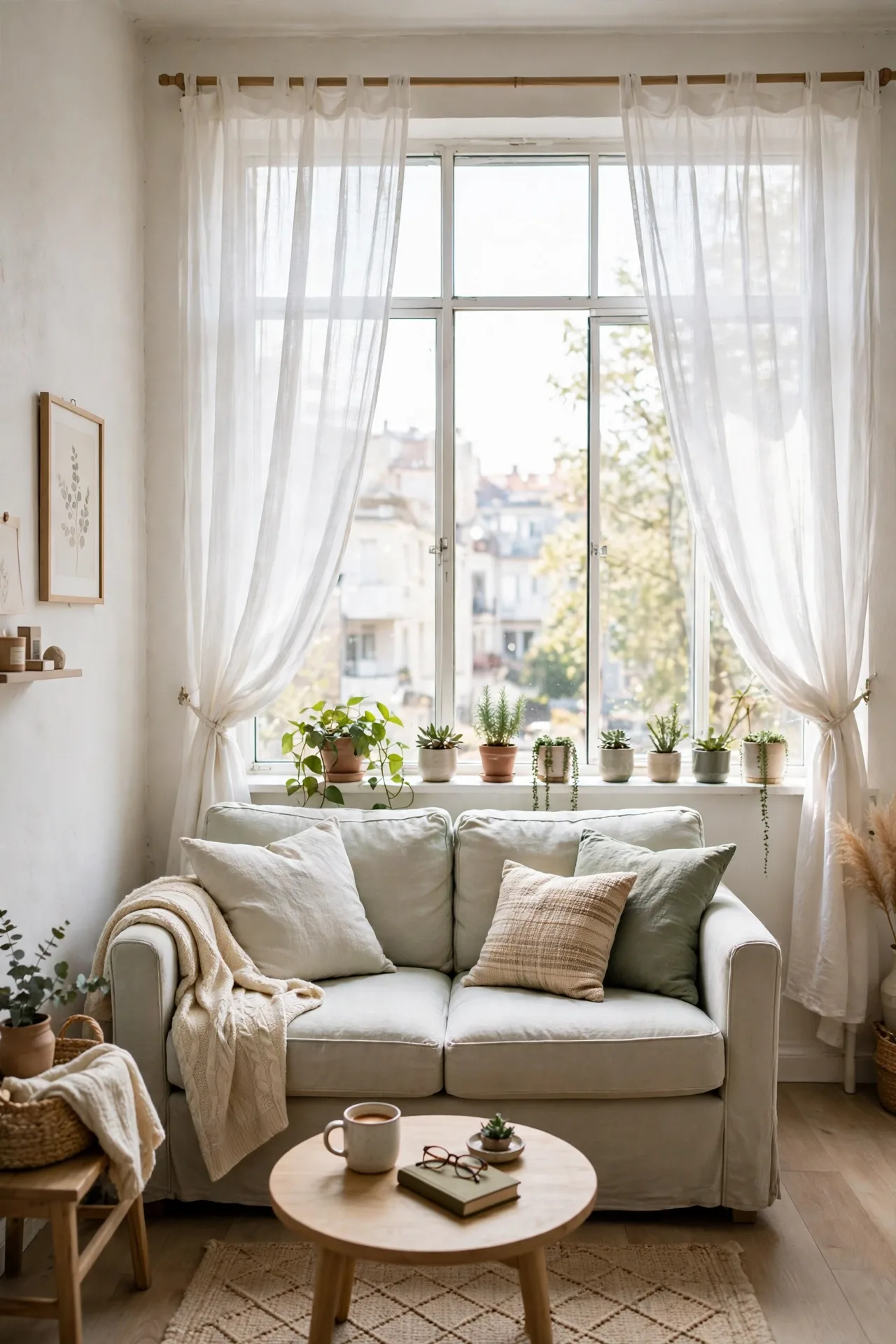
When a full sofa eats the room, a loveseat with two light chairs often seats the same number of people in less visual weight. Chairs can angle toward each other for conversation, pull up to a dining table when friends come over, and move out of the way when you need floor space. This is one of those small apartment living room layout ideas that renters love because nothing about it is permanent: rearrange the chairs for a party, then slide them back for a quiet evening. Choose chairs with open legs and slim arms so they add seats without adding bulk.
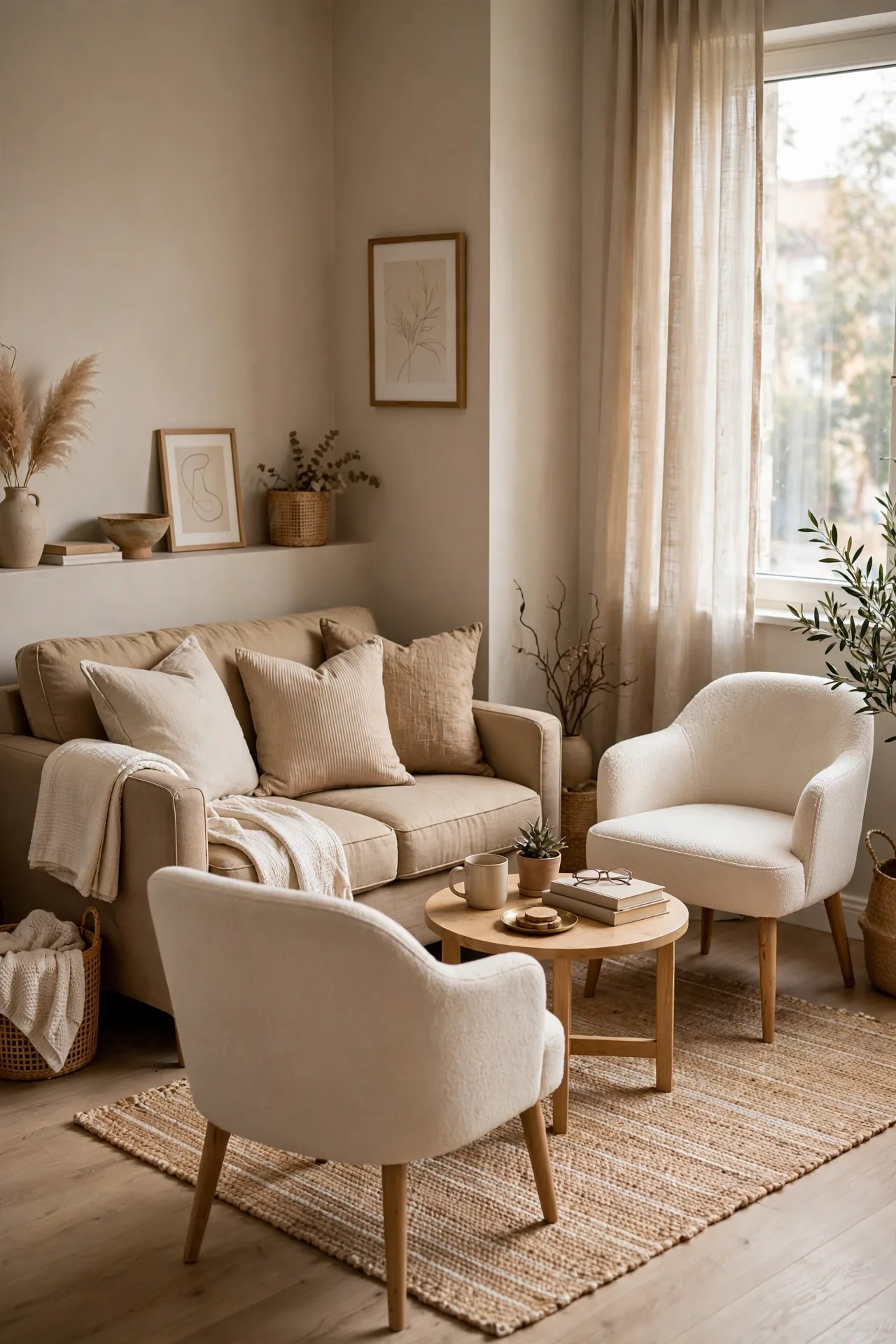
5. Use the Sofa Back as a Room Divider
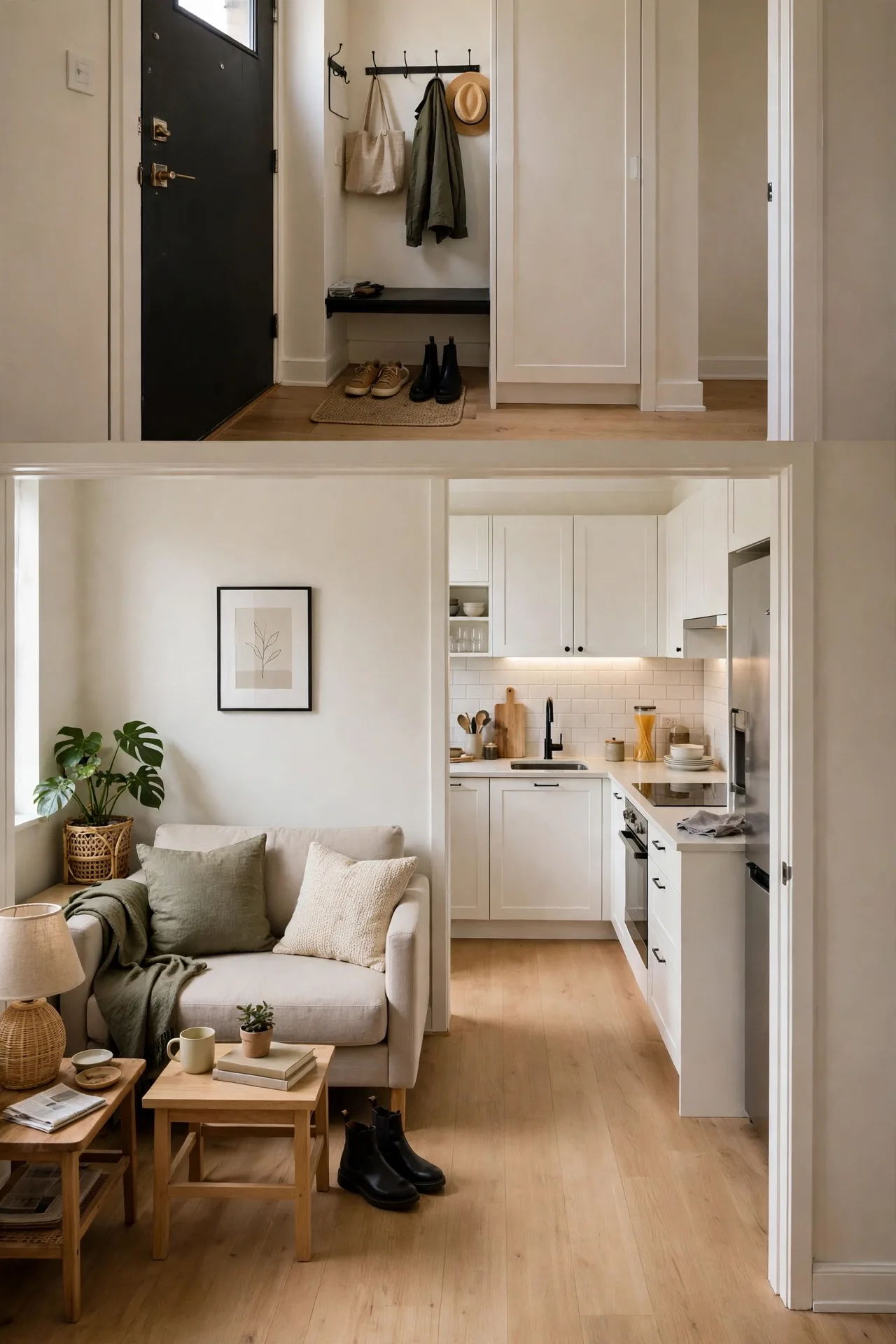
In an open-plan apartment, the back of the sofa is the most useful wall you already own. Turn it perpendicular to the kitchen or entry and it instantly draws the boundary of the living zone, hiding clutter on the other side and giving guests a clear sense of where to sit. A console table behind the sofa adds a landing spot for keys, books, and a lamp, and it stops the arrangement from looking like furniture that simply ran out of wall. Keep the divider low and open — a sofa back, not a bookcase — so light still travels through the apartment.
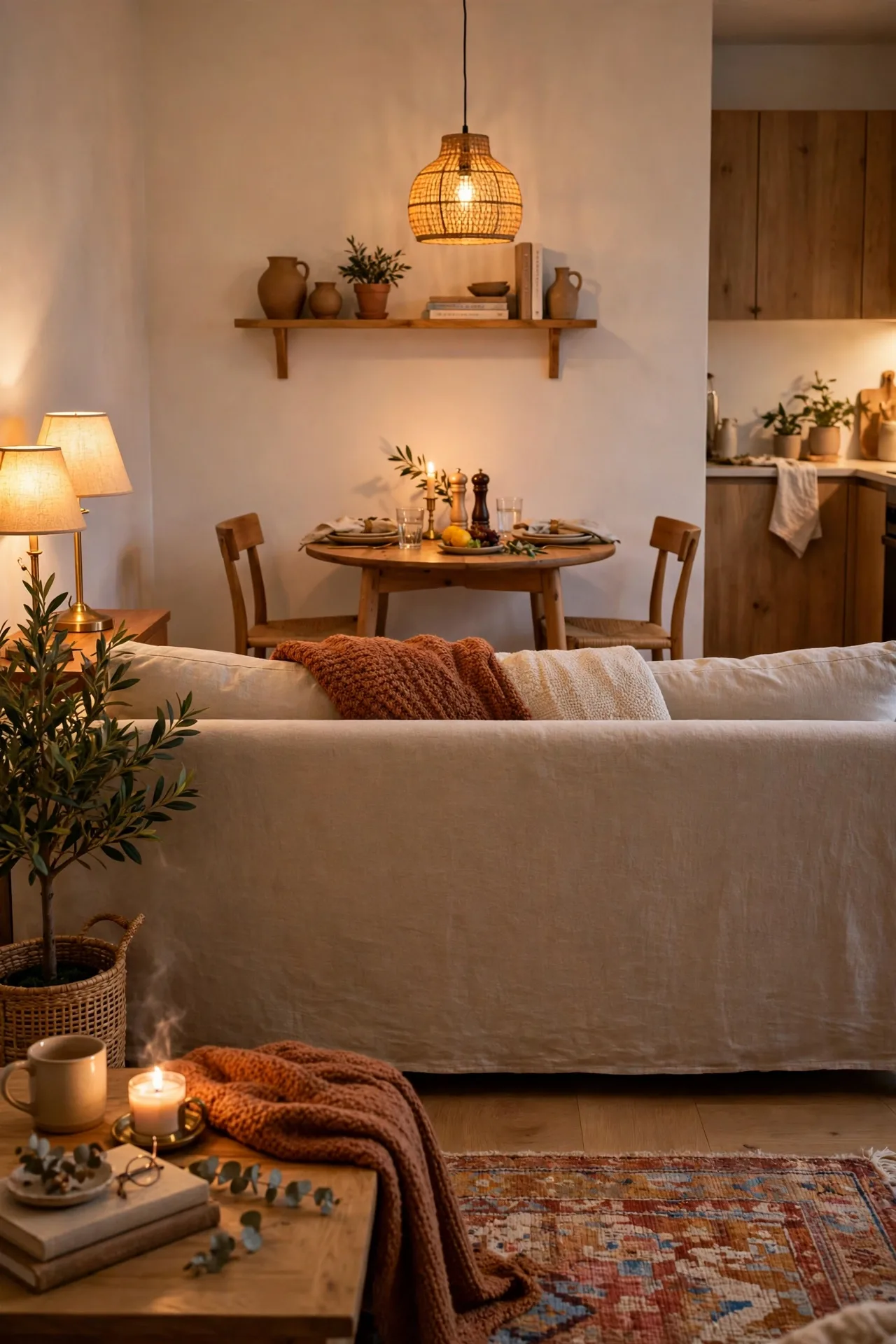
6. Go Low and Leggy
Furniture that sits low and shows its legs leaves more wall visible, and visible wall reads as breathing room. A low-profile sofa, a leggy coffee table, and open shelving instead of a tall closed cabinet keep sightlines clear across the room. This matters most in apartments with lower ceilings, where a tall bookcase or a high-backed sofa can make the room feel like it is closing in.
7. Wall-Mount the TV and Free the Floor
A TV stand is often the biggest, least flexible object in a small living room. Mounting the TV on the wall frees that whole footprint for a slim console, a bench, or simply empty floor, and it lets you set the screen at true eye level from the sofa. Hide the cables in a paintable channel so the wall stays clean, and flank the screen with one piece of art or a floating shelf rather than a full media wall. If your lease forbids drilling, a tall leaning stand or a no-drill mount gives you most of the same floor space back. For more screen-wall inspiration, browse these TV stand ideas for the living room.
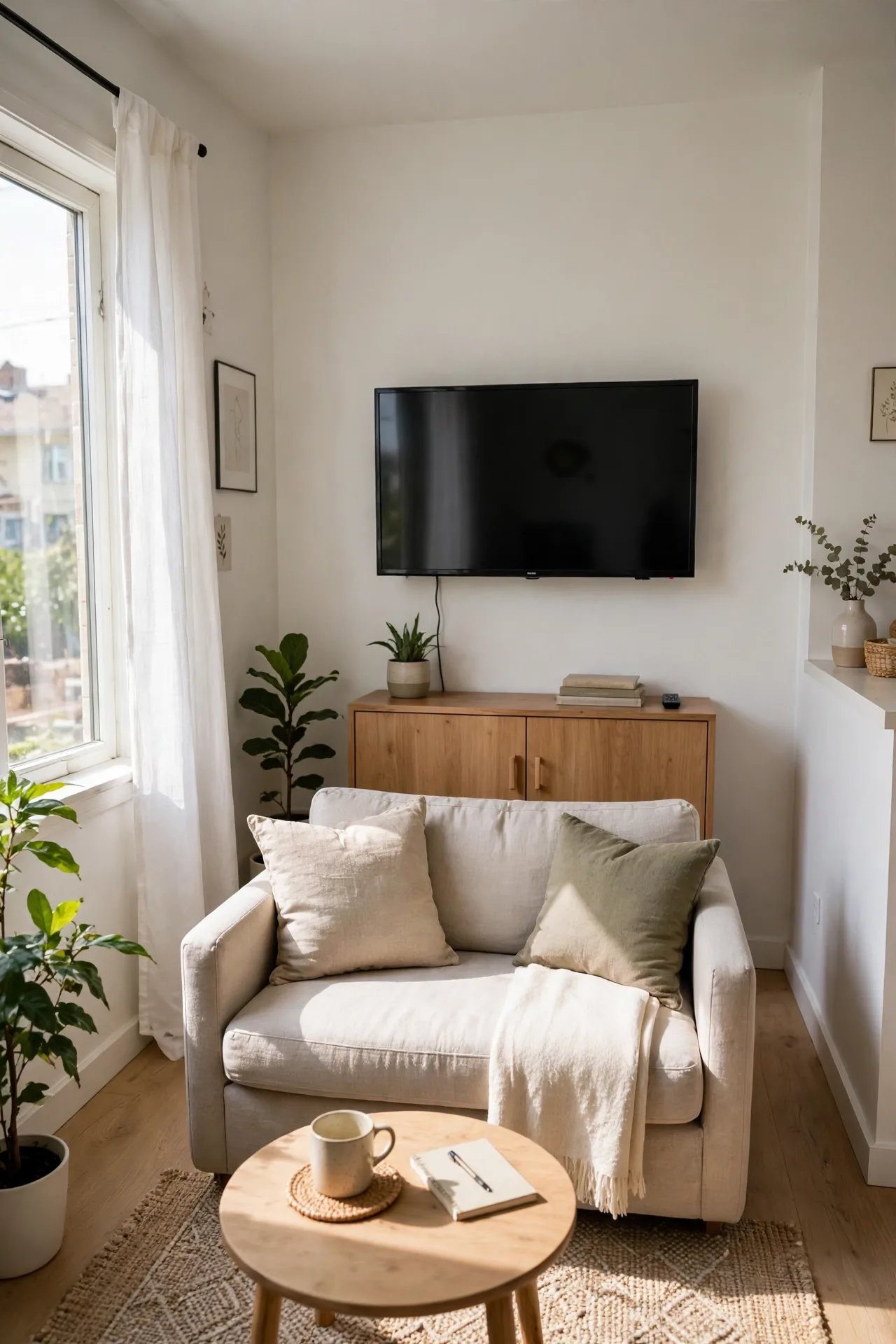
8. Steal a Corner for a Reading Nook
Every apartment has one awkward corner that fits nothing standard, and that corner is perfect for a chair. A comfortable armchair, a small side table, and a floor lamp turn dead space into the most-used seat in the home, and the main seating area stays free for conversation and TV. Angle the chair slightly into the room rather than shoving it flat into the corner, and add a soft throw so the nook looks inviting instead of exiled.
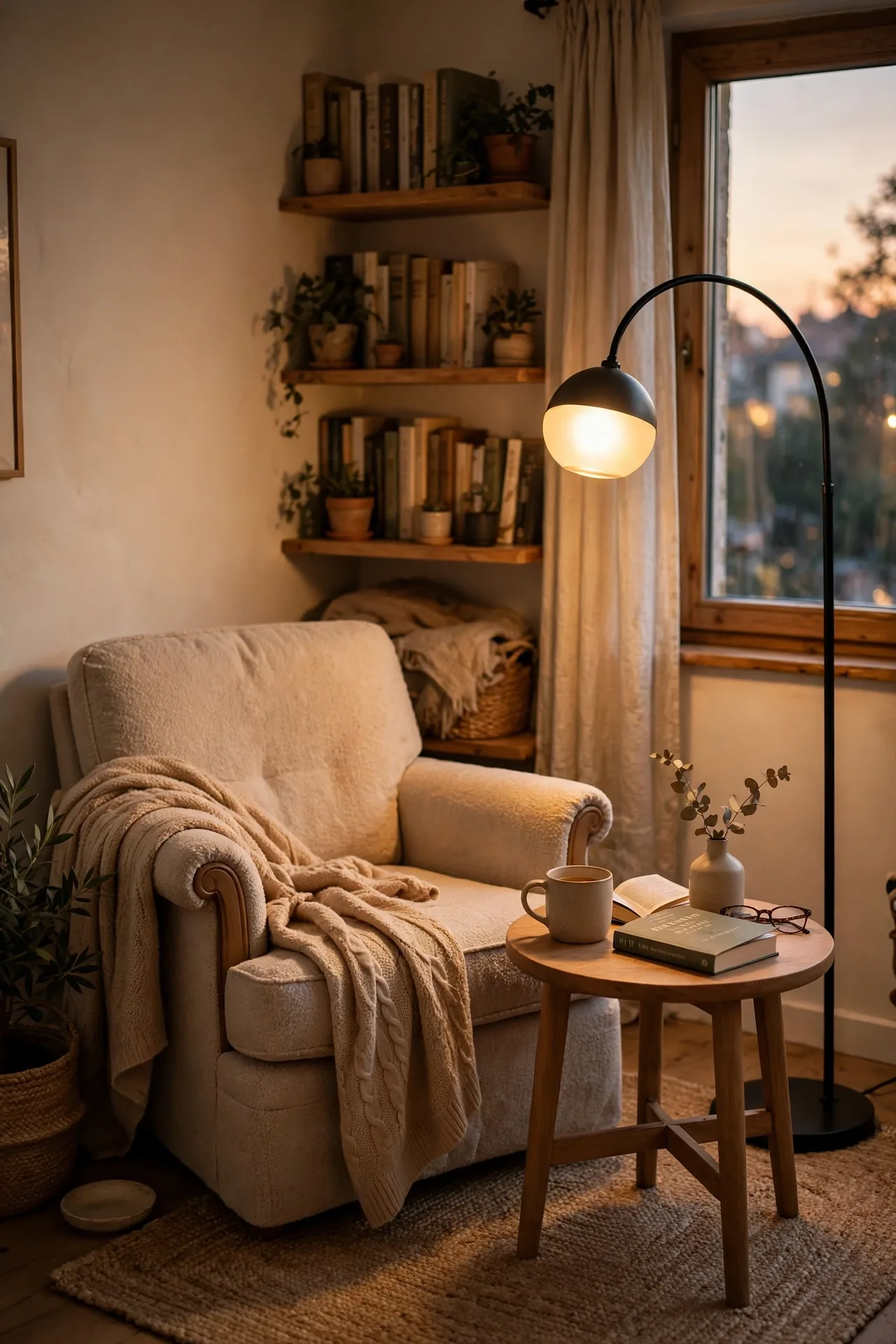
9. Ditch the Coffee Table for Ottomans
A hard rectangular coffee table can dominate a small seating area and bruise every shin that passes it. Two small upholstered ottomans or a single round pouf give you the same footrest and a surface for a tray, but they slide, stack, and tuck away when you need the floor. Round shapes are especially kind in tight rooms because there are no corners jutting into walkways. Choose ottomans with hidden storage and they swallow remotes, chargers, and board games too. Many of the best small apartment living room layout ideas work precisely because they replace one rigid piece with two flexible ones.
10. Put a Console Behind the Sofa
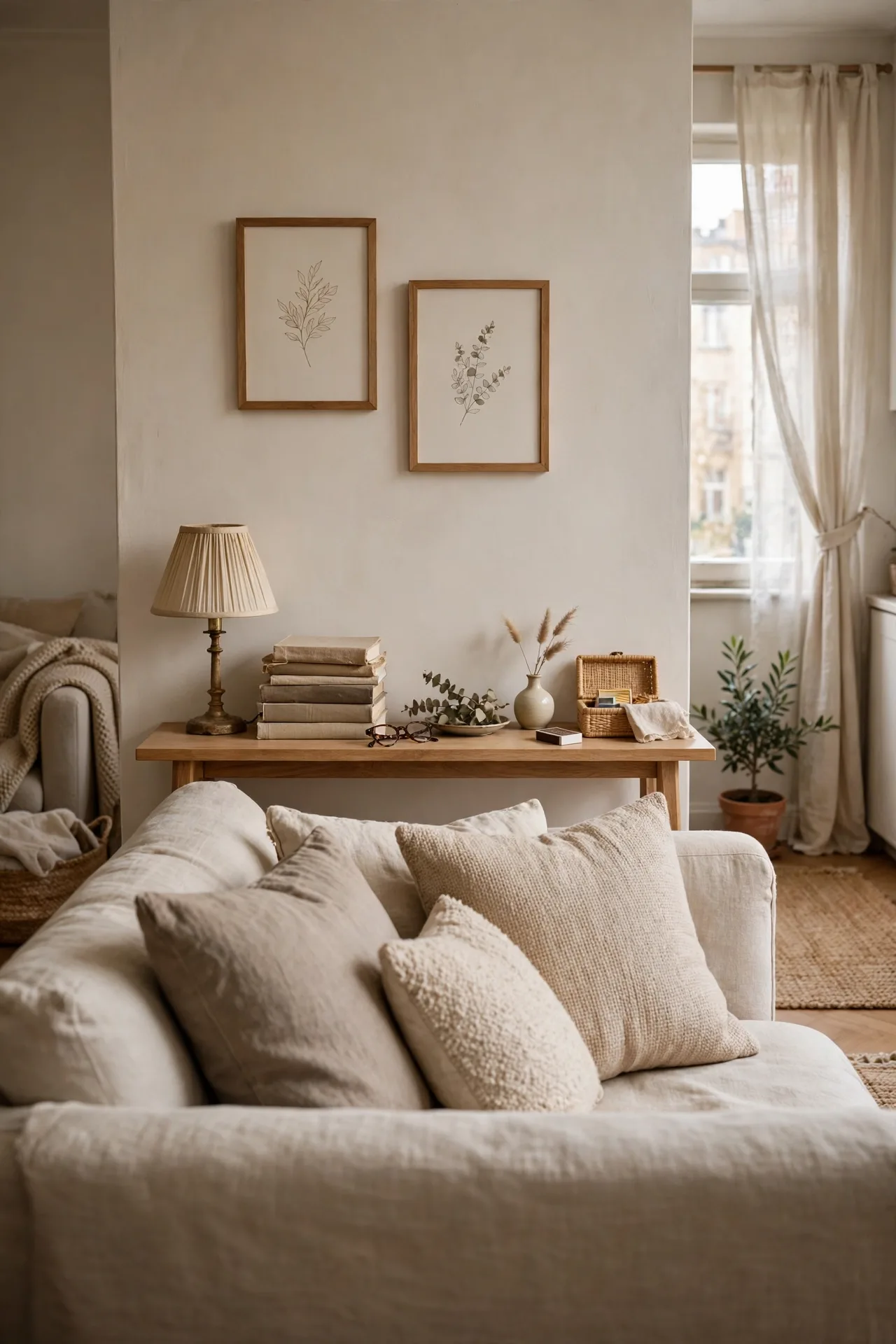
A slim console behind a floated sofa is the hardest-working piece in a small apartment. It holds a lamp at the perfect reading height, gives you a place to charge a phone out of sight, and creates a visual finish so the back of the sofa never looks bare. Keep it narrow — ten to twelve inches deep is plenty — and style it lightly with a stack of books and one small plant. If the sofa faces away from the entry, the console also becomes the first thing guests see, which sets a polished tone for the whole room.
11. Curve the Layout With a Round Rug and Table
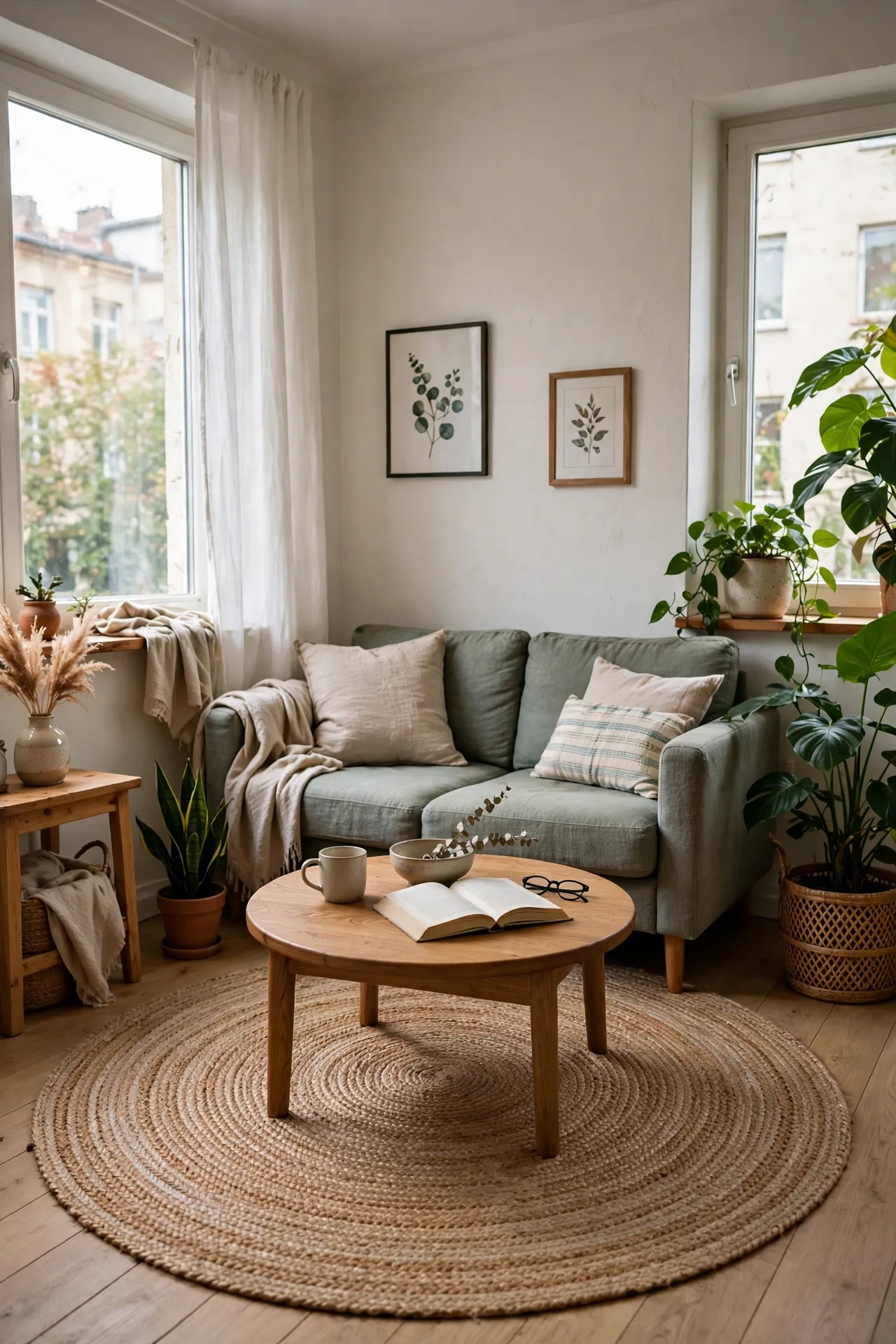
When a room feels boxy, curves soften it. A round rug under a round coffee table breaks up all the rectangles of a sofa, TV, and shelving, and it makes circulation easier because there are no corners to navigate around. This works beautifully in square-ish living rooms and in rooms with a bay window, where the curve echoes the architecture. For more on choosing the right base layer, see these rug ideas for the living room.
12. Zone With Lighting Instead of Walls
Three layers of light — overhead, task, and accent — can divide a room more gracefully than any partition. A pendant over the seating area, a floor lamp by the reading chair, and a warm glow on a shelf tell the eye where each zone begins and ends, even in a single open space. Put the layers on separate switches or smart plugs so you can light only the zone you are using; a dark corner reads as depth rather than clutter when the rest of the room glows. Skip the single harsh ceiling light, which flattens everything into one undifferentiated box.
13. Protect One Clear Walkway
Pick the path you use most — front door to kitchen, bedroom to bathroom — and defend it ruthlessly. No ottoman, plant stand, or chair leg should poke into that line, even if it means the seating sits slightly off-center. A room with one generous, obvious walkway feels larger than a room where every route requires a sideways shuffle, because your body relaxes when it knows where to go. Tape the walkway on the floor while you test layouts; if you keep stepping over the tape, the layout is wrong, not your feet.
14. Hang a Mirror Opposite the Window
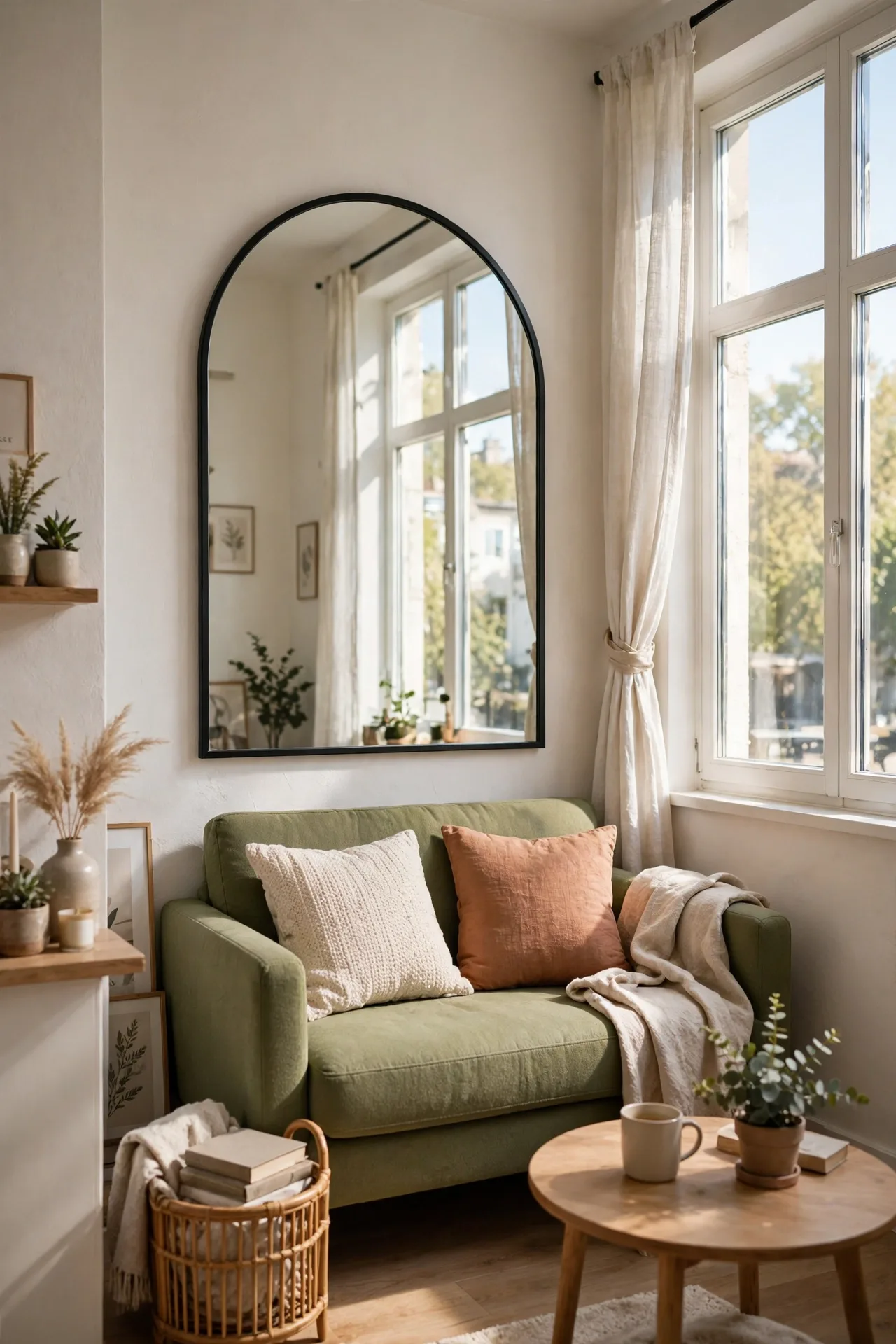
A large mirror hung opposite or beside the window doubles the daylight and gives the eye a second view to travel to, which makes the room feel almost twice as deep. Choose one generous mirror over a gallery of small ones — a single reflection reads as a window, while many small ones read as clutter. This trick pairs beautifully with a layout that already faces the window, since the mirror bounces that same light back into the seating area. Clever small-space planning like this is also the heart of these smart small living room ideas.
15. Edit Down to Five Big Pieces
Count the large pieces in your living room: sofa, chairs, tables, storage, TV unit. If the number is above five, something can probably go. Removing one bulky item — the extra chair nobody sits in, the second side table, the oversized media unit — frees more floor than any decorating trick, and the pieces that remain finally get room to breathe. Live with the edited layout for a week before buying anything new; most people discover the room was never too small, it was simply too full.
Frequently Asked Questions
How do I arrange furniture in a very small apartment living room?
Start by choosing a focal point, usually the window or TV wall, then place the largest seat facing it and build outward with smaller pieces. Keep one clear walkway, use a rug big enough for the front legs of all seating, and resist pushing everything flat against the walls.
Should the sofa go against the wall in a small apartment?
Not always. Floating the sofa a few inches off the wall — or using it as a divider in an open plan — often makes the room feel larger and more intentional. That said, in a very narrow room, placing the sofa against the longest wall can be the only way to keep a comfortable walkway. The rule is simple: if floating the sofa blocks circulation, keep it on the wall; if it creates a zone without blocking a path, float it. Either way, these small apartment living room layout ideas work best when walkways stay clear.
What size rug works best in a small living room?
Go bigger than you think. A 5-by-8-foot rug suits most apartment seating areas, and an 8-by-10 works if the room allows it. The front legs of the sofa and any chairs should sit on the rug, with a consistent border of bare floor showing around the edges. A rug that floats in the middle of the room with all furniture outside it makes the seating look disconnected and the floor look smaller.
Can I fit a sectional in a small apartment living room?
Yes, if it is the right scale. A compact apartment sectional with a chaise on one side can actually save space by replacing a sofa plus a chair, and it gives you lounge seating without extra pieces. Measure carefully, leave walkways clear on at least two sides, and choose a low, armless or slim-armed style so it does not visually swallow the room.
How do I separate the living room from the kitchen in a studio?
Use the back of the sofa, a rug, or lighting to draw the boundary instead of a wall. A sofa placed with its back to the kitchen creates an instant living zone, a rug marks the floor area, and a pendant or floor lamp gives the zone its own glow. Open shelving or a curtain can add separation without blocking light, but keep dividers low and airy so the studio still feels like one bright space.
Make It Yours
You do not need a bigger apartment — you need a layout that respects the one you have. Pick one idea from this list tonight: float the sofa, size up the rug, or clear a single walkway, and notice how different the room feels by morning. Small changes compound, and a room arranged around how you actually live becomes the room you love coming home to. Save your favorites to your Pinterest board so you can find them again when you are ready for the next change.