23 Mediterranean Living Room Ideas to Bring Tranquility Home
Read This Before You Decorate
Mediterranean living rooms are the definition of tranquil: sun-washed neutrals, natural textures, earthy tones, and an effortless blend of rustic charm and modern ease. Whether you love airy spaces flooded with natural light or cozy corners layered with soft fabrics, this timeless style creates a home that feels like a permanent retreat. These 23 Mediterranean living room ideas will help you bring that serenity home.
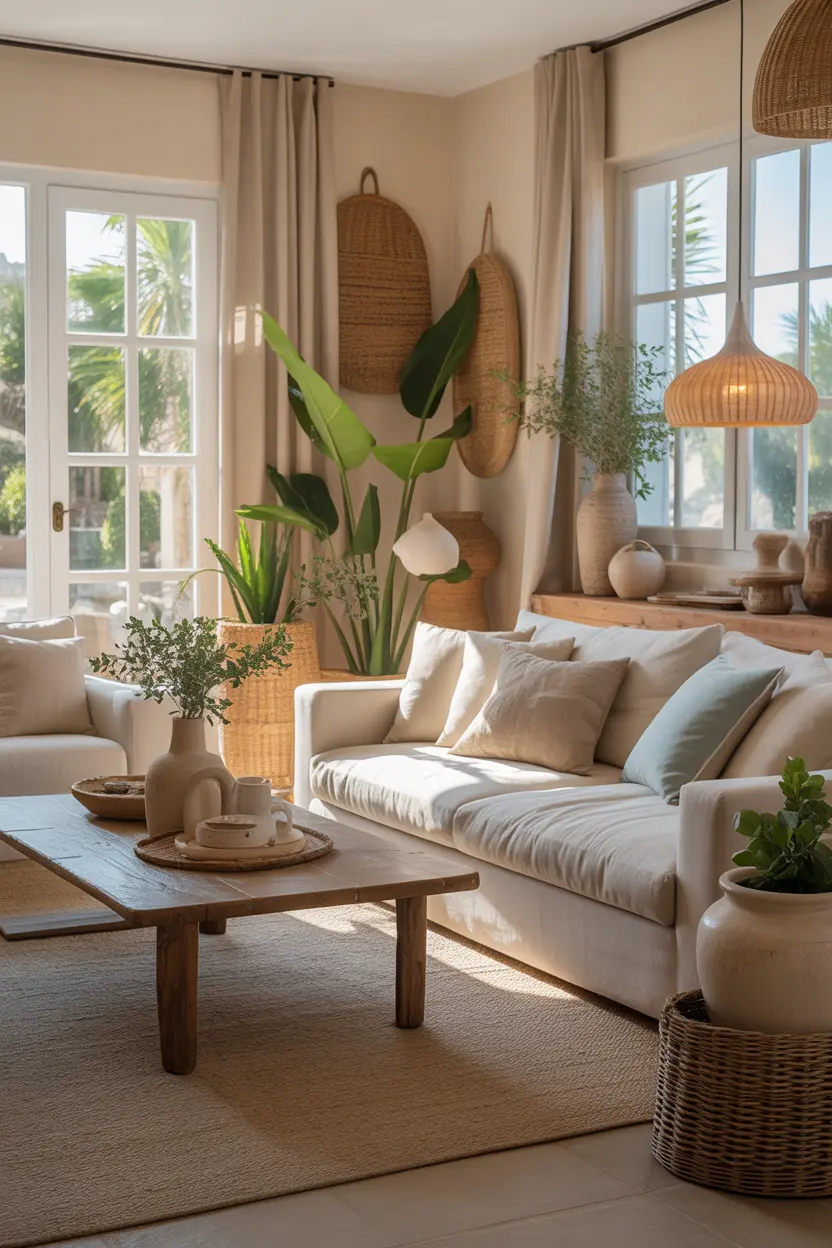
Mediterranean style runs on texture, not color. Designers describe the modern take as a refined, subtle aesthetic where rough-hewn wood meets smooth plaster walls, and natural stone, weathered metals, and hand-painted ceramics give a room its authentic, lived-in quality. Start with a calm neutral base — warm whites, sandy beiges — then layer texture: linen, rattan, jute, terracotta, wrought iron. Light is the other essential ingredient; large windows, open layouts, and pale walls are designed to invite daylight deep into the room. And don’t be afraid to mix eras: a sleek modern sofa beside a rustic wooden table is exactly the old-meets-new contrast that makes Mediterranean style feel alive. Mansion Global’s designer guide to the modern Mediterranean living room breaks down how pros balance all of this — texture, light, and craftsmanship — without the look ever feeling fussy. If your living room flows into other spaces, ideas for combining living and dining rooms show how to keep an open Mediterranean plan feeling calm and connected.
23 Mediterranean Living Room Ideas to Bring Tranquility Home
1. Embrace Natural Light with Large Windows
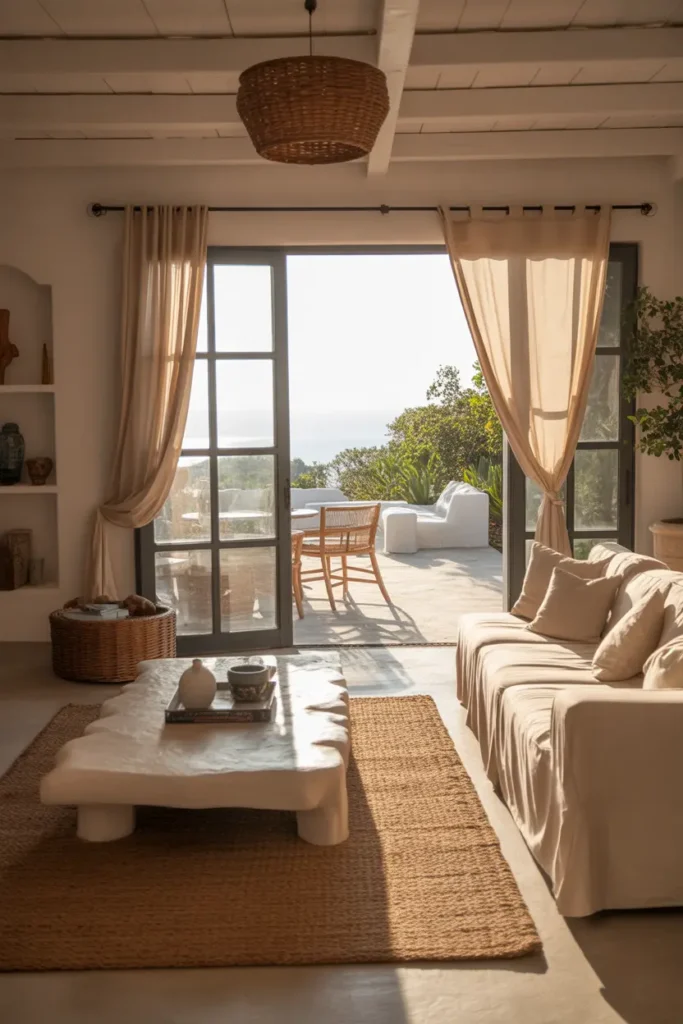
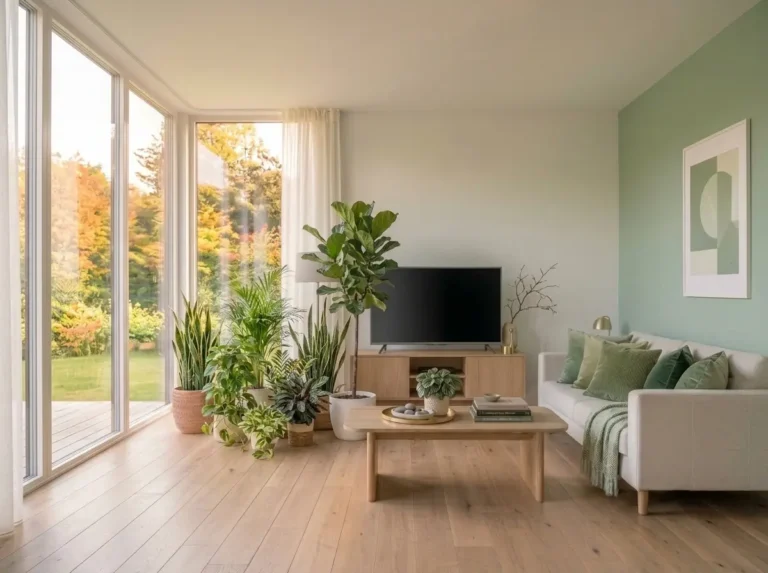
Mediterranean homes are famous for their light. Oversized windows or glass doors leading to a terrace flood the room with sun and blur the line between indoors and out. If new windows aren’t an option, sheer linen curtains and mirrors that bounce existing light do the next best thing.
2. Use Neutral Tones for a Calm Ambiance
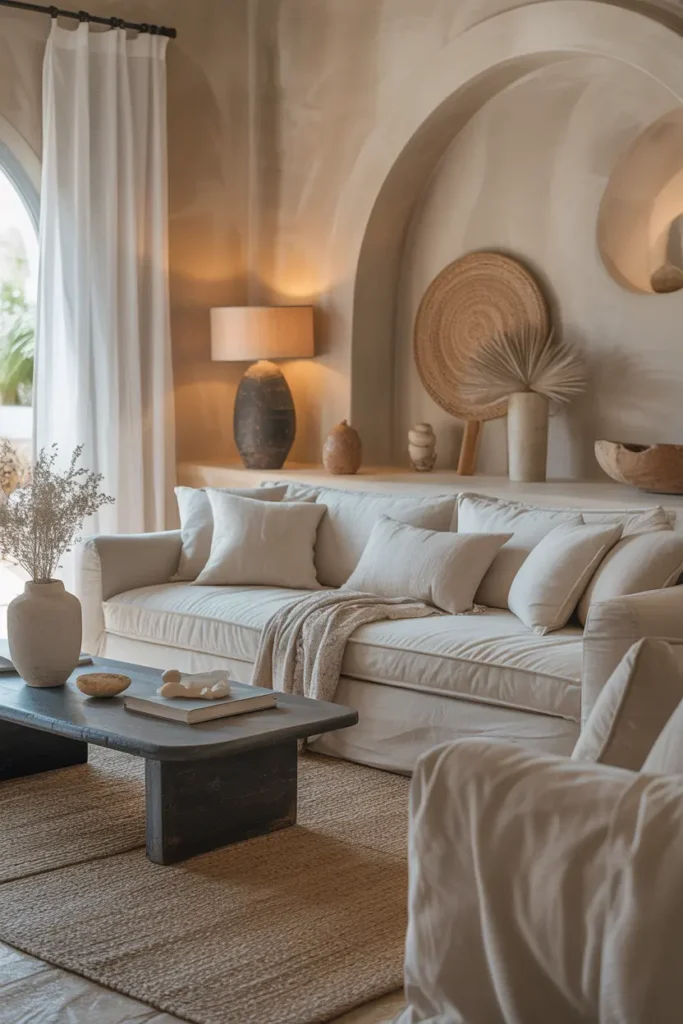
Whites, beiges, and light grays are the foundation — they create a peaceful, harmonious base that lets textures shine. Pair neutral walls with light-colored furniture, then add contrast through accessories: terracotta throw pillows, a patterned rug, a piece of art with warm earth tones.
3. Incorporate Textured Fabrics for Cozy Vibes
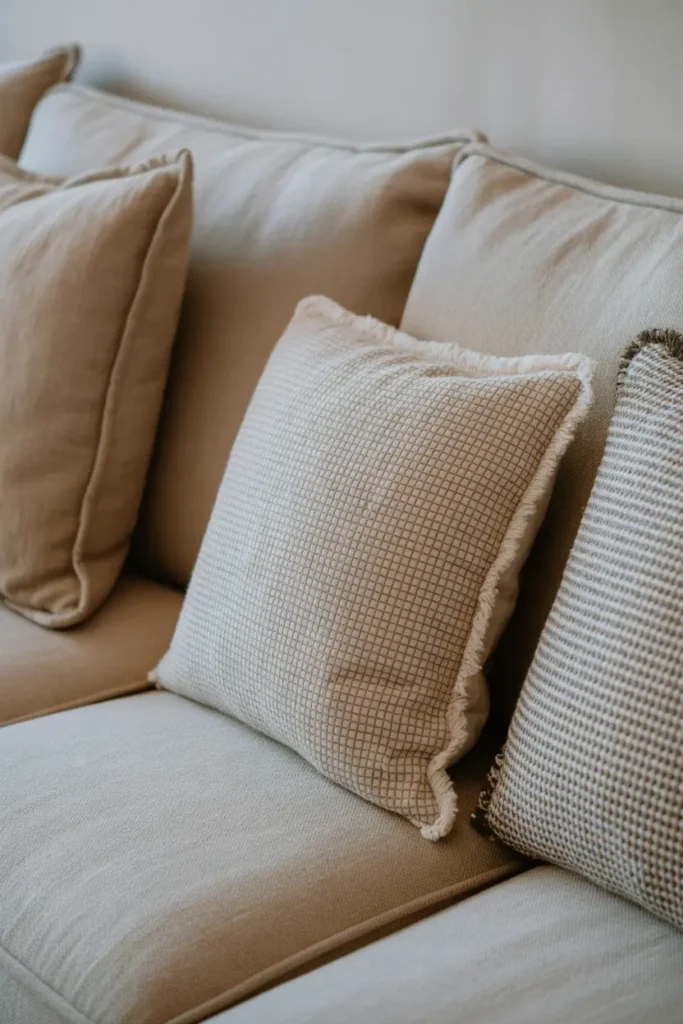
Linen, cotton, and wool in natural shades are what make a Mediterranean room feel inviting instead of stark. Layer textured throws, cushions, and curtains to add depth. The rule: if a surface looks flat, add something tactile.
4. Layer Rugs for Comfort and Warmth
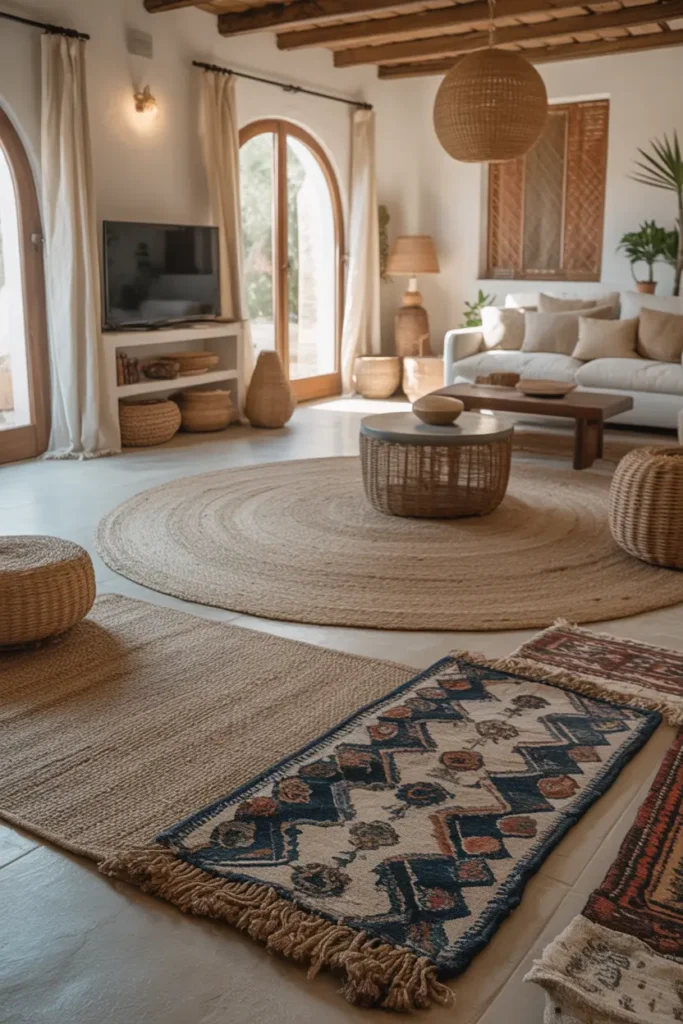
Layering rugs in different sizes and textures — jute over wool, a patterned runner over a large neutral — adds warmth and visual interest. Natural materials like jute, sisal, and wool complement the earthy palette. A large area rug anchors the seating area; smaller rugs define corners and add color.
5. Add Wooden Elements for a Natural Feel
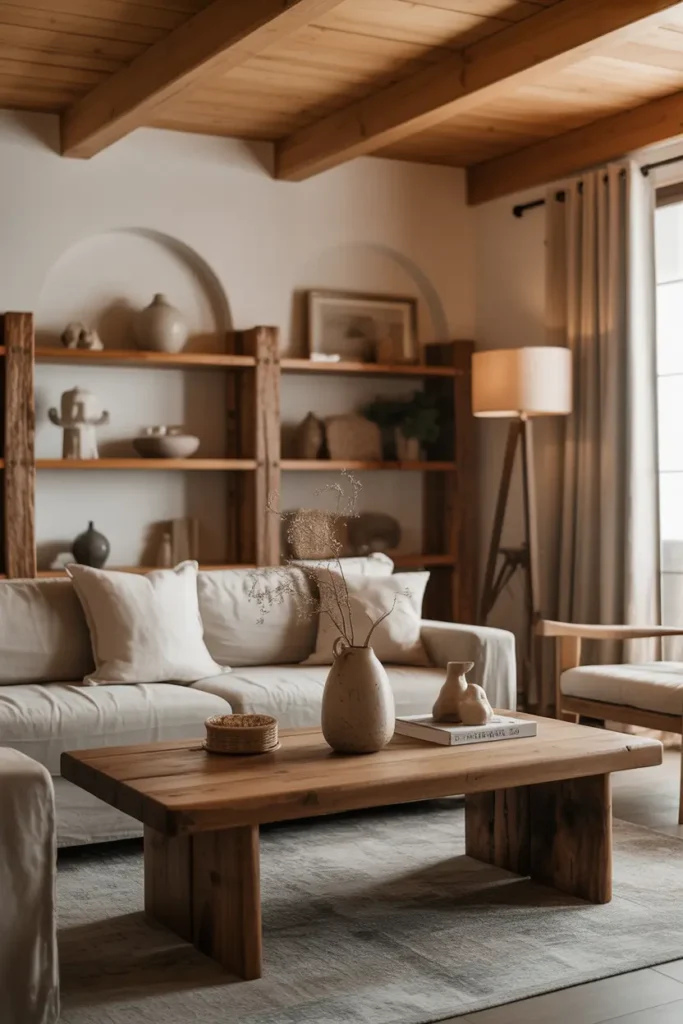
Wood brings the outdoors in: ceiling beams, a rustic coffee table, wooden shelving. Natural, unfinished woods give an authentic Mediterranean feel; painted wood leans more refined. Either way, the grain and warmth of wood are what keep a neutral room from feeling cold.
6. Play with Blue and White Color Schemes
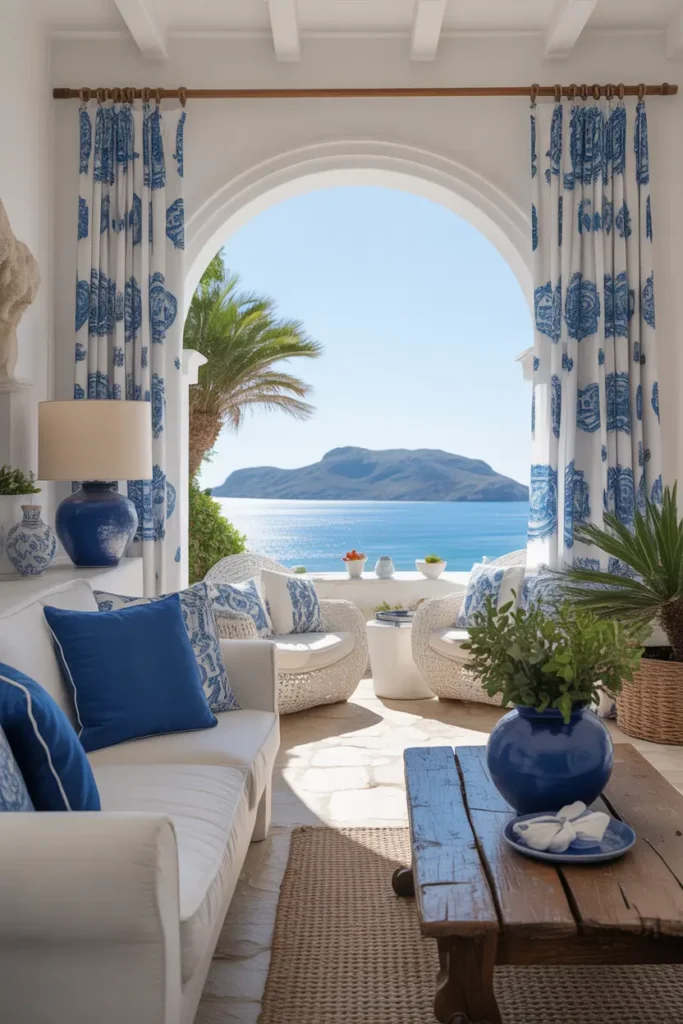
The blue-and-white combination is Mediterranean’s signature — think Santorini’s cobalt domes against white facades. Add blue through cushions, curtains, or an accent wall, balanced with white or cream furniture. It’s the same serene formula as coastal style, which is why our beach house living room ideas pair so naturally with a Mediterranean palette.
7. Bring the Outdoors In with Indoor Plants
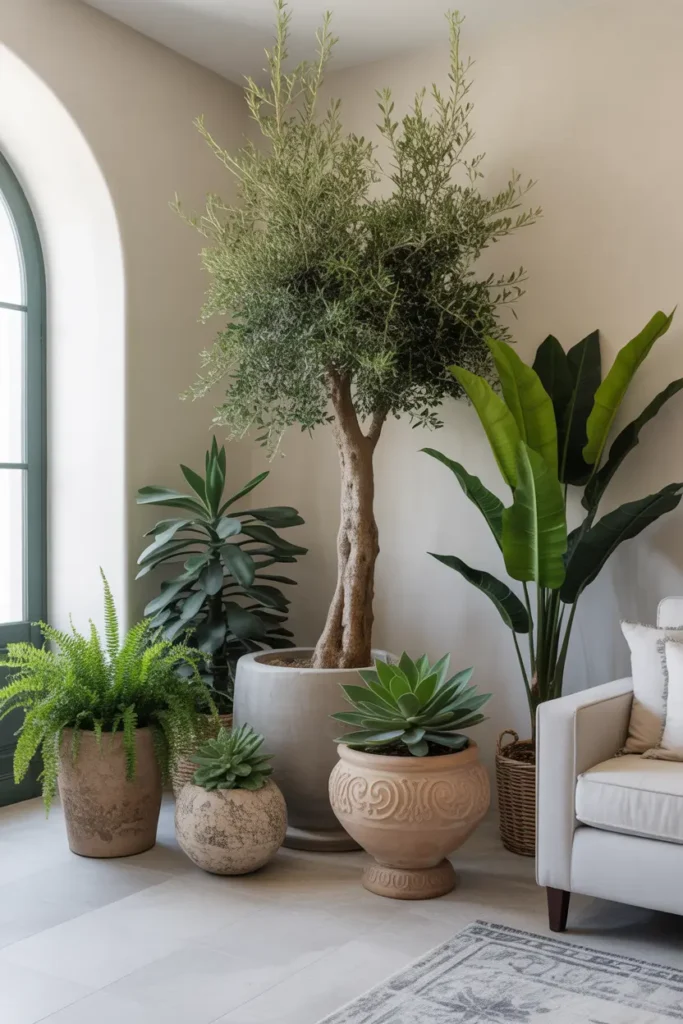
Olive trees, ferns, and succulents add life and a direct link to Mediterranean landscapes. A small olive tree in a terracotta pot is practically the symbol of the style. Plants also soften all the hard surfaces — stone, wood, iron — and make the room feel alive.
8. Use Mediterranean-Inspired Furniture
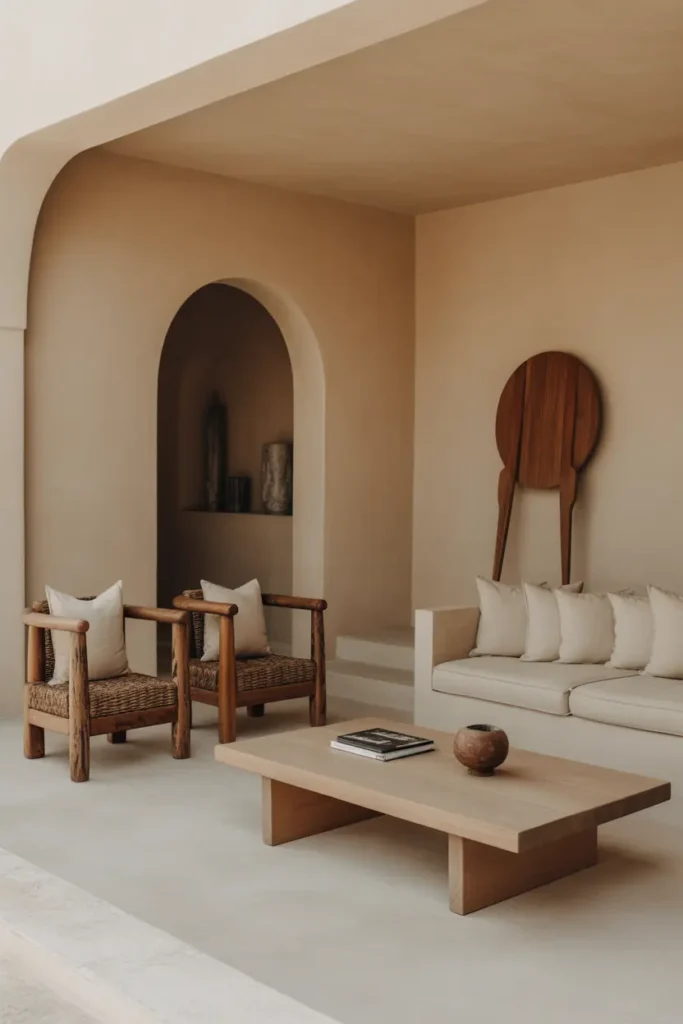
Look for rustic yet refined pieces: wooden or wicker furniture with simple, clean lines. A low-profile coffee table, rustic armchairs, a minimalist sofa in neutral shades. Mediterranean furniture blends comfort with elegance — nothing precious, nothing flimsy.
9. Experiment with Mediterranean Wall Art
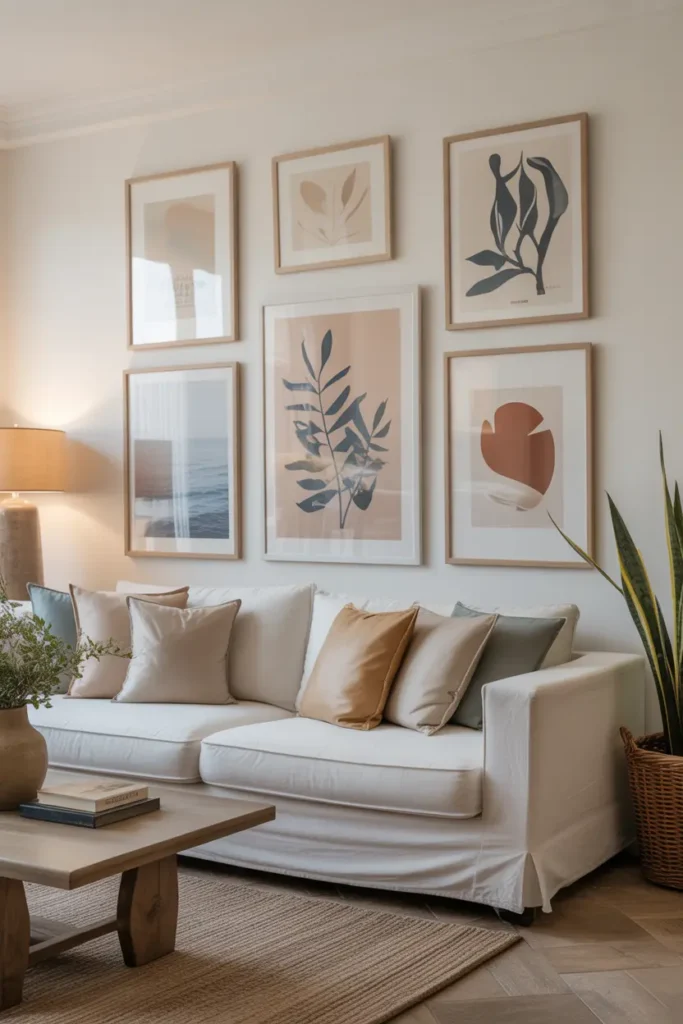
Seascapes, botanical prints, abstract designs in soft earthy hues — wall art is where personality enters. Mix styles and frames for an eclectic gallery wall that still feels cohesive. One large piece above the sofa anchors the room; smaller pieces grouped together add character.
10. Add Woven Baskets for a Rustic Touch
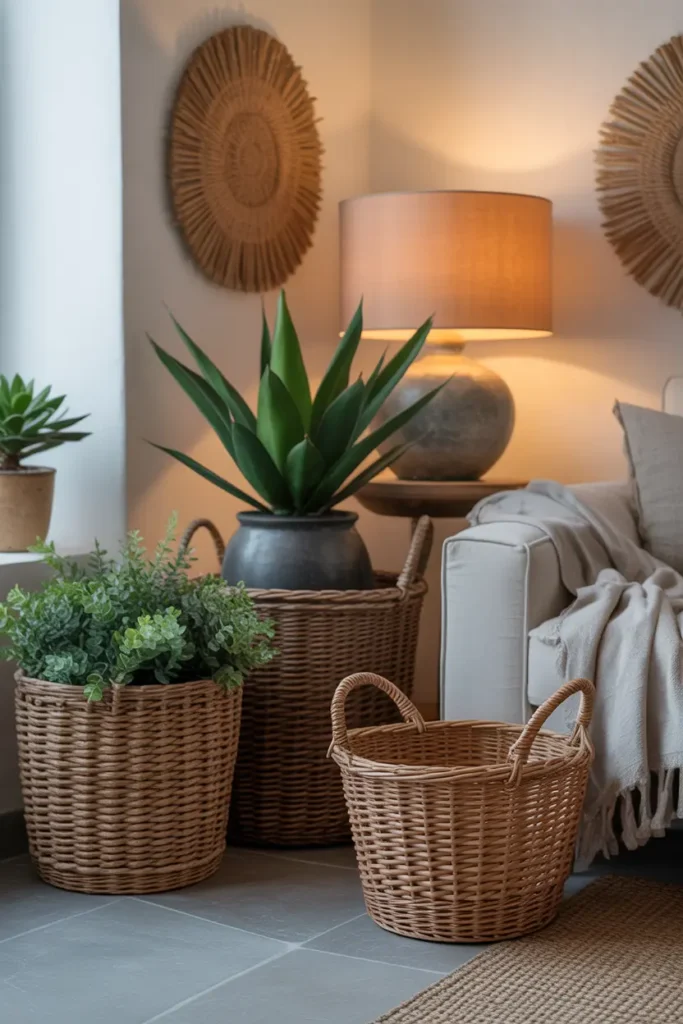
Woven baskets are Mediterranean workhorses: storage, planters, wall decor, blanket holders. Choose natural fibers like rattan or seagrass. A cluster of baskets in a corner adds instant texture and rustic charm for very little money.
11. Focus on Clean, Simple Lines
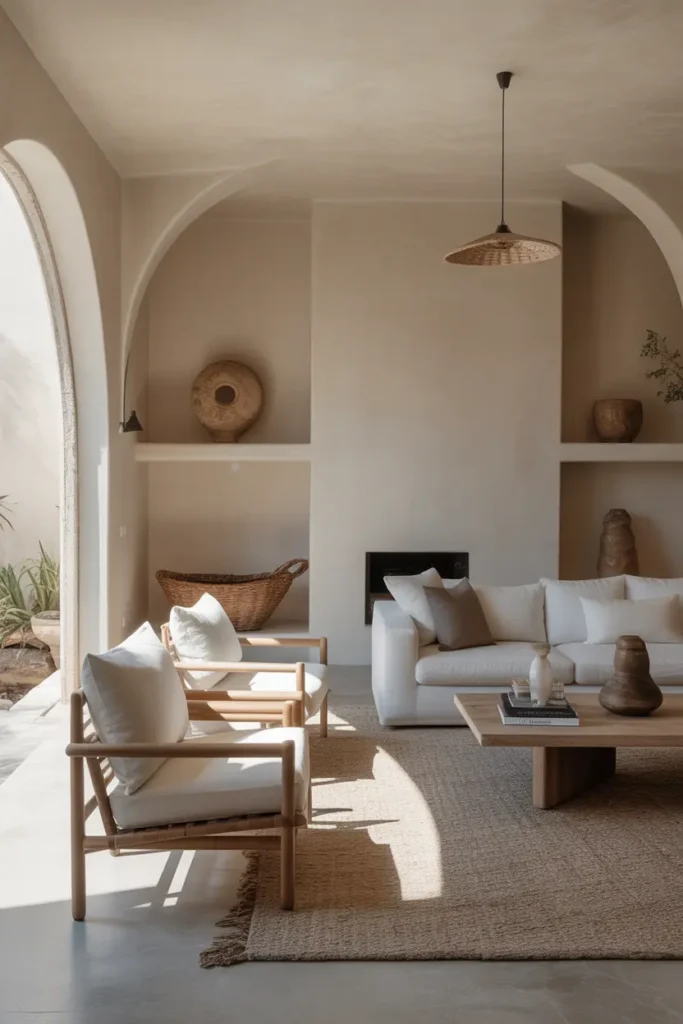
Mediterranean design embraces simplicity — furniture with clean lines that emphasize the beauty of the materials. Skip overly ornate details; let the wood grain, the stone, and the textiles do the talking. This restraint is what keeps the room serene instead of busy.
12. Create a Relaxing Lounge Area with Cushions
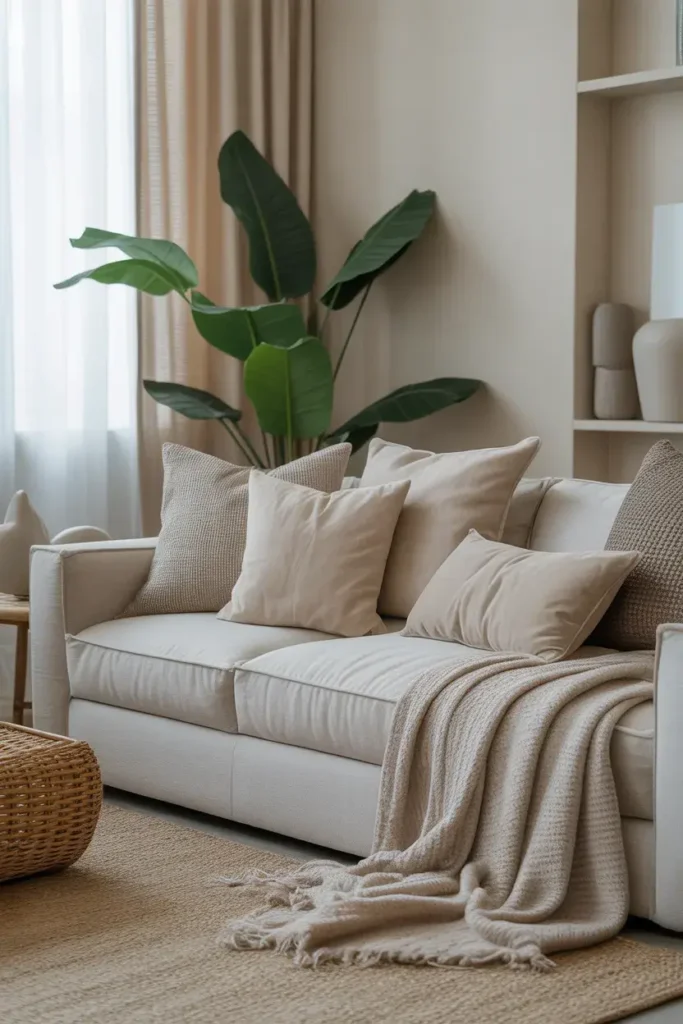
Pile cushions on sofas, armchairs, or even the floor to create a lounge area made for long conversations. Mix sizes, fabrics, and patterns in calming tones — cotton, linen, and soft weaves. The Mediterranean lounge is the opposite of stiff formal seating.
13. Choose Natural Stone Flooring
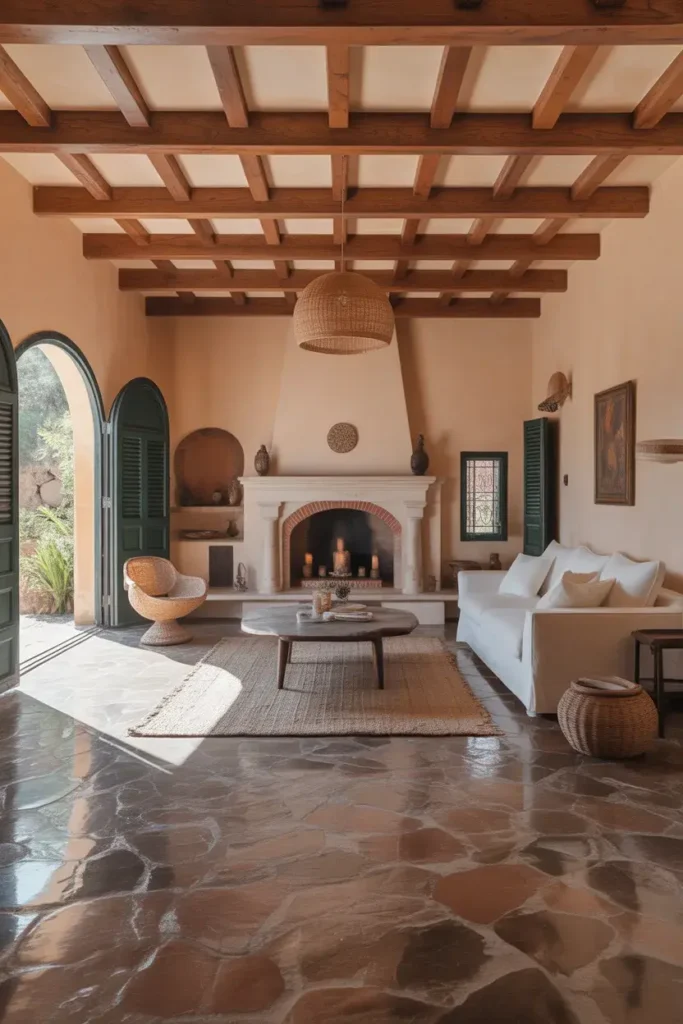
Terracotta, travertine, and marble floors are defining Mediterranean features — beautiful, durable, and cool underfoot. They create a seamless flow from outdoors to in. If stone isn’t in the budget, terracotta-toned tiles or a large natural-fiber rug over existing floors captures the spirit.
14. Add Mediterranean Lighting Fixtures
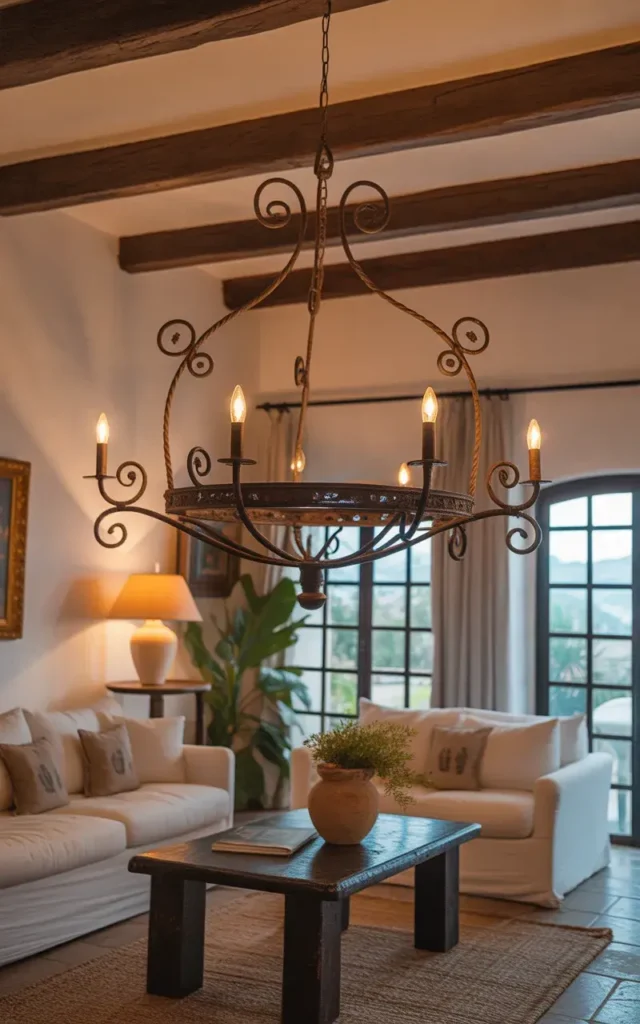
Wrought iron chandeliers, pendant lights, and sconces with rustic finishes cast a warm glow and add old-world character. Lighting is jewelry in a Mediterranean room — choose fixtures with craft and detail, then keep the bulbs warm so the room glows rather than glares.
15. Choose a Statement Sofa in Earthy Tones
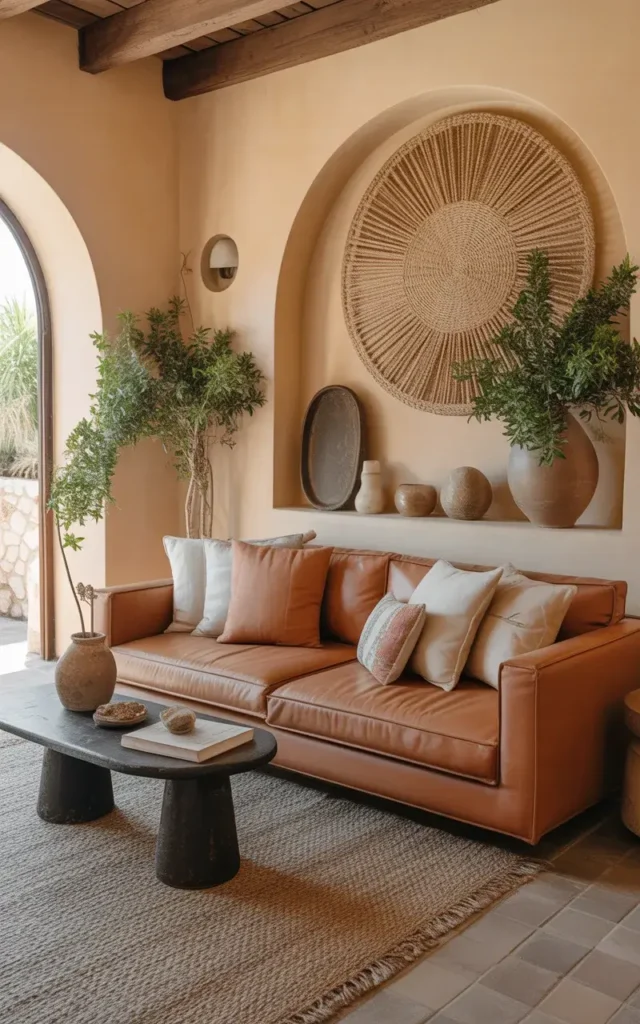
The sofa is the room’s anchor, so make it count: terracotta, olive green, or warm beige in a comfortable, inviting shape. Pair it with textured cushions and neutral accents. An earthy statement sofa does more for a Mediterranean room than any accessory.
16. Incorporate Decorative Mediterranean Tiles
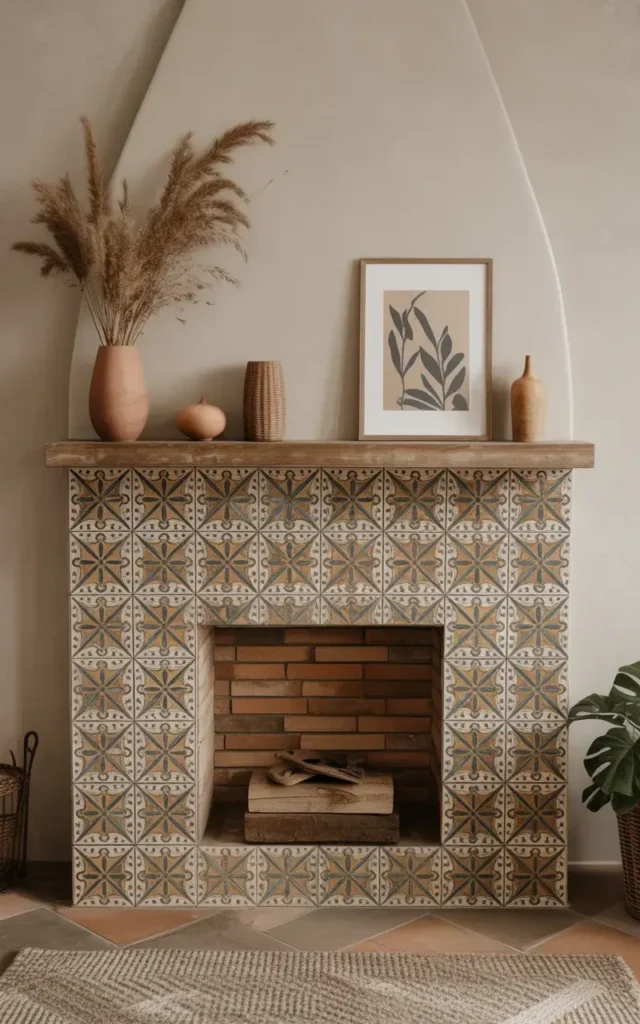
Hand-painted tiles with intricate patterns in blue, white, and earth tones bring old-world charm — on a fireplace surround, a feature wall, or even as framed art. A little tile goes a long way; one tiled accent is a focal point, a room full is a museum.
17. Add a Splash of Gold or Copper for Elegance
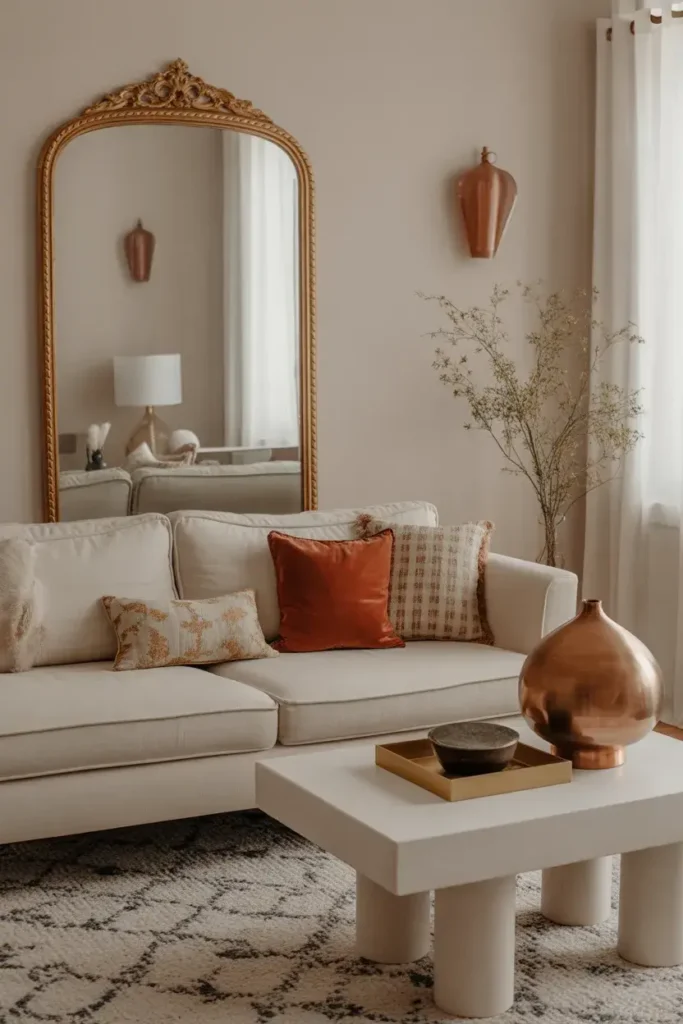
A restrained touch of metal — a gold-framed mirror, copper light fixtures, metallic vases — adds warmth and refinement. Use sparingly: these accents should catch the light, not dominate the room. Against all the matte natural textures, a little shine goes a long way.
18. Use Statement Mirrors to Create Light Reflection
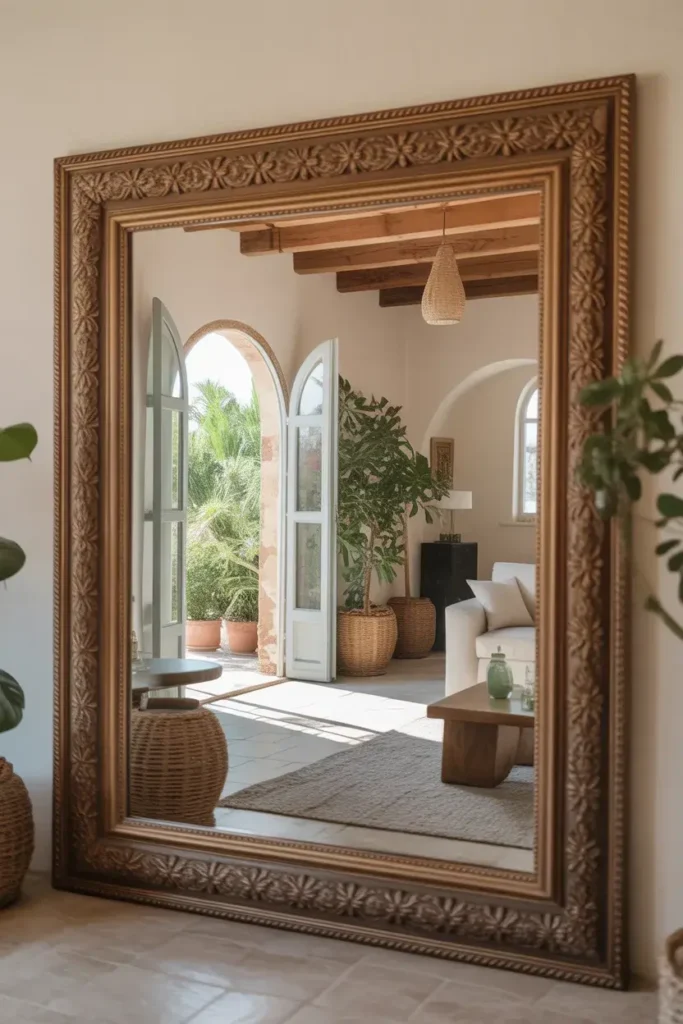
A large mirror with an ornate or rustic frame, placed opposite windows, doubles the natural light and makes the room feel larger. Mirrors are one of the easiest ways to amplify the bright, airy quality that defines Mediterranean style.
19. Opt for a Neutral, Textured Fireplace
A fireplace in natural stone or textured stucco, kept understated, anchors the room without competing with it. Arrange cozy seating around it for an intimate gathering spot. In Mediterranean style the fireplace is a hearth, not a monument.
20. Install Open Shelving with Mediterranean Decor
Open shelves let you display the beautiful everyday: decorative pottery, woven baskets, ceramic vases, books, plants. Curate carefully — grouped, spaced, and edited. Open shelving adds function and style, but only when it’s styled, not stuffed.
21. Focus on Layered Lighting for Depth
Ambient, task, and accent lighting together create depth and mood. Pendant lights, floor lamps, and table lamps with warm bulbs enhance the tranquil vibe. One ceiling light alone will always feel flat — layer from multiple heights and sources.
22. Mix and Match Modern and Rustic Styles
Pair sleek modern furniture with rustic wood accents for a balanced, inviting look. The contrast between smooth and rough, new and aged, is what keeps Mediterranean style feeling current rather than themed. This blend is the heart of the modern Mediterranean look.
23. Create a Mediterranean-Inspired Reading Nook
Turn a corner into a retreat: a comfy armchair, soft cushions, a small side table, surrounded by plants and natural light. It’s the perfect spot to unwind with a book. And if little ones share the space, these genius toy storage solutions for the living room keep the nook — and the calm — intact.
Mediterranean Living Room FAQs
What colors define Mediterranean style? Warm neutrals as the base — whites, creams, sandy beiges — with earthy accents: terracotta, olive green, warm wood tones, and the signature blue-and-white pairing. The palette should feel sun-washed and natural, never harsh.
How do I make my living room feel Mediterranean on a budget? Warm up the palette with terracotta and cream textiles, add a jute rug, bring in plants (an olive tree in a clay pot is the icon), swap in woven baskets, and let in as much natural light as possible. Texture does the heavy lifting — it’s cheaper than new furniture.
What’s the difference between Mediterranean and coastal style? They overlap heavily — both love light, neutrals, and natural materials. Mediterranean leans earthier and more old-world (terracotta, wrought iron, rustic wood, ornate tiles), while coastal leans breezier and more nautical (blues, whites, rattan, sea motifs). Many rooms happily blend both.
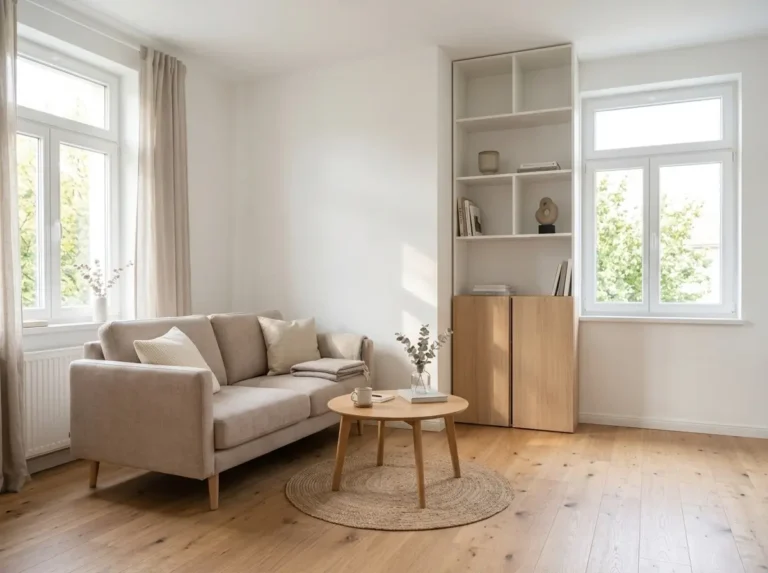
Can Mediterranean style work in a small living room? Yes — arguably better than most styles, because its light palette and simple lines make small spaces feel larger. Keep the base light, choose a few textured pieces over many small accessories, use mirrors to bounce light, and let one statement piece (a rug, a sofa, a plant) anchor the room.
Is Mediterranean style the same as Spanish or Tuscan style? Spanish, Tuscan, and Greek styles are all regional flavors of Mediterranean design. They share the core — warm neutrals, natural materials, rustic elegance — but differ in details: Spanish leans toward wrought iron and colorful tile, Tuscan toward warm stone and rich wood, Greek toward crisp white and blue. Mix the flavors you love.
Make It Yours
Mediterranean style isn’t about recreating a villa — it’s about borrowing its calm. Start with light neutrals, layer in texture, add one earthy statement, and let the sun do the rest. Save this post on Pinterest for your next refresh, and share it with someone whose living room needs a little more tranquility.