17 Japanese Bedroom Ideas for a Calm Minimal Look
Let’s be honest: most of us want a bedroom that actually feels like a place to rest, not just another room filled with stuff. If you’ve been scrolling through Pinterest looking for that “Zen” vibe, you’re in the right place. Japanese decor is the gold standard for minimalism, and it’s surprisingly easy to pull off.
In this guide, I’m breaking down 17 simple Japanese bedroom ideas to help you clear the clutter and find some peace. We aren’t just talking about floor beds; we’re looking at how to use light, wood, and space to make your room feel airy and open. I noticed that once I started focusing on these small, intentional details, my whole morning routine felt less rushed.
Ready to transform your space? Let’s get started.
Tatami Floor Setup
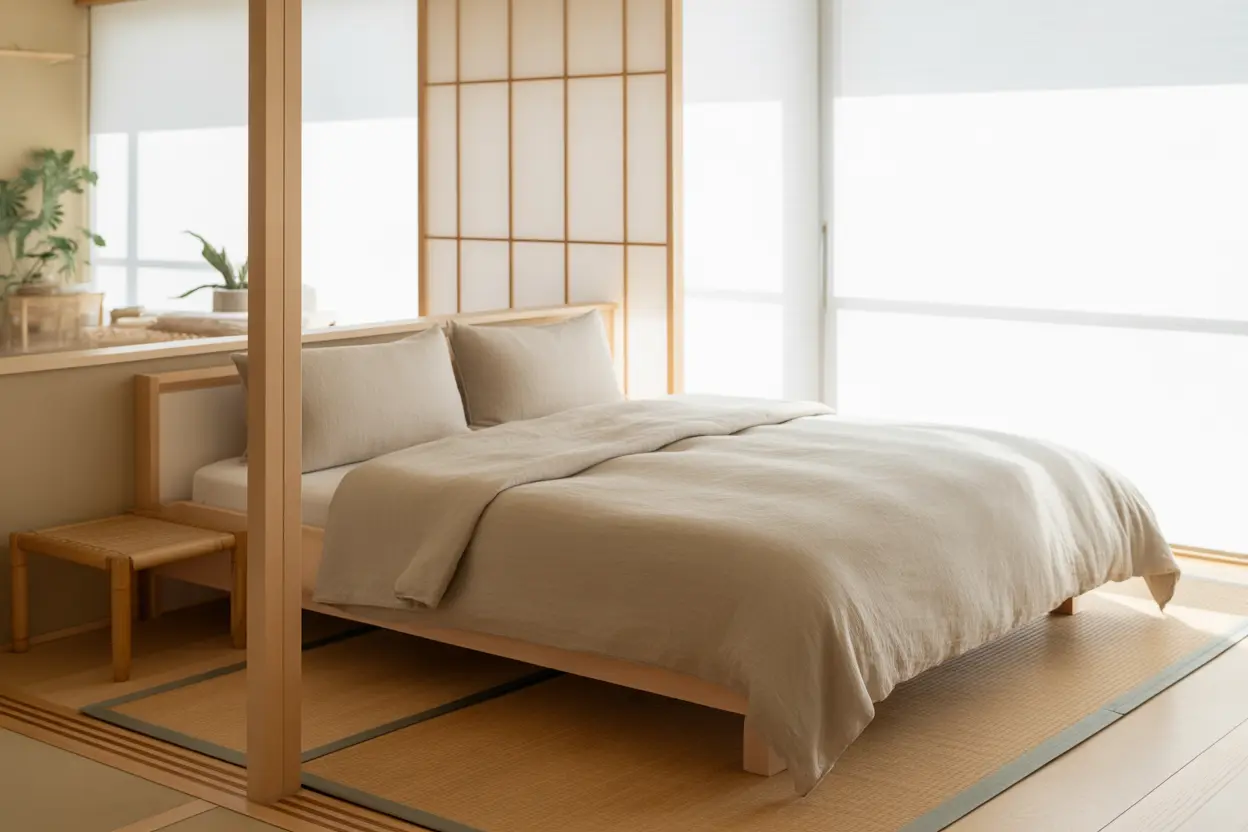
If you want a bedroom that feels truly Japanese, you have to look at the floor first. In a traditional home, the floor is actually the most important part of the room. This is where Tatami mats come in. These aren’t just thin rugs; they are sturdy, thick mats woven from a special straw called igusa.
One thing people usually miss until they see it in person is the smell. Real tatami has this light, earthy scent of dried grass that instantly makes you feel more relaxed. It’s also much warmer and has a bit of a “bounce” compared to cold hardwood floors. If you’re living in a small apartment, tatami is a total game-changer. Since it encourages you to sit and sleep lower to the ground, the upper half of the room stays open, which makes even a tiny bedroom feel much bigger and more peaceful.
Shōji Screen Partition
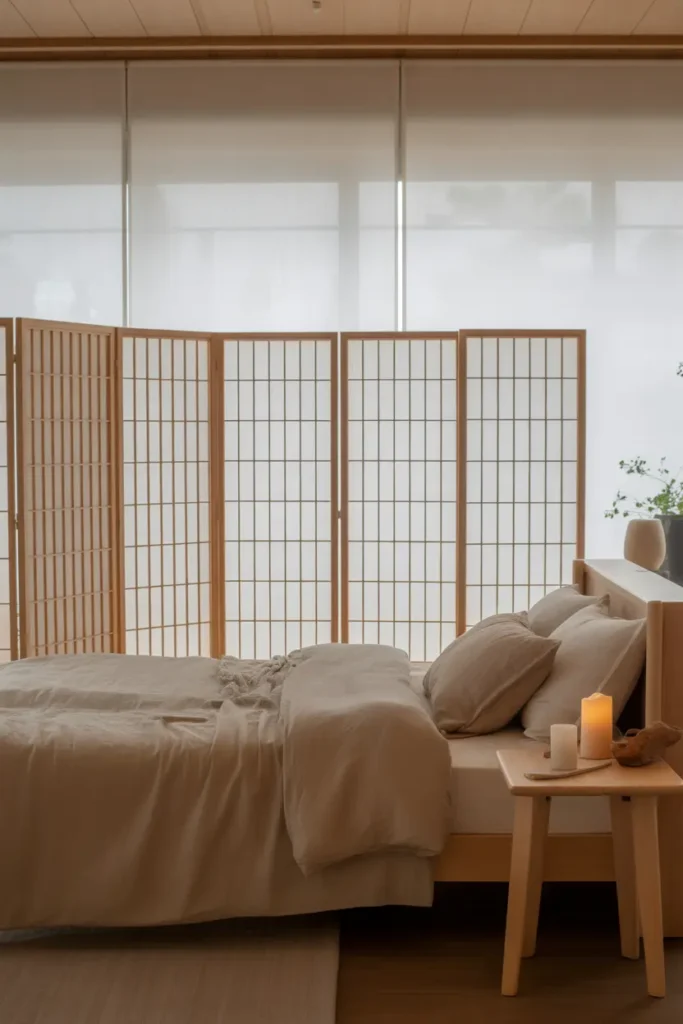
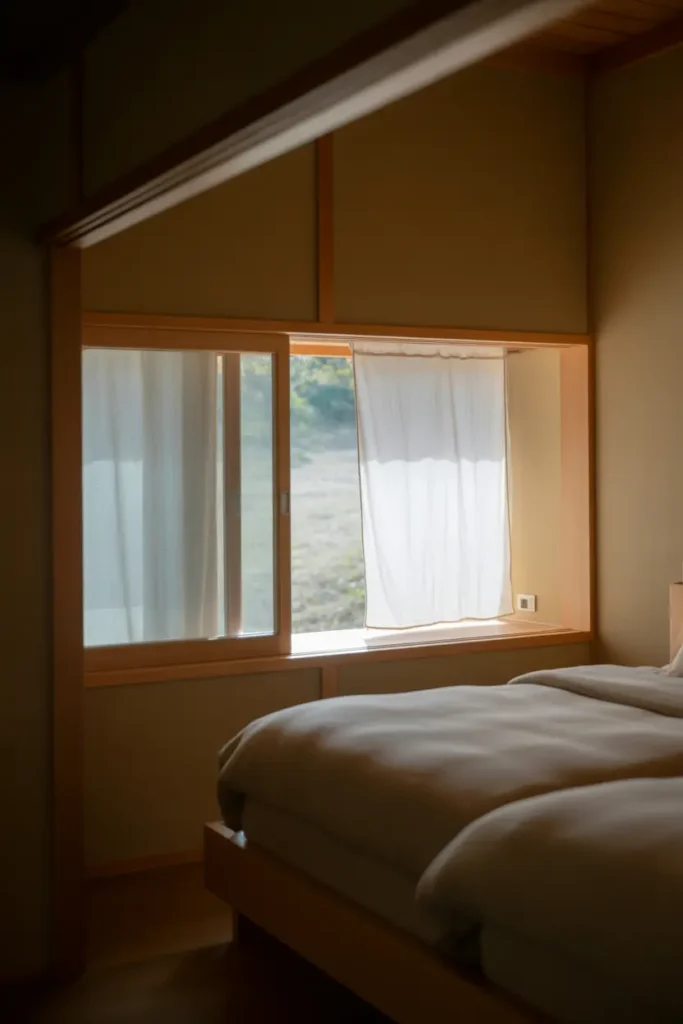
Privacy doesn’t have to mean blocking out the sun with heavy, solid walls. Shōji screens—those iconic wood and rice paper frames—are a genius way to divide your space. Think of them like a giant lampshade for your entire bedroom; they turn harsh, direct sunlight into a soft, cozy glow that makes everything look better.
I’ve found these are perfect for hiding a messy desk or creating a quiet little corner for reading without making the room feel cramped. Because they are so lightweight and slide open easily, they keep the air moving and the room feeling breezy. It’s a simple way to add some traditional style that feels much more elegant and “open” than using thick curtains or bulky room dividers.
Low Wooden Platform Bed
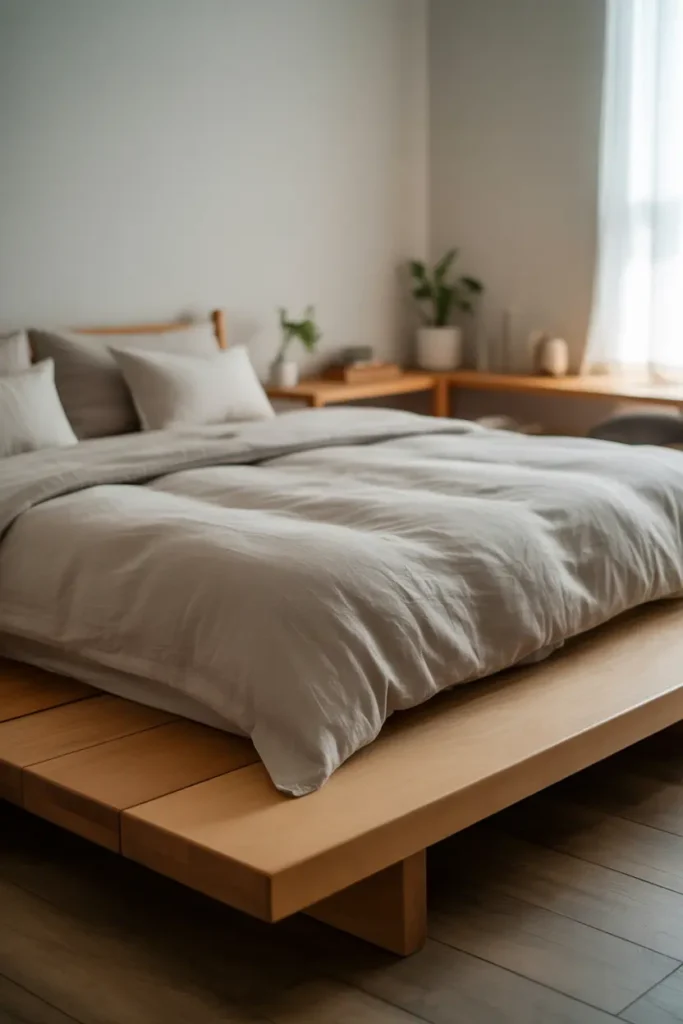
The “floor bed” is probably the first thing people think of when they imagine a Japanese room, but you don’t actually have to sleep on the ground to get that vibe. A low wooden platform bed gives you the same look while still feeling modern. By keeping the bed low, you leave a lot of empty space on the walls above, which is a neat trick to make a ceiling feel higher than it actually is.
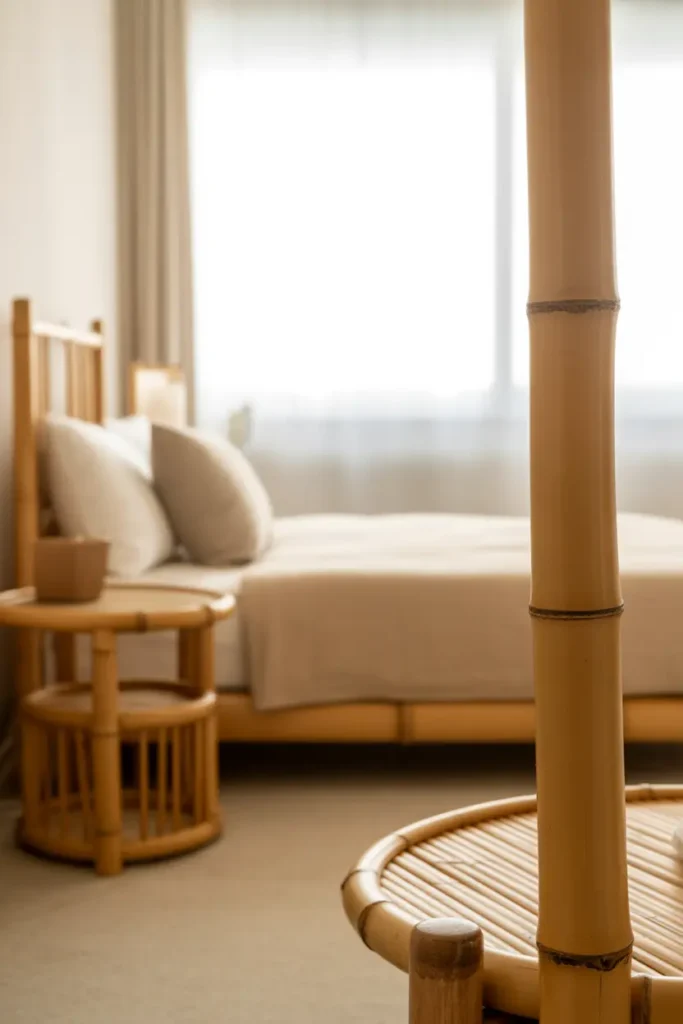
When you’re picking a frame, try to stick with light, natural woods like oak, pine, or even bamboo. I’ve noticed that switching to a low bed changes the whole energy of the room—it feels much more “grounded” and less cluttered. Plus, since there’s no room to shove boxes or junk under a low platform bed, it basically forces you to stay organized. It’s a simple change, but it really makes the whole sleeping area feel like a clean, quiet spot to unwind.
Neutral Color Palette

The secret to that “Zen” feeling isn’t just painting every wall white. It’s actually about using colors you’d find outside—like sand, warm stone, soft moss, or light wood tones. Using a neutral color palette creates what I call “visual quiet.” When your eyes aren’t jumping between bright colors or busy patterns, your brain finally gets a chance to relax.
If you’re not sure where to start, try a warm beige or a very light taupe instead of a cold, clinical white. These colors feel much more “human” and welcoming. They also make your green plants and wooden furniture stand out much better. I’ve found that when the walls and bedding are in the same color family, even a little bit of mess doesn’t look as distracting. It’s the easiest way to make your bedroom feel timeless and clean without much effort.
Floor Cushions and Low Seating
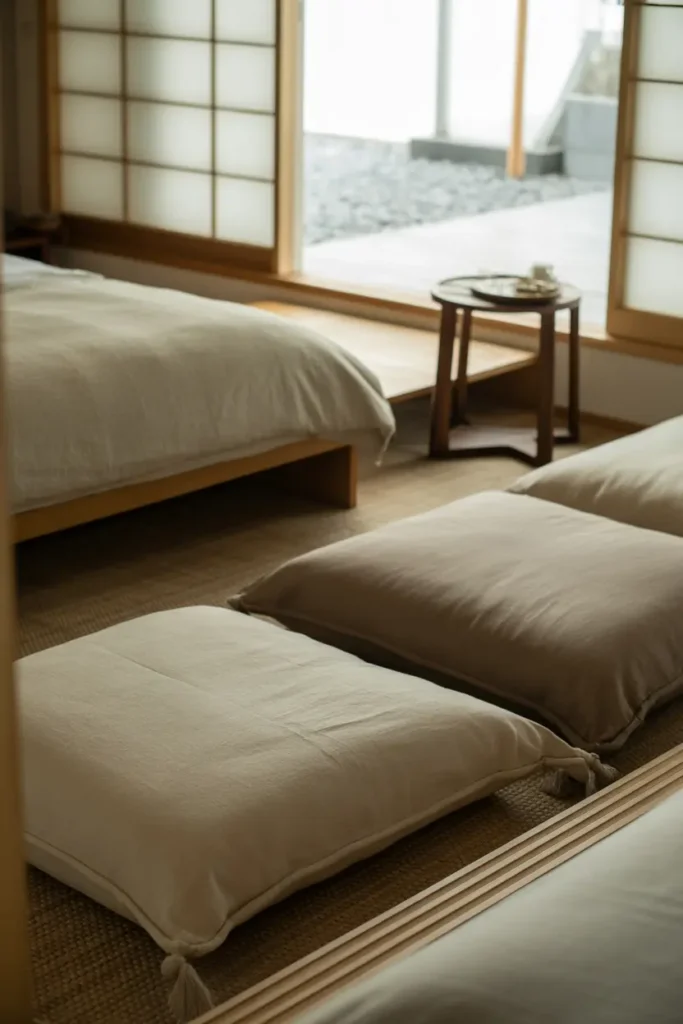
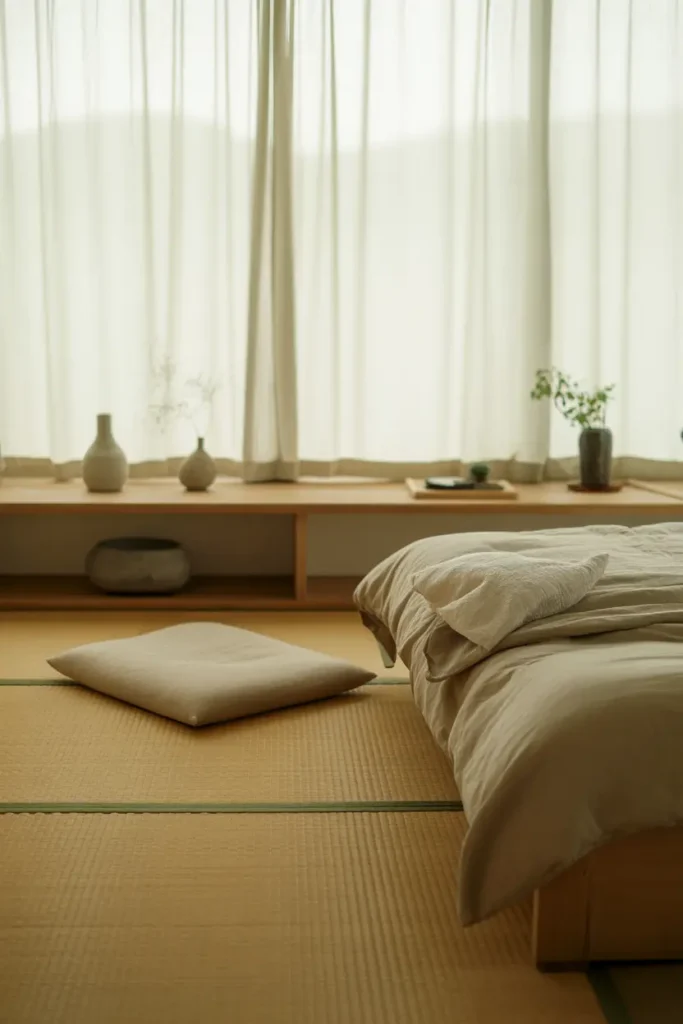
Instead of trying to squeeze a big, bulky armchair into the corner of your bedroom, try using a few high-quality floor cushions (or Zabuton, as they are called in Japan). This keeps the whole room feeling very relaxed and “down to earth.” It’s a great way to create a little spot for your morning coffee or a place to sit while you’re journaling without taking up much space.
The best thing about using low seating is that it keeps the room’s layout feeling open and light. If you have a smaller bedroom, these are perfect because you can just stack them up in a corner when you aren’t using them. I’ve found that sitting lower to the ground actually changes the way you use your room—it makes the whole vibe feel much more personal and quiet. Plus, it’s a lot cheaper than buying a heavy piece of furniture that might just end up collecting dust!
For those looking to maximize comfort and space, these Futon Bedroom Ideas offer practical solutions while maintaining a clean and relaxing aesthetic.
Soft Natural Light

Japanese design is really big on how light affects your mood. Instead of just turning on one bright bulb on the ceiling, try to focus on soft, natural light. This means trading those heavy, dark drapes for sheer linens that let the sun filter through. It makes the whole space feel much more “alive” during the day and incredibly cozy as the sun starts to go down.
I’ve noticed that when you have soft light hitting things like wooden furniture or a green plant, it creates these natural shadows that look like art on your walls. It’s a lot more relaxing than harsh, artificial lighting. If your room doesn’t get much sun, you can still get this look by using warm-toned lamps or even paper lanterns. It’s all about creating a glow that feels gentle on the eyes and helps you wind down after a long day.
Minimalist Bedding

One of the quickest ways to ruin a “Zen” look is by using loud patterns or bright, shiny fabrics on your bed. To keep things Japanese-style, you want to stick with minimalist bedding. This usually means picking out high-quality linens in colors like soft gray, cream, or off-white. The goal is to make the bed look inviting and comfortable without it becoming a huge distraction in the middle of the room.
In my experience, switching to natural fabrics like 100% linen or cotton makes a massive difference in how well you sleep. These materials have a bit of a textured, lived-in look that actually gets better over time. You don’t need five different decorative pillows or a heavy comforter; just a few clean layers are enough. It’s a lot easier to make the bed in the morning, and it keeps your mind feeling clear because there isn’t a mountain of fabric to deal with every day.
Natural Wood Elements
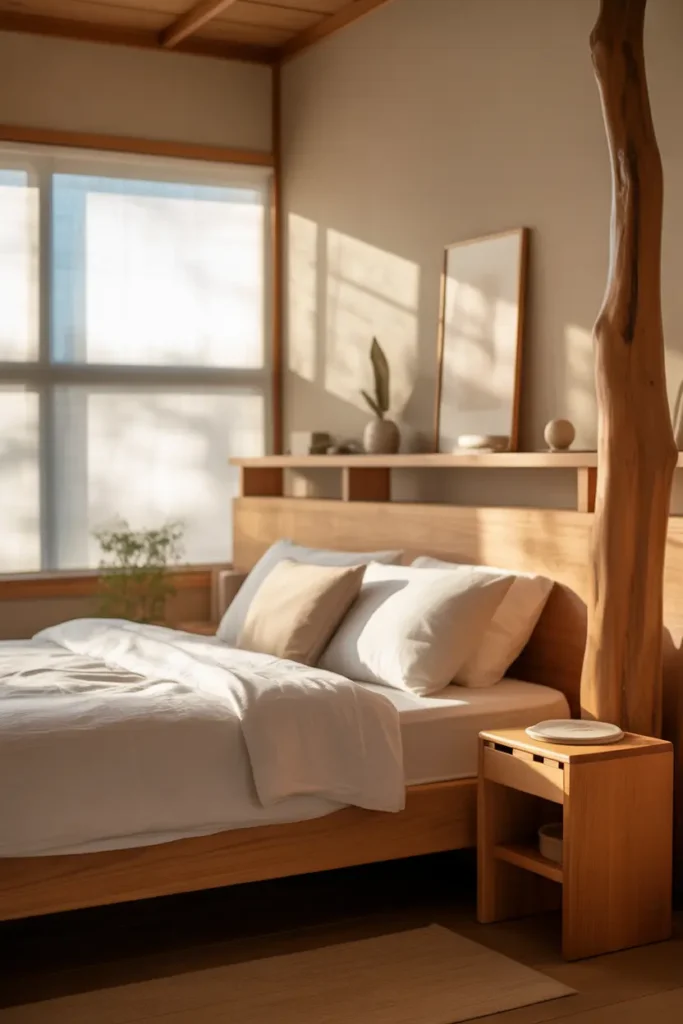
If you look at any classic Japanese bedroom, you’ll notice a lot of wood. But it’s not the shiny, dark, polished kind; it’s usually natural, light-colored wood. Adding these elements is the best way to keep a minimalist room from feeling “cold” or like a doctor’s office. The wood adds a bit of organic warmth that makes the space feel like a real home.
You don’t have to go overboard with this. Even something as small as a wooden bedside table, a simple picture frame, or a set of bamboo blinds can make a big difference. I’ve found that when you mix these wooden textures with neutral walls, the room starts to feel a lot more “connected” and peaceful. It’s a timeless look that never really goes out of style, and it’s a lot more durable than the cheap plastic or metal furniture you see everywhere else.
Simple Greenery
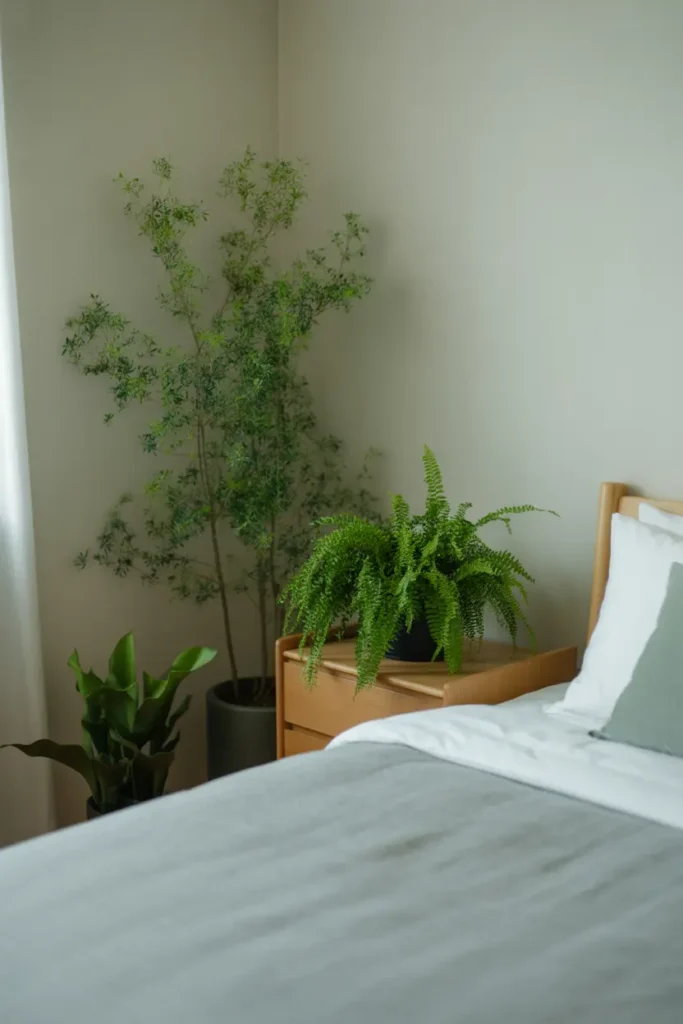
You don’t need to turn your bedroom into a full-blown jungle to get that Japanese feel. In fact, for this look, less is definitely more. Just one or two well-placed plants can add enough “life” to the room without making it feel cluttered. Think of a single tall plant in a corner or a small potted fern on your nightstand.
I’ve found that sticking to plants with simple, clean shapes works best. Something like a Snake Plant or a Peace Lily is perfect because they don’t grow too wild and they actually help clean the air while you sleep. The green of the leaves looks amazing against neutral walls and wood furniture. It’s a very easy way to bring a bit of nature indoors, and it makes the whole room feel much fresher and more “awake” during the day.
Futon Mattress
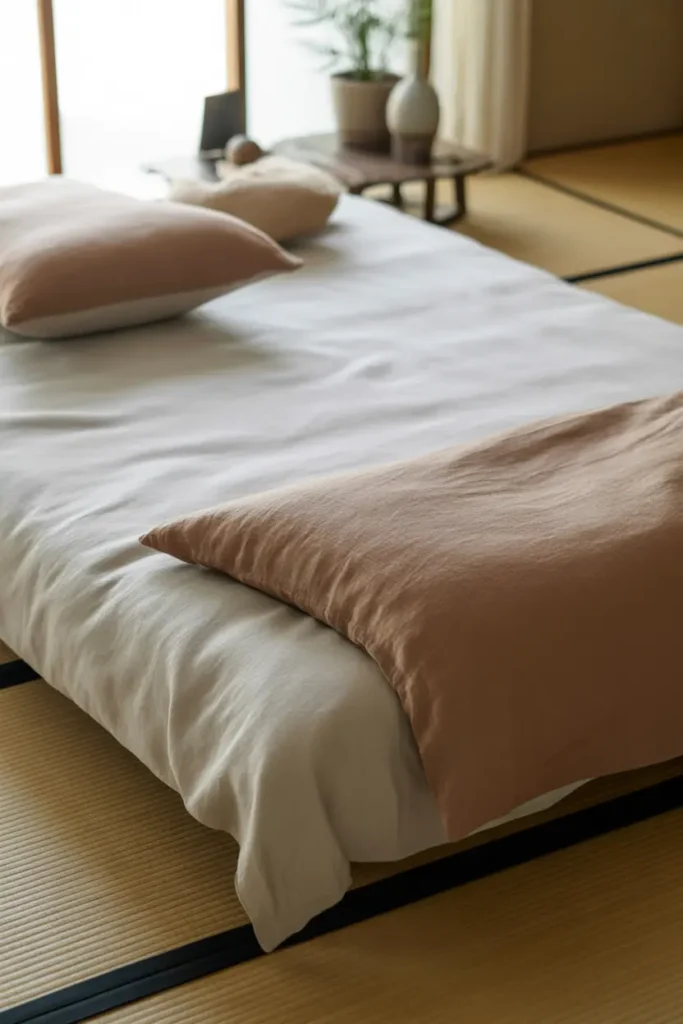
If you really want to lean into the minimalist lifestyle, a traditional Japanese futon is the way to go. Unlike the thick, heavy western mattresses we’re used to, a real futon is much thinner and designed to sit right on a tatami floor or a very low platform. It might take a few nights to get used to the feeling of being so close to the ground, but many people find it’s actually better for their back and posture.
The biggest win here is how much space you save. In Japan, people often fold up their futons and put them away in a closet during the day, which instantly turns the bedroom into a wide-open living space. Even if you don’t put it away every morning, just having such a low-profile bed makes the room look incredibly clean and uncluttered. It’s a great option if you’re living in a studio or a small room where every square foot counts.
Japanese-Style Wall Art
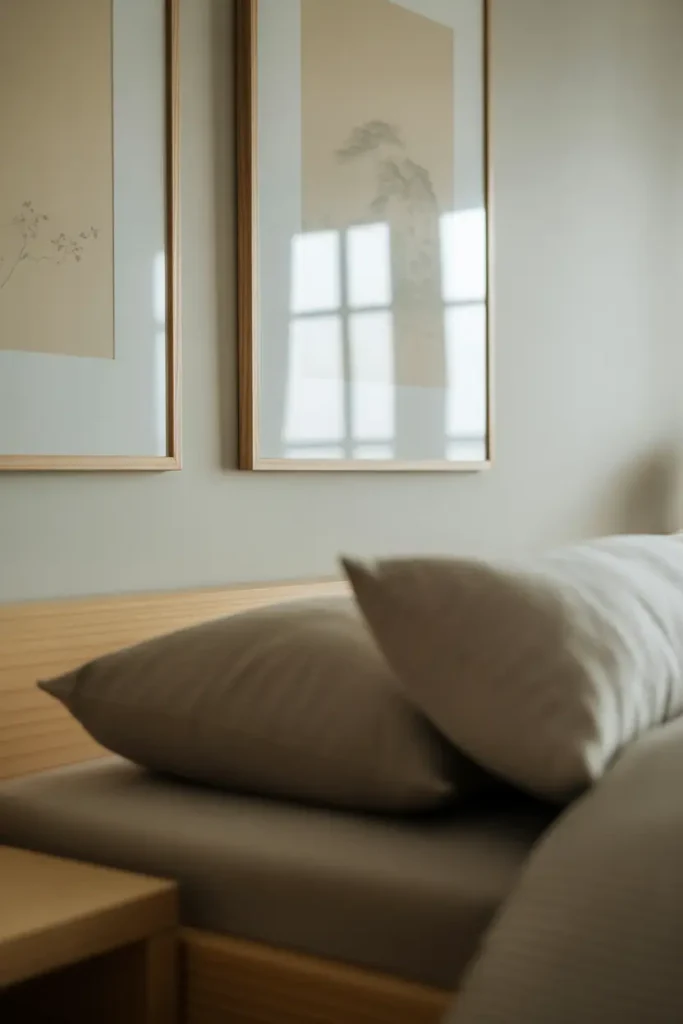
When it comes to the walls, the Japanese style is all about “less is more.” Instead of a gallery wall with twenty different pictures, try picking just one or two pieces of Japanese-inspired art. Something like a simple ink brush painting, a nature print, or even a beautiful piece of calligraphy can act as a quiet focal point without making the room feel crowded.
I’ve found that black-and-white art or very muted colors work best here. You want something that draws the eye but doesn’t “scream” for attention. In my experience, leaving a lot of empty space around a single frame actually makes the art look more important and the room feel more peaceful. It’s not about filling every blank spot on the wall; it’s about choosing one thing that you really love to look at when you wake up.
Neutral Toned Rugs
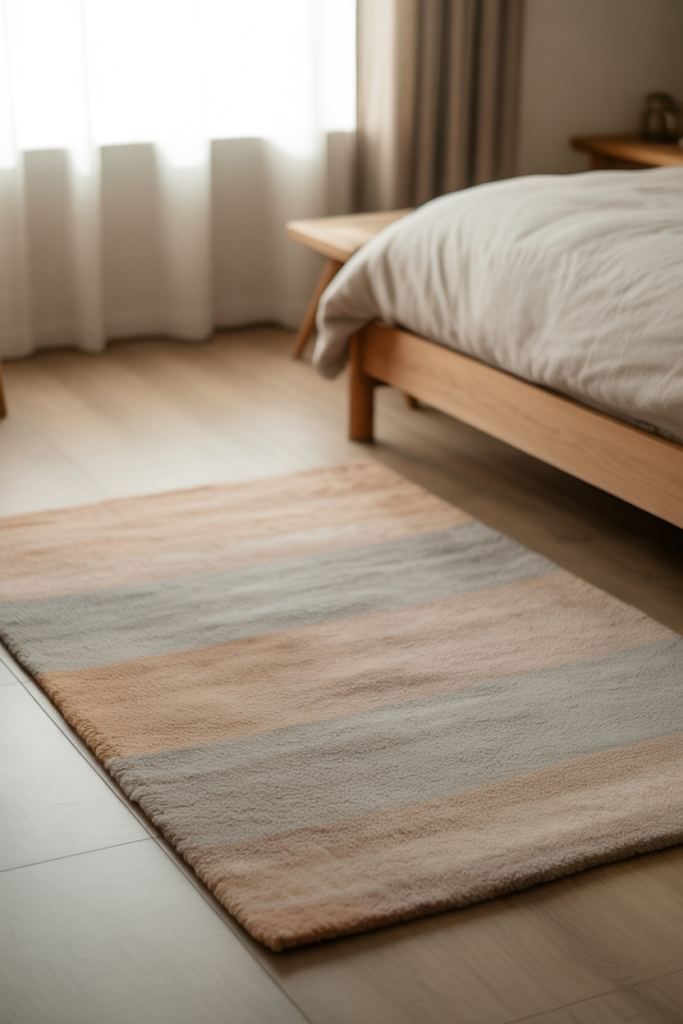
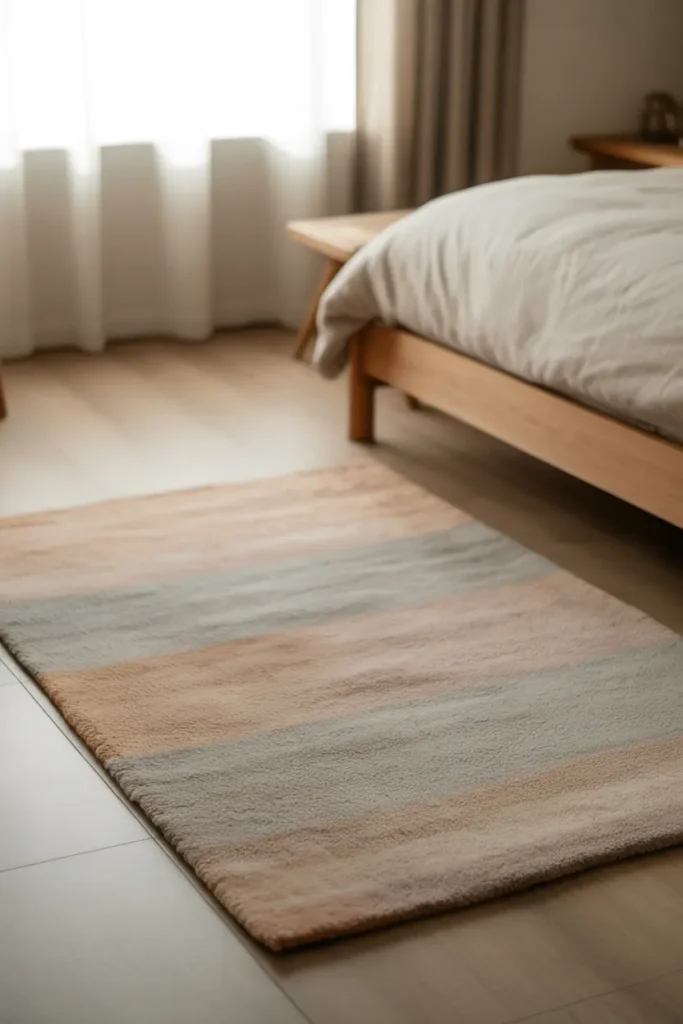
In a minimalist room, you don’t want a rug that has a crazy pattern or neon colors. Instead, look for a neutral-toned rug in shades like oatmeal, soft charcoal, or light beige. Even if you already have wooden floors, a rug helps to “zone” the bed area and makes the whole room feel a lot warmer and more finished.
The trick is to go for texture rather than a busy design. A flat-weave wool rug or something with a simple jute texture feels great under your feet and keeps that natural, Japanese vibe going. I’ve noticed that a rug also helps with the acoustics—it stops the room from sounding “echoey” or empty. It’s a small addition that makes a big difference in how comfortable the space feels, especially on cold mornings when you don’t want to step directly onto a hard floor.
Paper Lantern Lighting
Lighting can really make or break a room’s vibe, especially at night. Instead of those modern metal lamps or bright plastic fixtures, try using paper lanterns. They’re a huge part of Japanese design and for a good reason—the paper shade acts like a filter, turning a regular light bulb into a soft, warm glow that doesn’t hurt your eyes.
I’ve found that these lanterns are perfect for a bedroom because they make the whole space feel a lot “softer” and more relaxing. You can hang a large round one from the ceiling or just get a small table version for your nightstand. It’s a very cheap and easy way to add some character to your room without making it feel cluttered or over-decorated. Plus, there’s something about that warm, filtered light that just makes you want to put your phone away and actually get some sleep.
Wabi-Sabi Accents
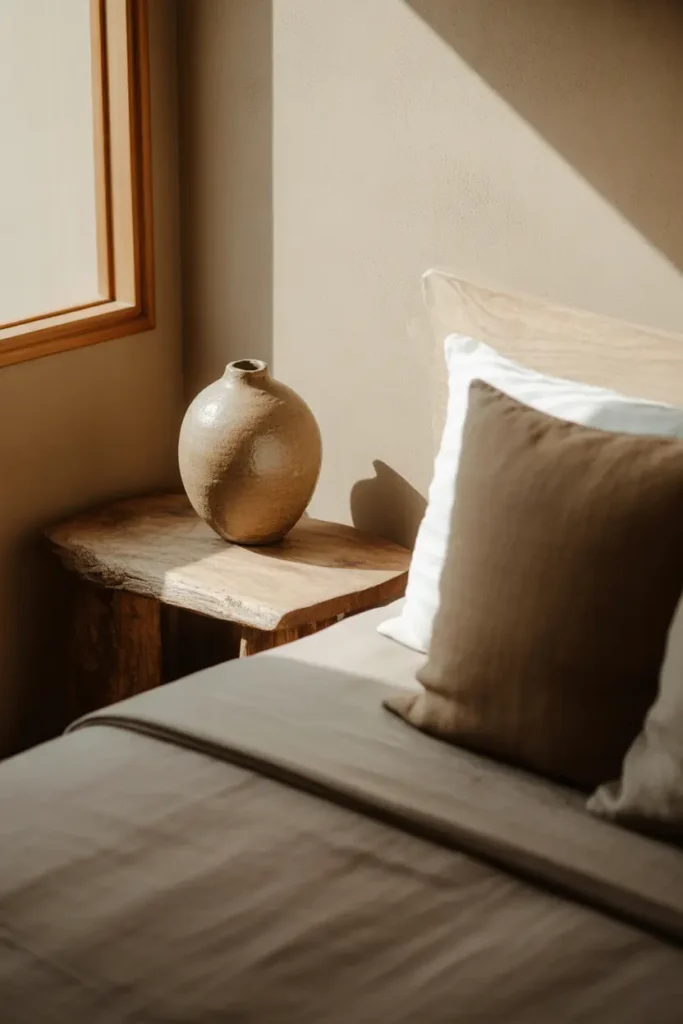
In Japanese design, there’s a famous idea called Wabi-Sabi, which basically means finding beauty in things that aren’t perfect. For your bedroom, this means you don’t have to stress about every single thing looking brand new or perfectly polished. A handmade ceramic vase with a tiny crack, a wooden stool with a visible grain, or even linen sheets that stay a little bit wrinkled actually add character to the room.
I’ve found that when you allow for these small “imperfections,” the room feels much more lived-in and real. It takes the pressure off trying to keep a “showroom” house. Instead of looking sterile, your bedroom starts to feel like a place where you can actually relax and be yourself. It’s about choosing items that have a story or a natural feel to them, rather than just buying mass-produced plastic stuff that has no soul.
Simple Sliding Windows
Most people forget that how a room smells is just as important as how it looks. To get that authentic Japanese feel, you should skip the heavy, artificial air fresheners and go for natural scents instead. Think of things like sandalwood, cedar, or even Hinoki (Japanese cypress). These aren’t overwhelming; they just give the room a clean, woody smell that helps you relax the moment you walk in.
In my experience, using a simple incense holder or a small wood-mist diffuser works best. I’ve found that a light, natural scent really ties the whole “Zen” theme together. It makes the bedroom feel like a getaway from the rest of the house. Plus, it’s a much nicer way to wake up than smelling nothing but stale air or strong chemicals. It’s a small detail, but it really helps in setting a quiet, peaceful mood for the night.
Bamboo Details
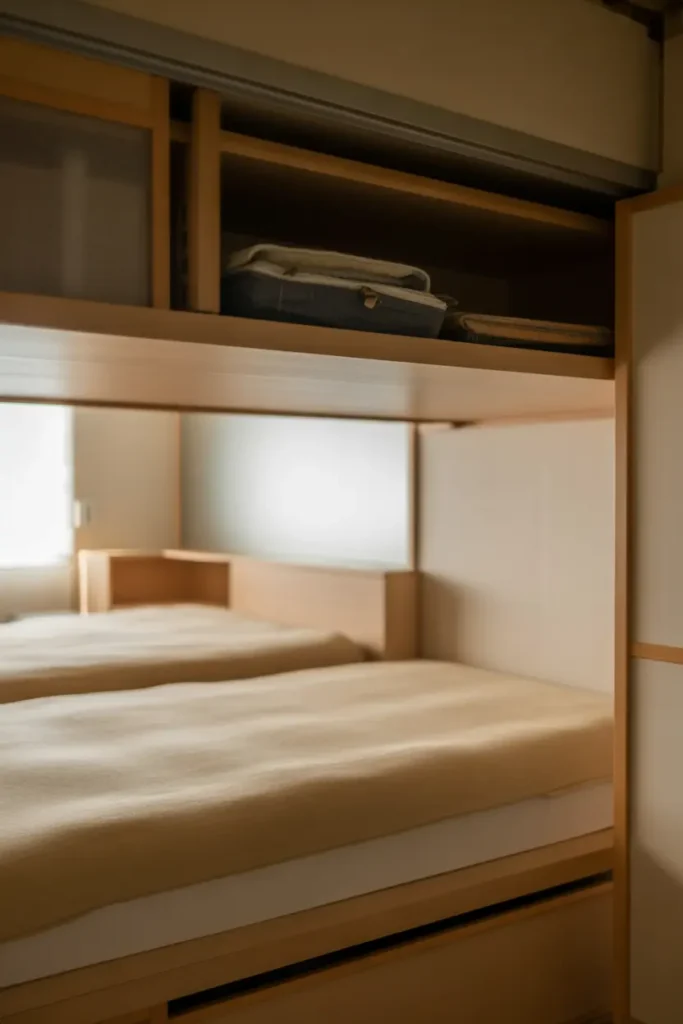
The biggest enemy of a minimalist Japanese bedroom is clutter. If you have stuff piled up on every surface, you lose that calm, open feeling immediately. The trick is to use hidden storage so everything has a place out of sight. Instead of open shelves that just collect dust and look “busy,” look for simple wooden cabinets with sliding doors or even a bed frame with built-in drawers.
I’ve found that the less “stuff” you can see, the better you’ll sleep. In Japan, they often use built-in wall closets (Oshiire) to hide everything from futons to clothes. You can do the same thing by using plain, matching boxes or baskets to organize your closet. When you close the door and see nothing but clean lines and empty surfaces, your brain can finally stop scanning the room and just rest. It’s not about throwing everything away; it’s just about keeping it neatly tucked away where it doesn’t distract you.
Hidden Storage Spaces
In Japanese culture, there is a big focus on the transition from the outside world into your home. You can bring this same idea to your bedroom by creating a clear entryway. Even if you don’t have a lot of space, just keeping the area behind the door completely empty and clean makes a huge difference. It’s like a mental signal that tells you you’re entering a private, quiet zone.
I’ve found that placing a small wooden stool or a simple mat right at the entrance helps a lot. It gives you a spot to leave your slippers or just a second to breathe before you step into the rest of the room. When the entrance is cluttered with shoes or laundry bags, that “Zen” feeling is gone before you even get inside. By keeping the doorway open and bright, you’re making sure the first thing you see is the calm space you’ve created, which is the perfect way to end your day.
Final Thoughts
Creating a Japanese-style bedroom isn’t about spending a fortune on authentic antiques or trying to live in a perfectly empty box. It’s really just about choosing things that feel natural and getting rid of the extra noise that clutters up your life. Whether you start with a simple pair of floor cushions or go all-in with a low platform bed, the goal is to make your room feel like a place where you can actually breathe.
In my experience, you don’t have to do all 17 of these things at once. Just picking two or three ideas that fit your current space will make a massive difference in how you feel when you wake up. At the end of the day, your bedroom should be the one spot in your house where the outside world can’t reach you. Keep it simple, keep it natural, and you’ll find that a little bit of “Zen” goes a long way.