18 Open Shelving Kitchen Ideas (Styled)
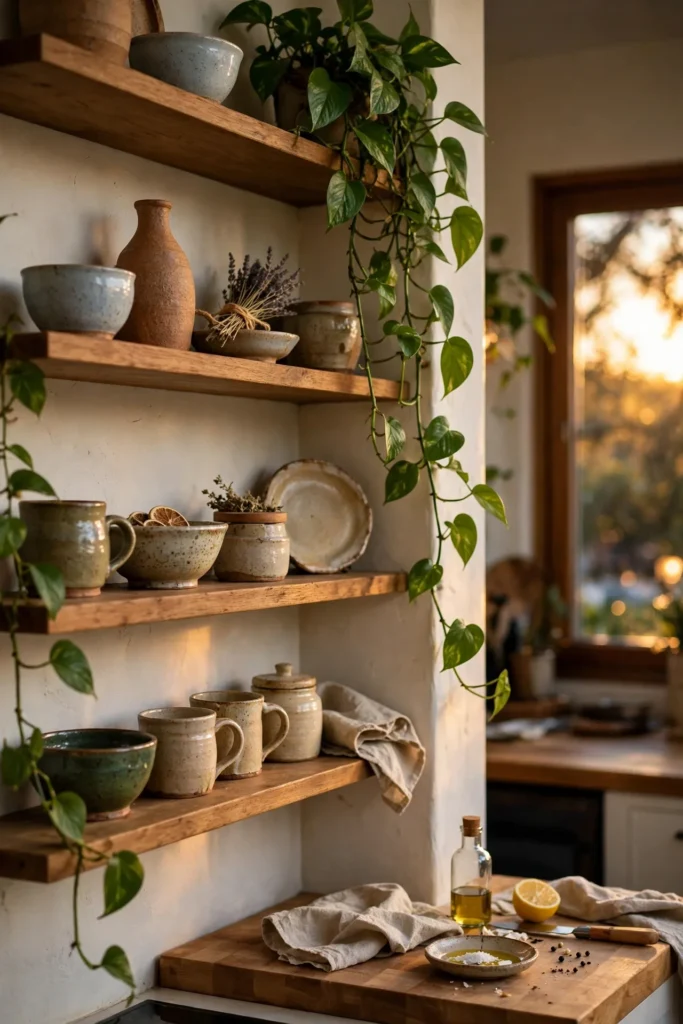
Open shelving kitchen ideas work best when the shelves reflect the way you actually cook, not a showroom display you are afraid to touch. Done well, a few open shelves make a kitchen feel bigger, brighter, and more personal than a wall of closed cabinets ever could, because everything you reach for daily is right where you can see it. The trick is not buying more pretty dishes. It is choosing what earns a spot, giving each item room to breathe, and styling the shelves so they still function on a busy Tuesday night. These 18 open shelving kitchen ideas cover the practical side first — what to put where, how to keep it clean, and how to avoid the cluttered look — so your shelves stay beautiful long after the first styling session.
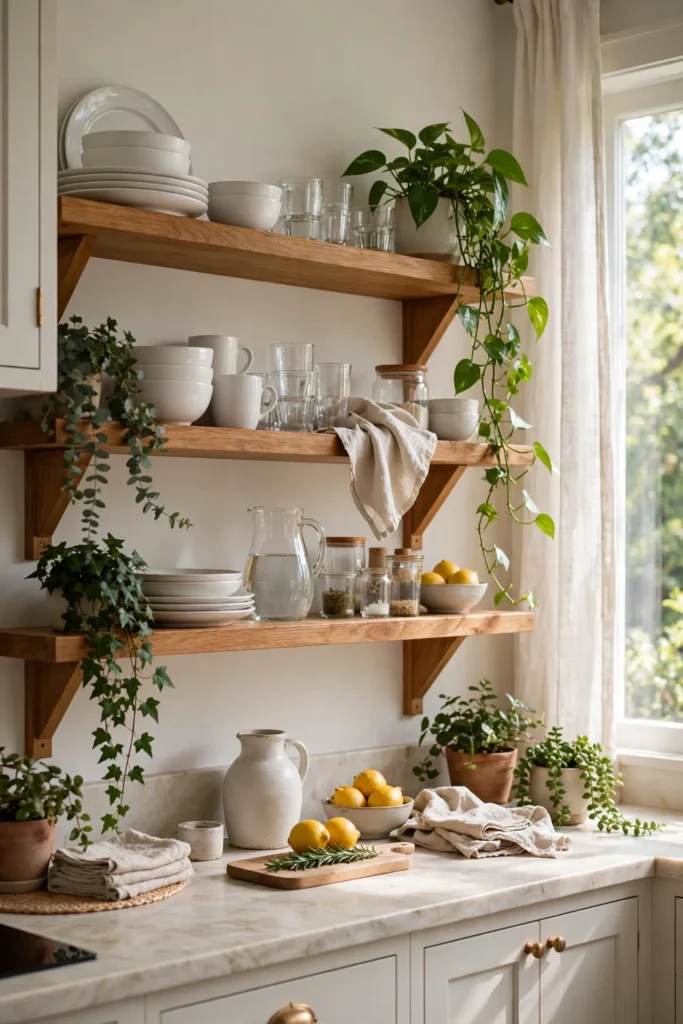
Read This Before You Rip Out a Cabinet
Before you commit to open shelving, live with the idea for a week. Take the doors off one upper cabinet and see how the open look feels when the dishes are not perfectly arranged. If the sight of everyday plates relaxes you, open shelving will suit you. If it makes you want to shut a door, keep your closed storage and add one or two open shelves as an accent instead of a full wall.
Plan for dust and grease honestly. Shelves near the stove collect a film faster than shelves across the room, so keep rarely used pieces away from the cooking zone and put daily plates and glasses where they get washed often anyway. A quick weekly wipe with a damp cloth keeps open shelves looking intentional, and it takes less time than most people expect once it becomes routine.
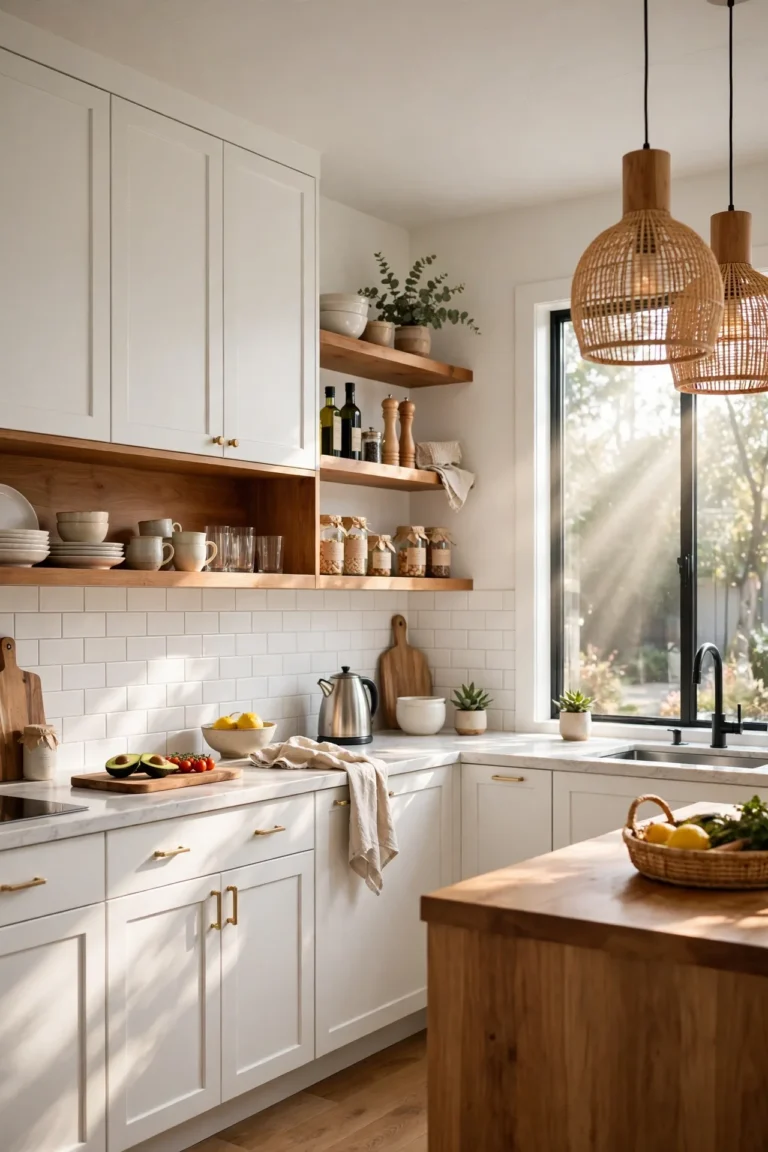
Match the shelf material to your kitchen, not to a trend photo. Thick wood warms up a white kitchen, slim black metal suits a modern space, and painted shelves that match the wall color almost disappear, letting the dishes do the talking. Whatever you choose, anchor shelves into studs or use proper wall anchors, because a shelf of stoneware is far heavier than it looks. For more professional styling inspiration, see Studio McGee’s kitchen design guide.
Finally, decide on a simple rule for what lives on the shelf: if you have not used it in a month, it does not belong up there. Open shelving rewards editing. Fewer, better pieces always look more expensive than a crowded shelf, and they leave room for the decorative touches that make the wall feel styled rather than stored.
1. Start With Everyday Dishes, Not Display Pieces
The most useful open shelving kitchen ideas begin with the plates and bowls you already own. Stack daily white or cream dishes in neat piles, group mugs by color, and let the repetition do the styling for you. Matching everyday dishes look calm even when nothing else is styled, and because you use them daily, they never gather dust. Keep special occasion pieces on a higher shelf and the workhorse dishes at arm’s reach where cooking happens.
2. Let One Color Lead the Whole Wall
Pick a single color to repeat across your shelves and the whole wall instantly looks planned. White dishes with wood cutting boards and one green plant is a classic combination that works in almost any kitchen, while blue stoneware against a white wall makes a quiet statement without extra decoration. The color does not have to match your cabinets exactly. It just needs to appear at least three times so the eye reads it as a choice, not a coincidence.
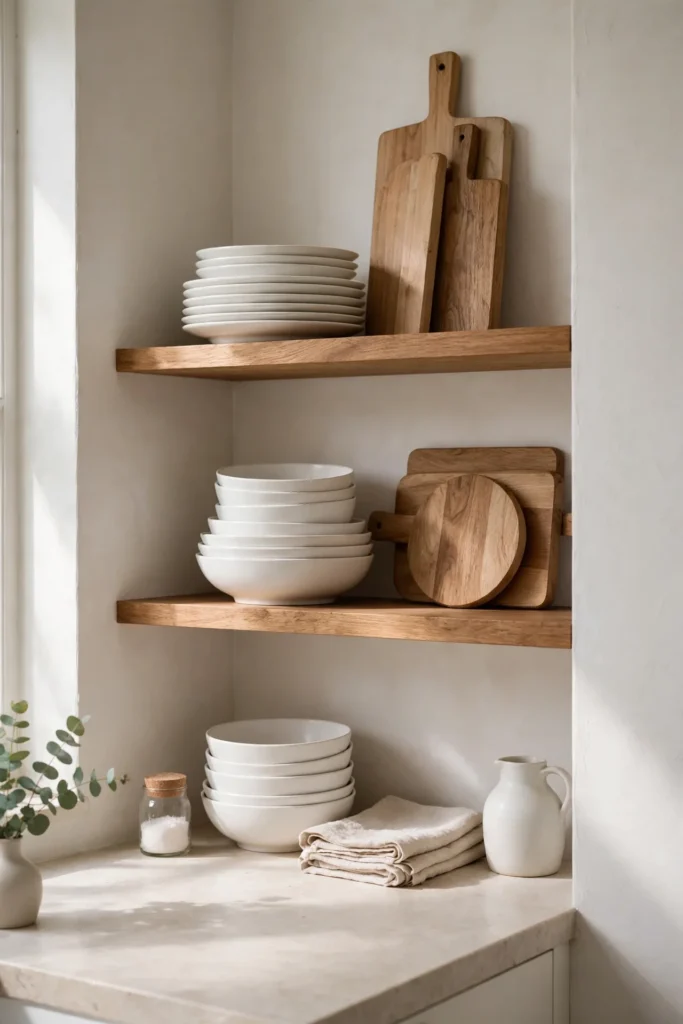
3. Mix Wood Tones for Warmth
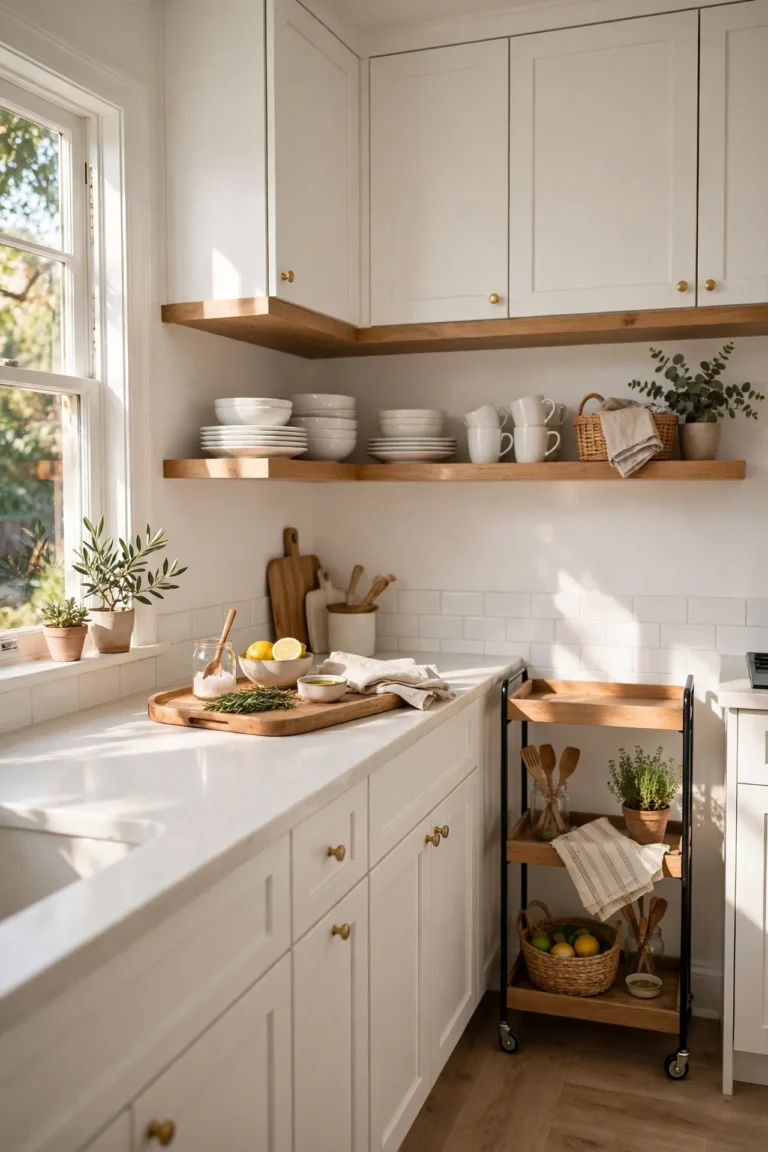
Wood shelves against any wall color add instant warmth, and mixing wood tones keeps the look from feeling like a furniture set. A thick oak shelf above the counter pairs beautifully with a walnut cutting board leaning nearby and beech spoons in a crock. Keep the wood finishes in the same warm or cool family so they feel related, and let the grain show. Sealed wood wipes clean easily, which matters where steam and splashes are daily life.
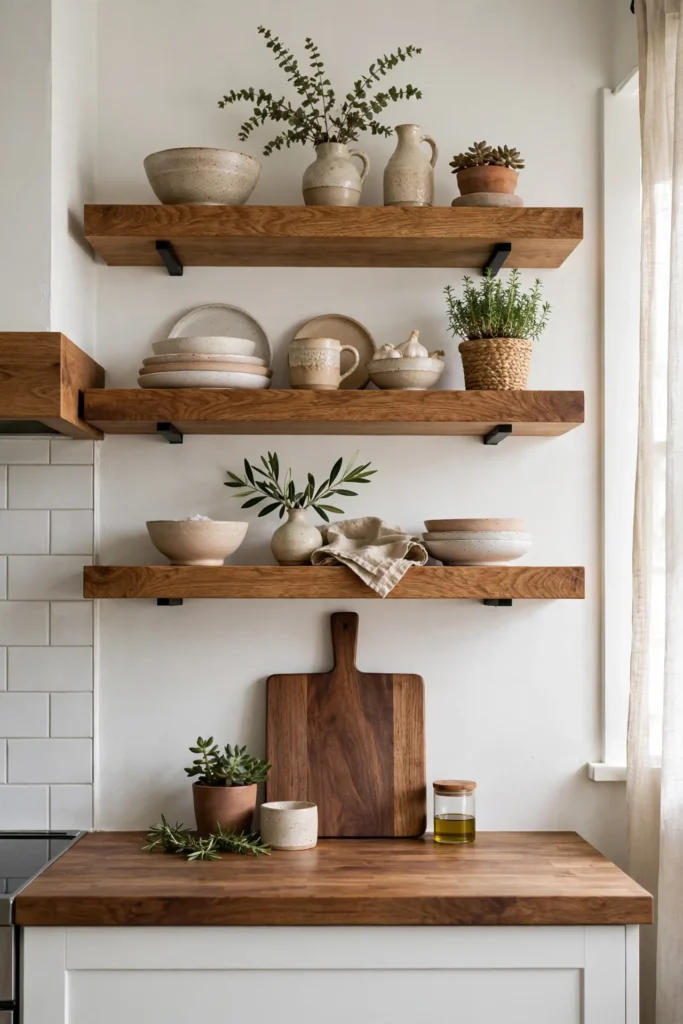
4. Give Glassware Its Own Shelf
Glassware earns its own shelf because it catches light in a way nothing else on the wall does. Group drinking glasses, wine glasses, and a few jars together, leaving space between groups so each shape reads clearly. Hang wine glasses upside down from an under-shelf rack if room is tight, and keep everyday tumblers on the lowest shelf so guests can help themselves. Clear glass also visually lightens a dark kitchen wall, a useful trick in rooms with little natural light.
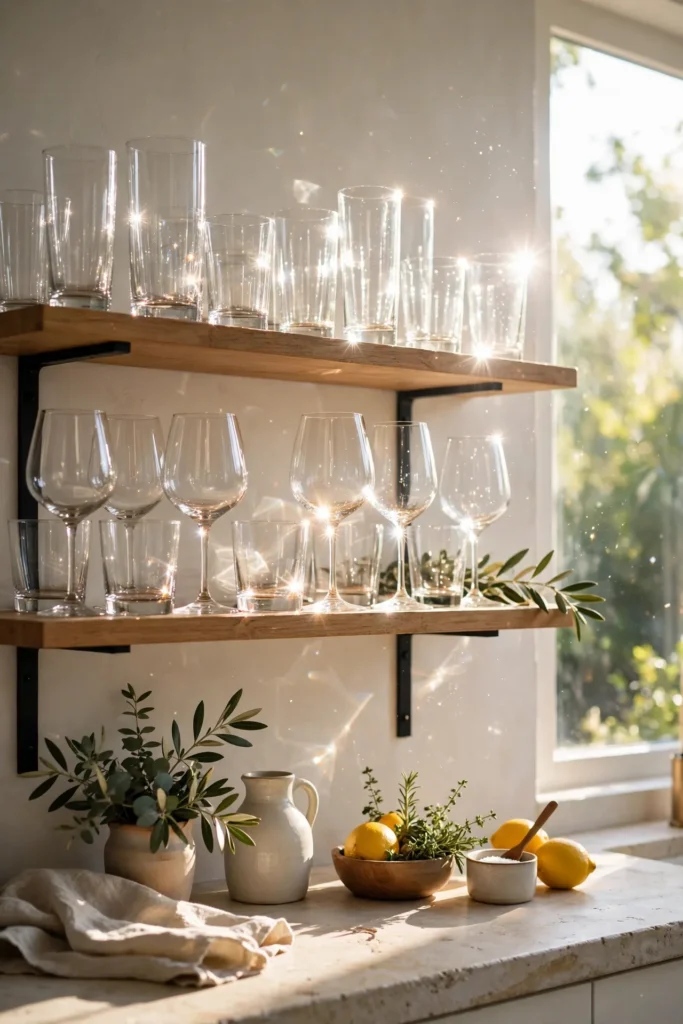
5. Style in Odd Numbers and Small Groups
Stylists group objects in threes and fives for a reason: odd groupings look natural while even rows look like a shop display. Try a stack of bowls, a small plant, and a leaning cutting board as one group, then leave a gap before the next group starts. The empty space matters as much as the objects, because it gives the eye a place to rest and makes the shelf look curated rather than crammed. If a shelf starts to feel busy, remove one item before adding anything new.
6. Add Lighting Under or Above the Shelves
A slim LED strip under each shelf changes the whole wall after dark, turning stored dishes into a warm display and giving you task light on the counter below. Battery puck lights work if you cannot wire anything, and a small picture light above a single statement shelf gives a gallery feel. Choose warm white light, around 2700K, so the glow flatters both the dishes and the food. Lighting is the one upgrade that makes even modest shelves look expensive.
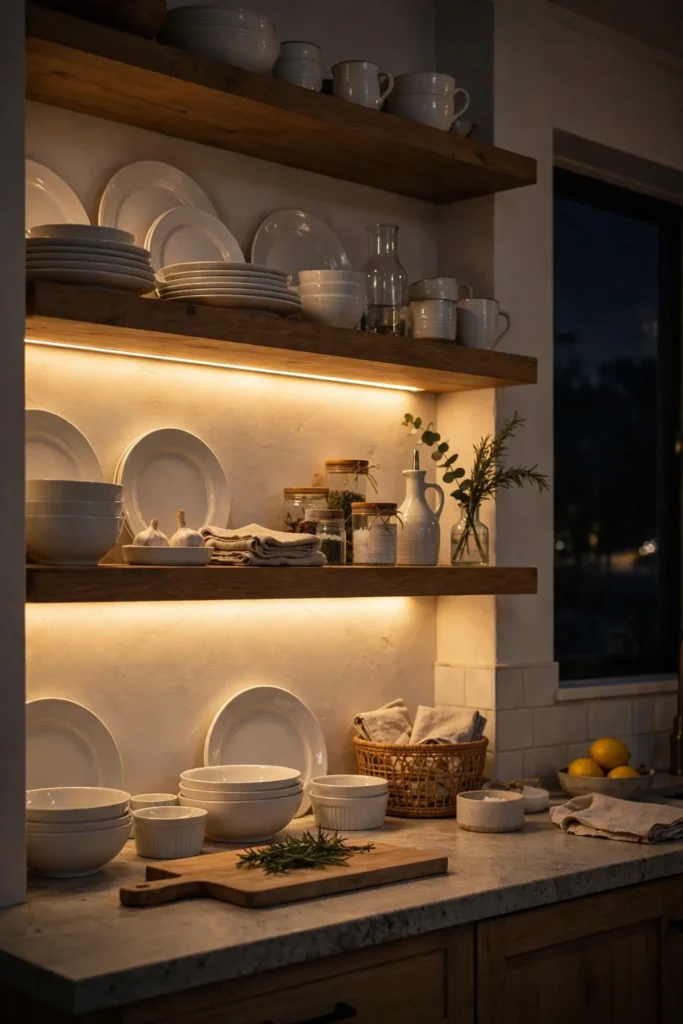
7. Use Open Shelves to Open Up a Small Kitchen
In a small kitchen, replacing one run of upper cabinets with open shelves can make the room feel noticeably larger, because the wall stays visible and light travels further. This is one of the most practical open shelving kitchen ideas for apartments and galley kitchens. Keep the shelves shallow, around 10 to 12 inches deep, so they hold plates without jutting into your workspace, and store bulky items in the lower cabinets instead. If you want more small-space tricks, these smart small-space ideas use the same visual principles in living rooms.
8. Bring in Plants That Tolerate Kitchen Life
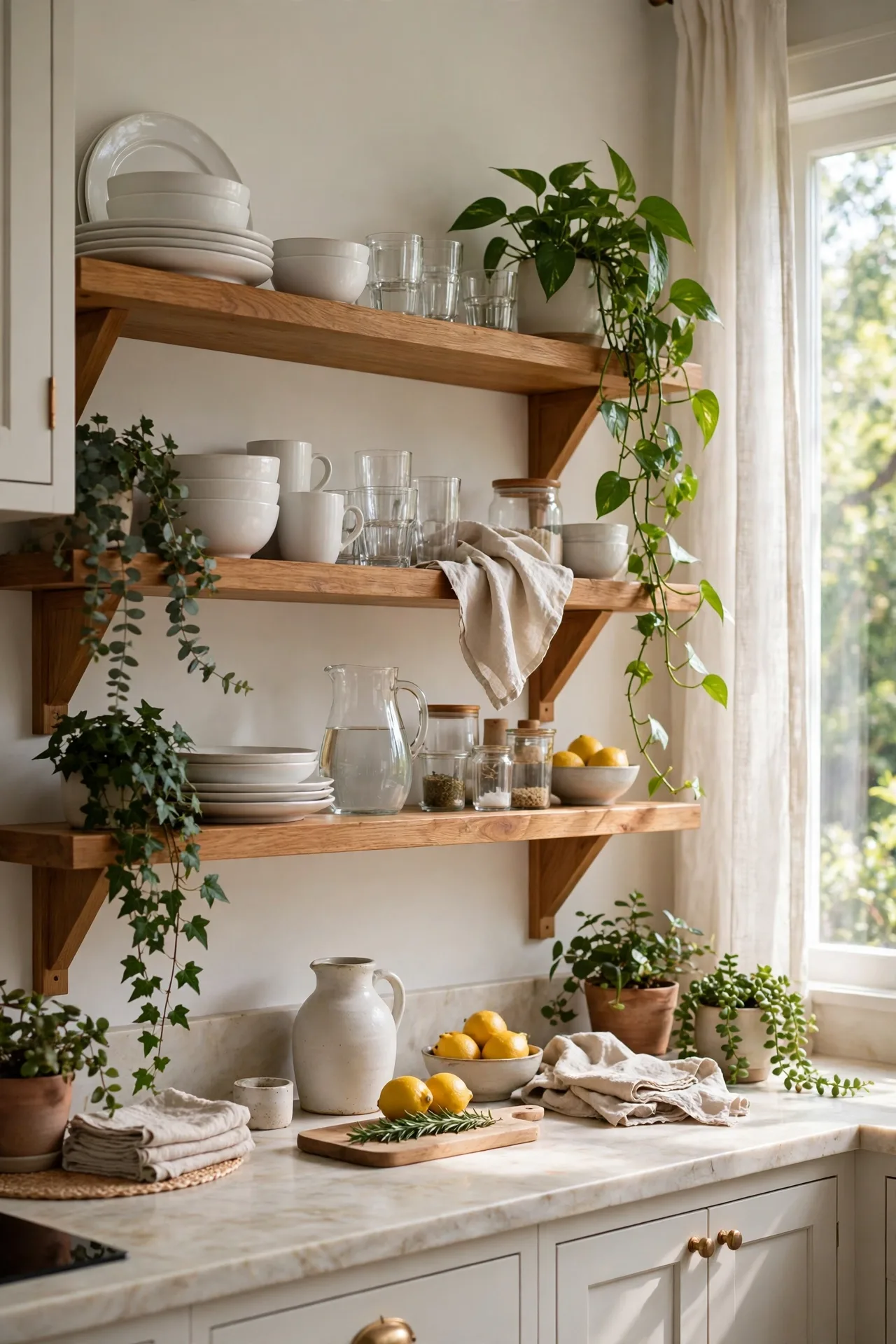
A trailing pothos or a small potted herb on the end of a shelf softens all the hard ceramic and wood, and kitchens are actually kind to many plants thanks to cooking humidity. Choose plants that forgive irregular watering, like pothos, spider plants, or rosemary, and keep them in pots with drainage so watering day does not stain the shelf. One plant per shelf is plenty. Two or three trailing plants along a long shelf can turn the whole wall into a living feature.
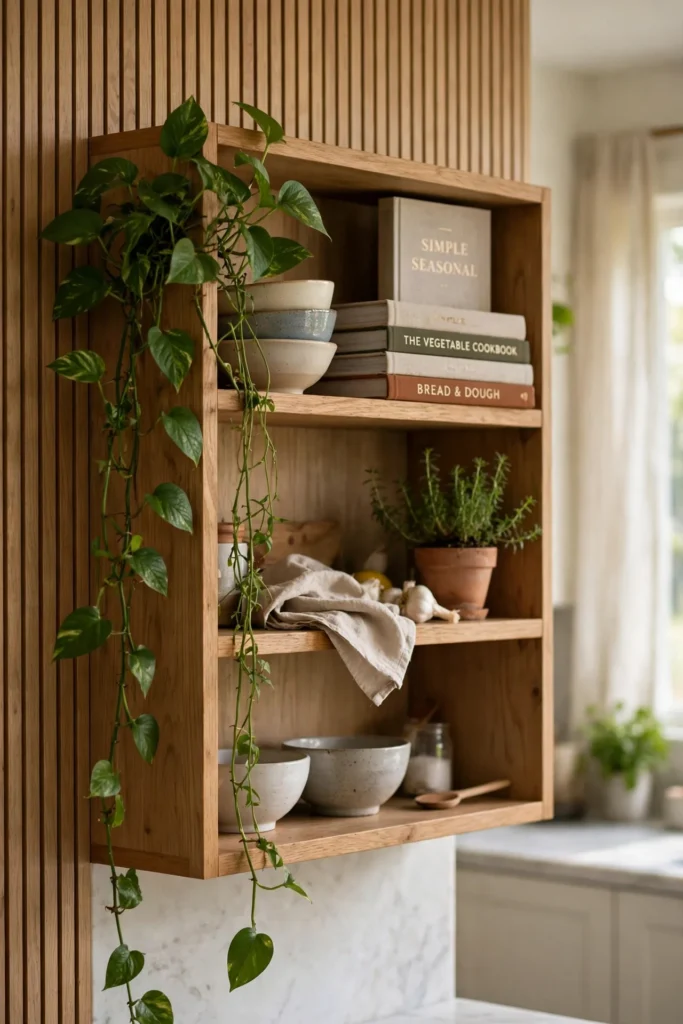
9. Mix Materials So Shelves Do Not Look Flat
A shelf of only white ceramic can look flat in photos and in real life, so mix in wood, glass, metal, and linen to give the wall texture. A woven basket for linens, a brass rail with hanging cups, a marble board leaning upright, and a stack of linen napkins each add a different surface for the eye to catch. The mix keeps shelves interesting even when the color palette stays neutral, and it lets you change the look seasonally by swapping one material.
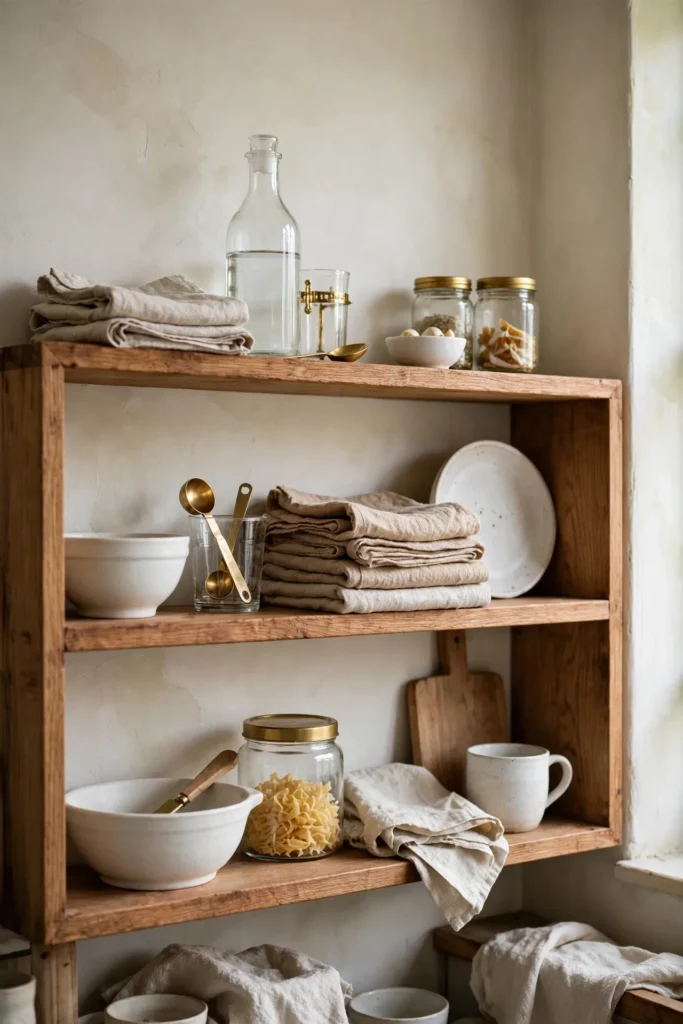
10. Keep the Bottom Shelf for Daily Cooking
Reserve the lowest, easiest-to-reach shelf for the things you grab while cooking: oils, salt and pepper, your favorite pan, and the cutting board. Decant oils and vinegars into matching bottles if the original packaging clashes, and keep spices in uniform jars so the shelf reads as tidy even when full. This working shelf does not need to look styled, it needs to work, and grouping cooking essentials together saves steps during meal prep. Put the pretty, rarely used pieces higher up, where they are seen but not in the way.
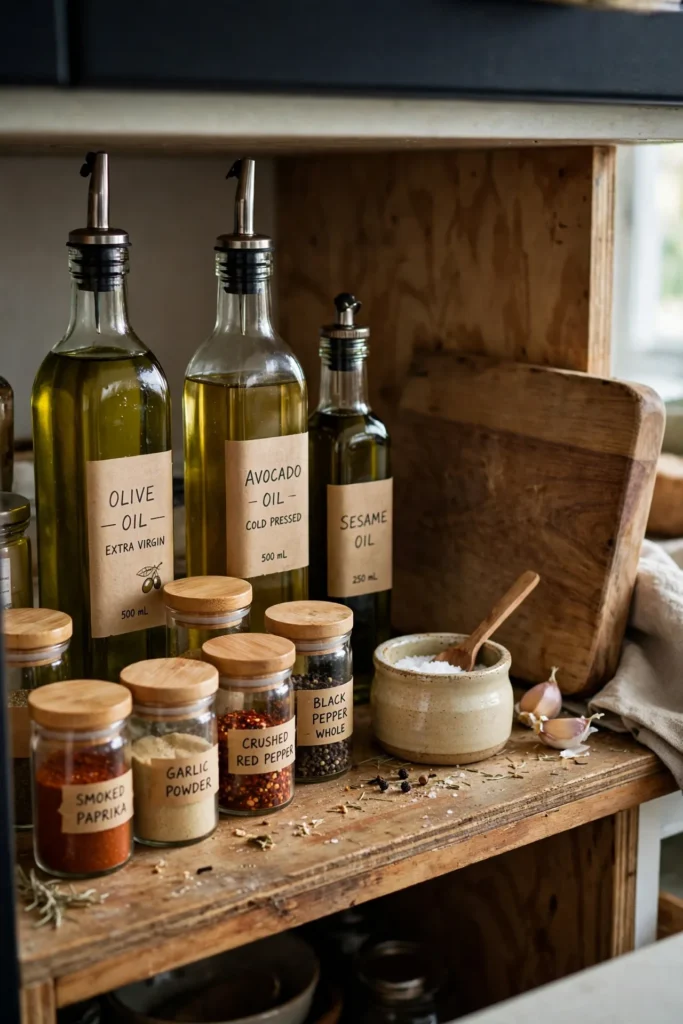
11. Try a Single Statement Shelf Instead of a Wall
If a full wall of open shelving feels like too much commitment, one long statement shelf gives you most of the look with none of the upkeep. A single thick wood shelf above the sink or the coffee station holds a few favorite pieces and a plant, leaving the rest of your cabinets intact for everything you would rather hide. This also suits renters, since one shelf needs only a couple of wall anchors. Style it like a picture ledge: tall items at the ends, shorter pieces in the middle, one trailing plant.
12. Carry the Style Into an Open-Plan Living Space
When the kitchen opens into the living room, the shelves become part of the living room view, so style them to match the room beyond. If the living space is coastal and light, keep the shelves pale with natural textures; if it is warm and rustic, lean into wood and earthy ceramics. This shared palette makes the open plan feel like one home instead of two rooms sharing a wall. For inspiration on tying the two spaces together, these coastal living room ideas show how a light, natural palette flows across an open plan.
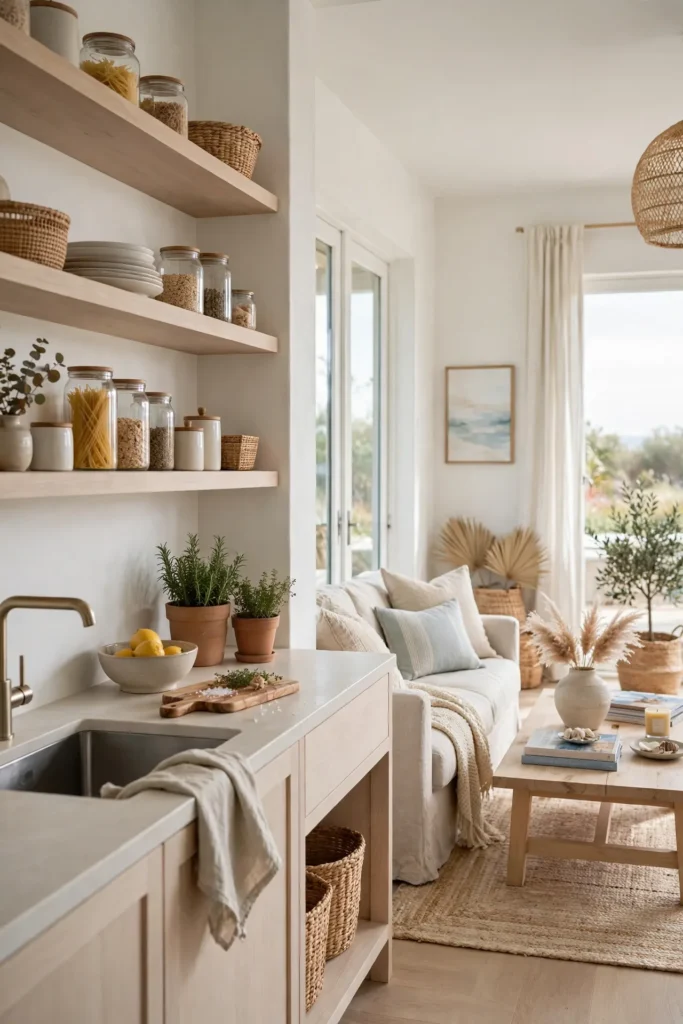
13. Style Seasonally Without Redoing the Shelves
You do not need to restyle open shelves from scratch every season. Keep the everyday dishes as the base layer, then swap just two or three accents: a small wreath in winter, a bowl of citrus in summer, a ceramic pumpkin in autumn. Because the base stays the same, the seasonal swap takes ten minutes. Store the seasonal accents in one labeled box, and resist buying new decor each season when a plant cutting or a bowl of fruit does the same job.
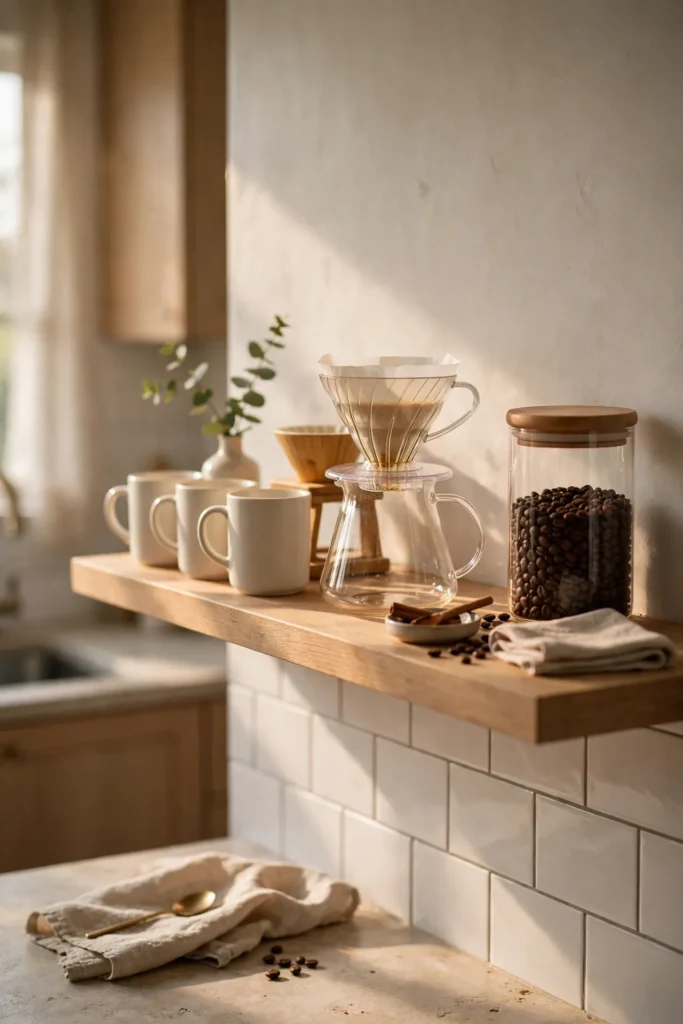
14. Build a Coffee Station Shelf
A dedicated coffee shelf turns a morning routine into a small ritual. Group the coffee maker or pour-over set, mugs, a jar of beans, and a tiny sugar bowl on one shelf near an outlet, keeping everything for that first cup in one place. Matching mugs make the station look intentional, and a small tray underneath catches drips and visually groups the pieces. If counter space is tight, this shelf frees the counter entirely, a real win in a small kitchen.
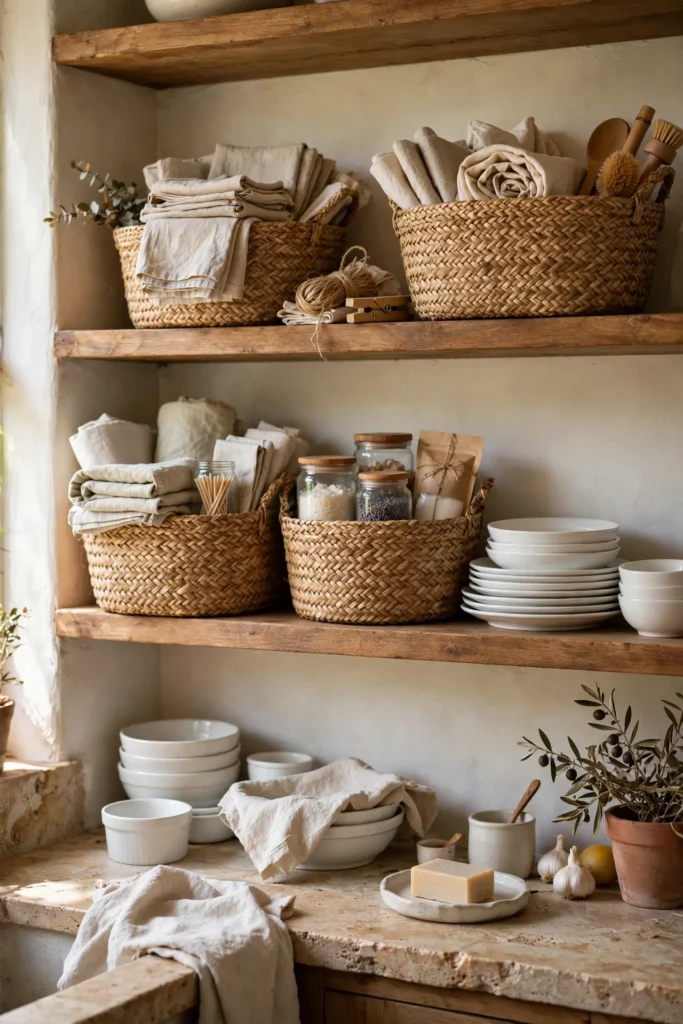
15. Use Baskets and Boxes for the Unglamorous Stuff
Not everything in a kitchen is photogenic, and open shelving does not mean everything must be on show. Woven baskets and lidded boxes hide tea towels, cleaning supplies, and odd-shaped gadgets while adding texture to the shelf. Choose baskets that match the shelf material so they read as part of the styling rather than storage you are apologizing for. One or two baskets per shelf is the right balance.
16. Anchor Shelves With Art or a Mirror
A small framed print or a leaning mirror at one end of a shelf stops the wall from looking like a warehouse row. Art adds a personal note that dishes alone cannot, and a mirror bounces light around a dim kitchen while making the room feel deeper. Lean, do not hang, pieces that sit on the shelf itself, and keep them away from the stove’s steam. One piece of art per shelf run is enough.
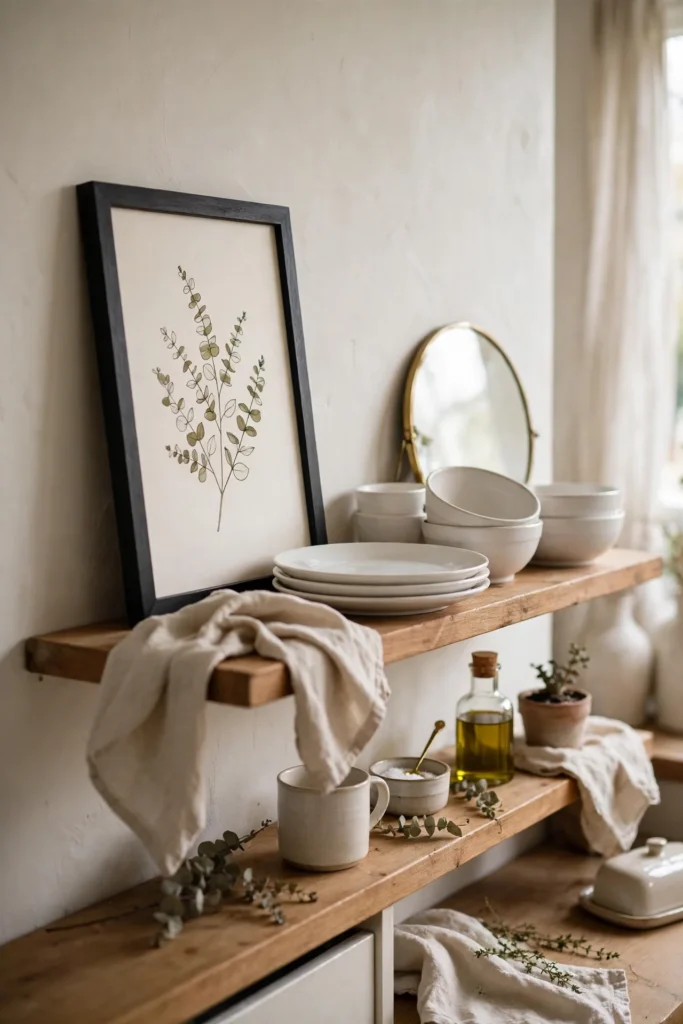
17. Keep a Consistent Gap and Height Rhythm
Shelves look best when the spacing follows the height of what sits on them, with breathing room above each group. Leave a few inches above tall items like pitchers and cutting boards so nothing feels wedged in, and keep the gap between shelves roughly consistent across the wall. If you are installing new shelves, hold your tallest items against the wall first and mark spacing from real objects, not a diagram. Consistent rhythm separates a professional-looking installation from shelves simply screwed to the wall.
18. End With a Shelf You Love Looking At
The last shelf to style should be the one you see most, often the one opposite the door or above the sink. Put your favorite pieces there: the handmade mug from a trip, the inherited serving bowl, the plant that finally thrived. Open shelving kitchen ideas only work long term when the shelves hold things you genuinely like, because you will see them every single day. A soft rug underfoot finishes the room the same way it does in living spaces, as these rug ideas for living rooms show for grounding a space.
Frequently Asked Questions
Are open shelves in kitchens practical for everyday cooking?
Yes, for the items you use daily. Plates, glasses, and cooking essentials stay cleaner on open shelves than rarely used pieces do, because they are washed and returned so often. Keep seldom-used serving dishes in closed cabinets, put the daily items on the shelves, and wipe the shelves once a week.
How do I keep open kitchen shelves from looking cluttered?
Edit ruthlessly and leave empty space. Group items in small odd-numbered clusters, leave gaps between groups, and remove one thing before adding anything new. A single repeated color across the shelves also calms the look, and baskets hide items that are useful but not pretty. If a shelf still looks busy, photograph it: clutter shows up more clearly in a photo than in person.
What is the best depth and spacing for kitchen open shelves?
Most kitchen shelves work best at 10 to 12 inches deep, which holds dinner plates without sticking too far into the room. Space shelves 15 to 18 inches apart for standard dishes, and more for tall pitchers or cutting boards stored upright. Always anchor into studs or use heavy-duty anchors rated for the load, since a shelf full of stoneware weighs far more than expected.
Do open shelves get dusty and greasy quickly?
They collect dust at about the same rate as any open surface, and grease mainly affects shelves close to the stove. Daily-use items stay clean through regular washing, and a weekly wipe keeps the shelves themselves fresh. Running the range hood fan while cooking reduces grease noticeably.
Can I mix open shelving with closed cabinets?
Absolutely, and most designers recommend it. Use open shelves where you want display and daily access, and keep closed cabinets for food storage, cleaning supplies, and mismatched items. A common layout keeps open shelves on one wall or section, with closed cabinets everywhere else, giving you the airy look without losing practical storage.
Make It Yours
Start with just one shelf this weekend. Clear it, style it with the dishes you already love, add one plant, and live with it for a few days before deciding whether to open up more of your kitchen. The best open shelving kitchen ideas are the ones that fit your cooking habits, your dishes, and your budget, not someone else’s photo. And when your shelves start looking like the kitchen you have always wanted, save your favorites to your kitchen board on Pinterest, so the next styling refresh is already half-planned.