19 Pantry Organization Ideas (Beautiful)
A beautiful pantry is not about matching jars. It is about opening a door and finding what you need in five seconds, without moving three things you do not. The best pantry organization ideas do both jobs at once: they make everyday cooking faster and they make the shelves look calm enough to leave open. You do not need a walk-in pantry, or a full weekend, to get there. Most of these ideas work in a single cabinet, a closet, or a few feet of shelving — start with the zone that frustrates you most and build out from there.
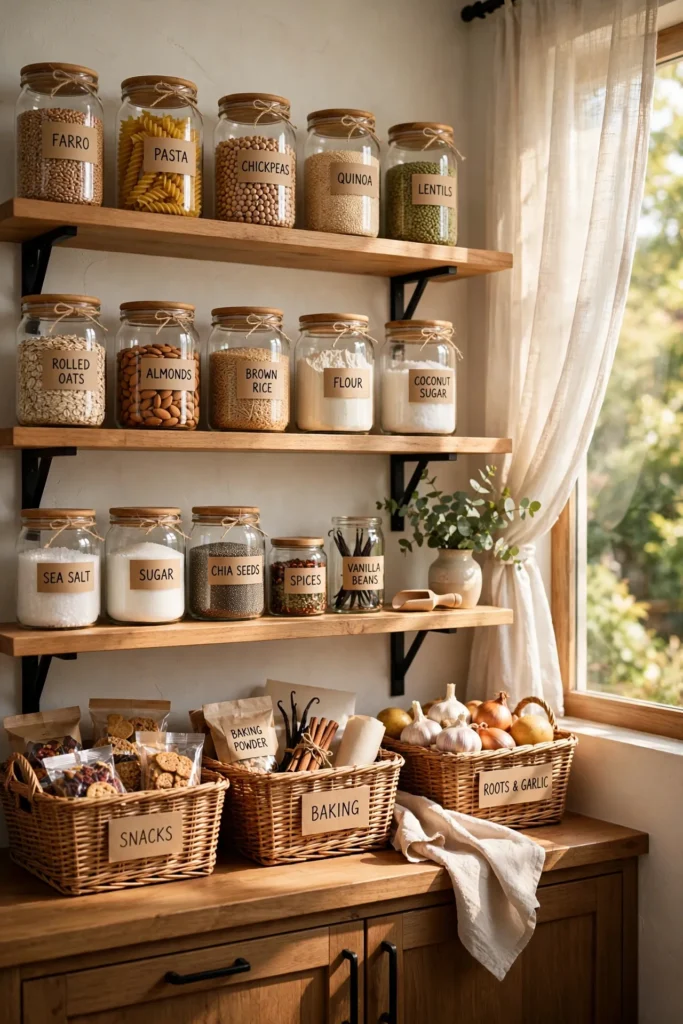
Read This Before You Organize Your Pantry
Empty the pantry before you buy a single container. Pull everything out, check dates, and toss what is stale, broken, or never going to be cooked. Most pantries hold a surprising amount of duplicates — three half-used bags of rice, two open boxes of the same pasta — and no container system fixes a shelf that is simply overfull. What is left is your real inventory, and it tells you exactly what sizes and how many containers you actually need.
The pantry organization ideas that last organize by how you cook, not by food group. Breakfast things together, baking things together, weeknight dinner bases together — the groups your hands reach for in one motion. A pantry sorted by strict category looks tidy in a photo and fails on a Tuesday night, when dinner needs items from four different shelves. Zones beat categories every time, the same way a working kitchen beats a showroom one: the ideas in these fresh kitchen refresh ideas work because they serve real routines, not just looks.
Decant only what you use weekly. Flour, sugar, rice, oats, and coffee earn clear, airtight jars because you see at a glance what is running low. Everything else — the specialty grain, the holiday baking supply — can stay in its original packaging, clipped shut and labeled. Decanting the whole pantry at once is the fastest way to spend a fortune on containers and an afternoon on transfer work you will resent by March.
Finally, label for the next person, not for yourself. You know what is in the jar; a partner, a guest, or future-you at 6 a.m. does not. A short label — contents plus the date it was opened — keeps the system working when you are not there to explain it. Keep labels simple and consistent, and the pantry will mostly organize itself from here on.
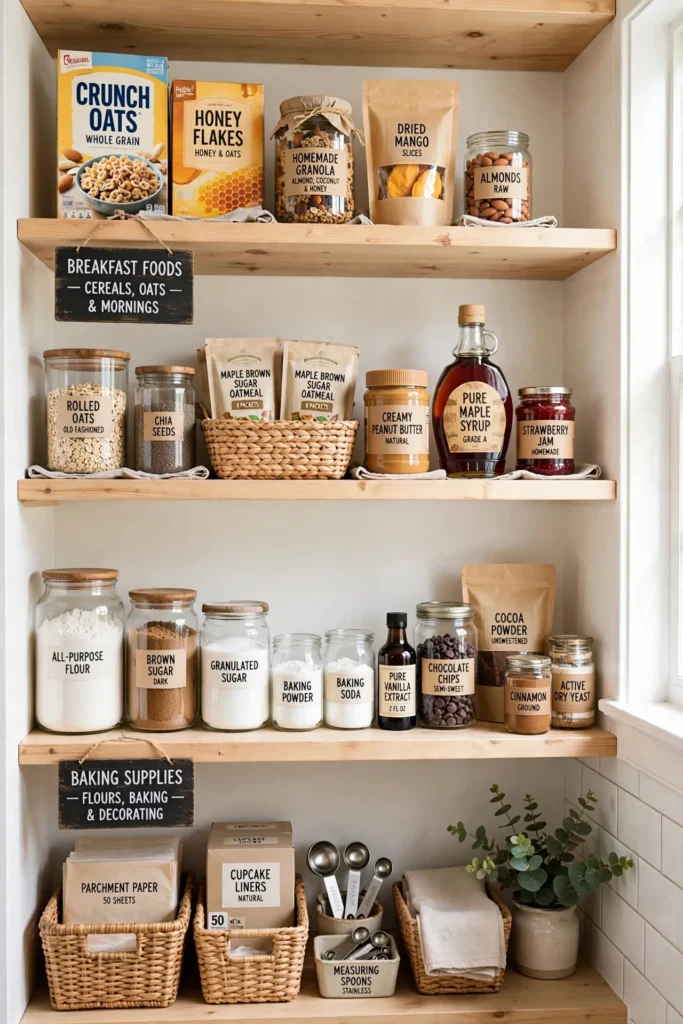
1. Zone the Shelves by Meal, Not by Category
The first of these pantry organization ideas is also the most important: give each shelf a job — breakfast on one, baking on another, weeknight dinners on a third. When everything for one kind of cooking lives together, putting groceries away and pulling out ingredients both get faster, and the shelves stay tidy because every item has an obvious home. Start with the two zones you use most and let the rest follow.
2. Decant Daily Staples Into Clear Jars
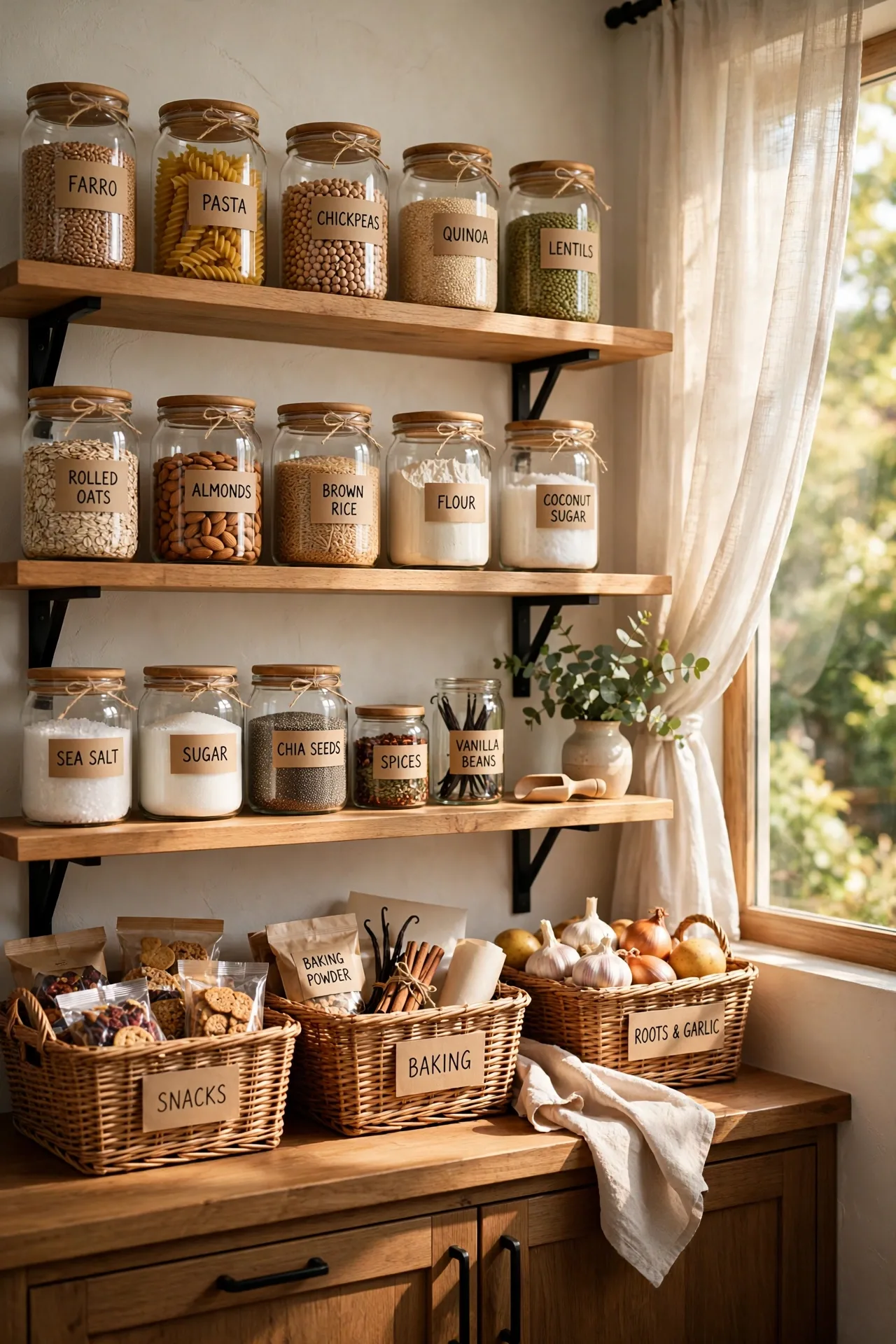
Flour, sugar, rice, oats, and pasta earn glass jars because you cook with them constantly and you need to see levels at a glance. Choose airtight lids, one jar size per staple family, and keep the jars at eye level so a low supply is obvious before you start cooking. The rest of the pantry can stay in its packaging — jars are for the workhorses only.
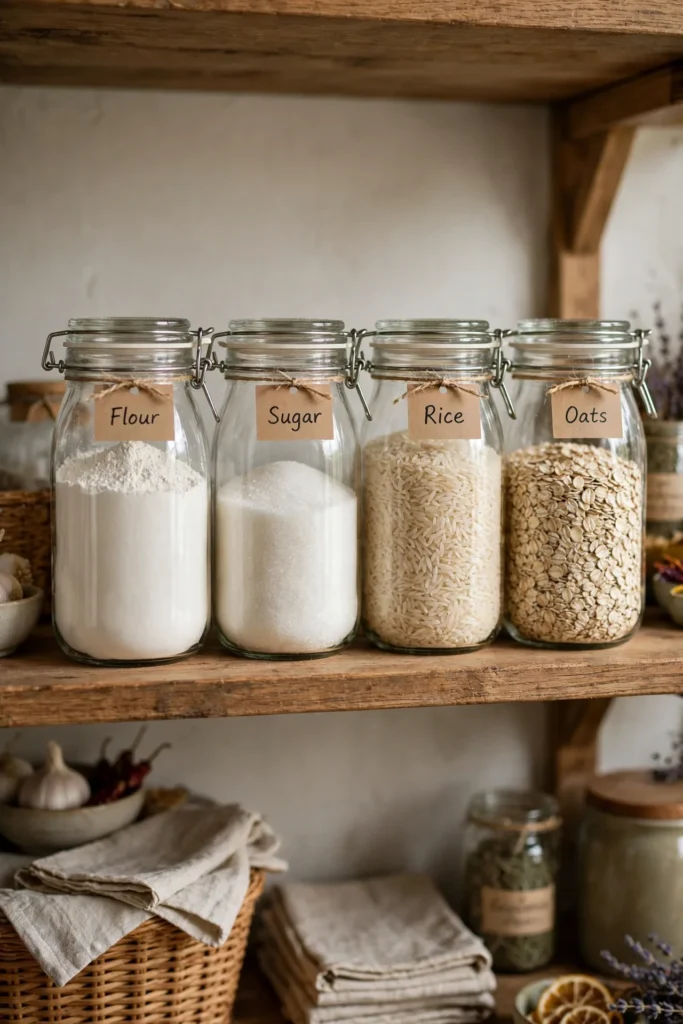
3. Label Everything With Contents and Date
A label that says only “flour” is half a label. Add the variety — bread flour, almond flour — and the date it was opened, and you will never again bake with something stale or buy a duplicate of a jar that is already full. Use the same label style across the whole pantry; consistency is what makes labels easy to read at a glance.
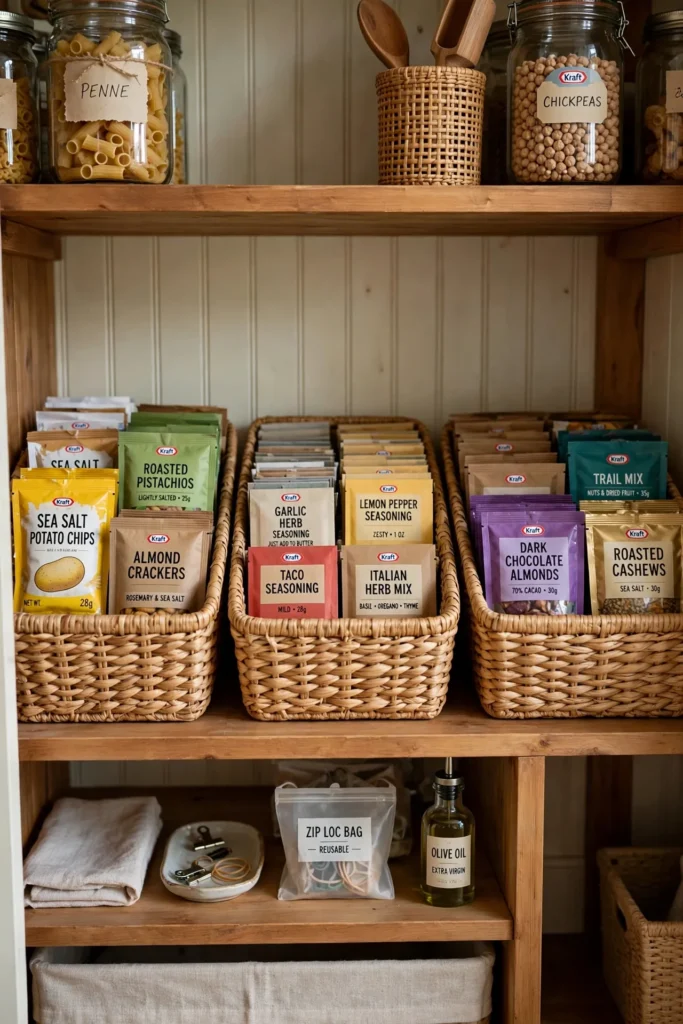
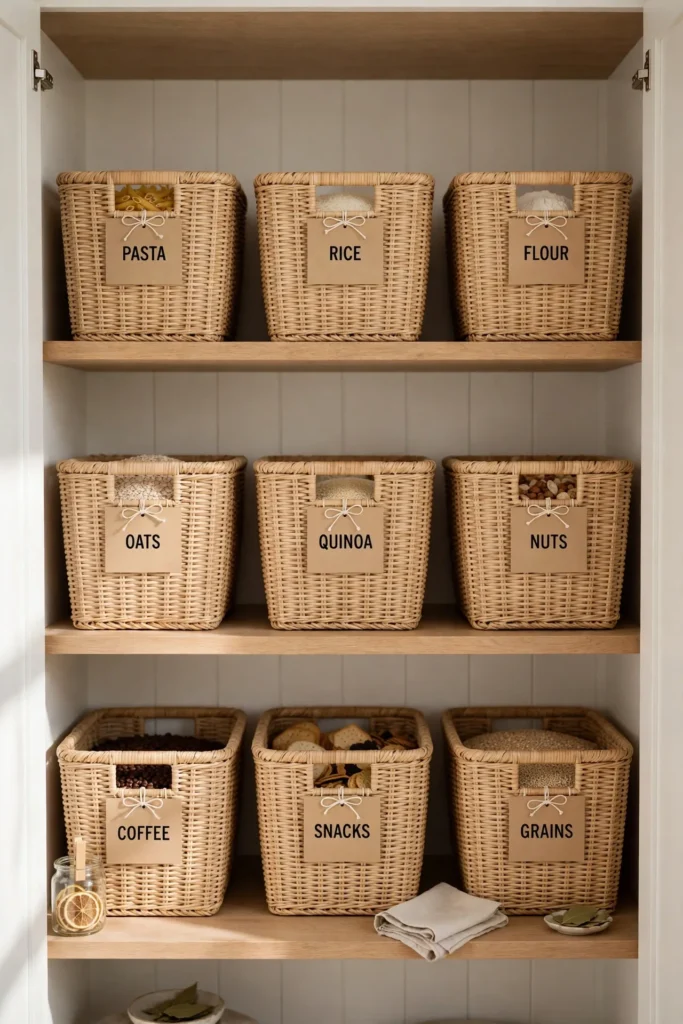
4. Use Baskets to Corral Small Items
Small packets are what make a pantry look chaotic: sauce mixes, snack bars, seasoning envelopes. One basket per group turns twenty loose items into one thing you can pull out, look through, and slide back. Choose baskets you can lift with one hand and see into from above, and leave a little empty space in each so new groceries have somewhere to go.
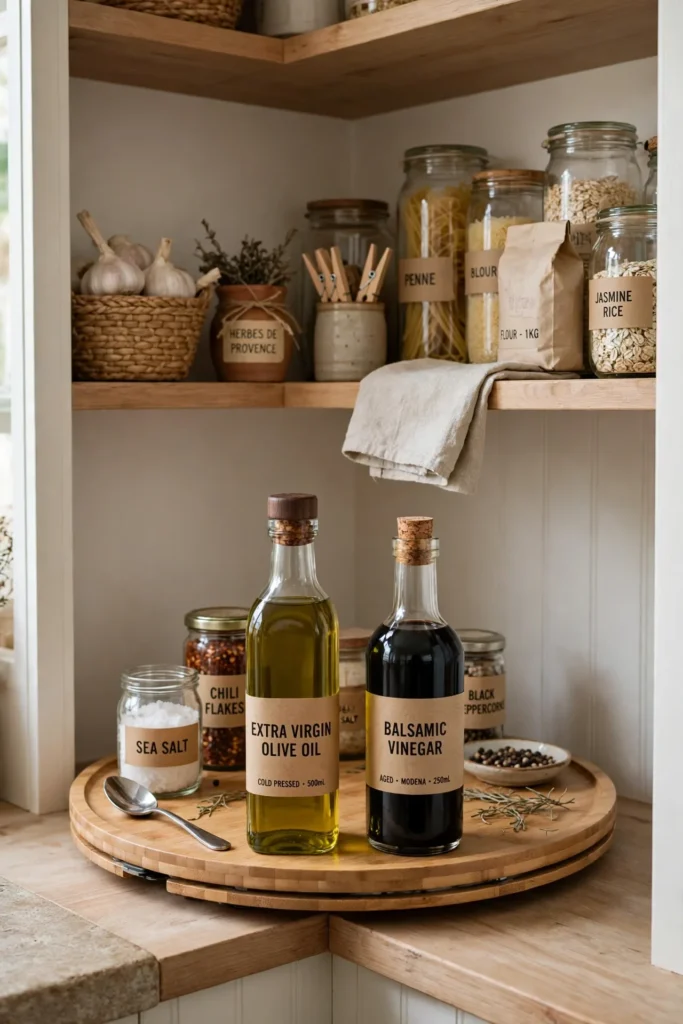
5. Add a Lazy Susan to Deep Corners
Deep pantry corners swallow jars whole. A turntable brings the back row to the front with one spin, so oils, vinegars, and sauces stop expiring in the dark. Use one large turntable rather than several small ones, and reserve it for tall bottles that are hard to see over — short jars are easier to reach without help.
6. Stack With Shelf Risers, Not Piles
Cans stacked three high always end in an avalanche. A simple shelf riser doubles the usable surface of one shelf and lets you see the second row without moving the first. Keep the heaviest cans on the bottom tier and the lightest on top, and leave the front edge clear so you can read labels without pulling anything out.
7. Put Kids’ Snacks at Kid Height
One low basket for snacks children may help themselves to ends the daily “can I have” negotiation and the climbing. Keep it to a small, rotating selection, and refill it when you put groceries away rather than on demand. The rest of the pantry stays adult territory, and the low basket teaches its own tidy habit: one snack out, basket back on the shelf.

8. Store Baking Supplies as One Kit
Flour, sugar, baking powder, vanilla, and chocolate chips live together in one basket or on one shelf, so baking starts with pulling out a single container instead of hunting across the pantry. If you bake rarely, keep the kit on a higher shelf out of daily traffic; if you bake weekly, give it prime eye-level space. Either way, one kit means one cleanup too.
9. Use the Door for Spices and Small Jars
The inside of a pantry door is free real estate. A slim rack there holds spices, small jars, and packets that would otherwise crowd the shelves, and it puts them at eye level where labels are readable. Check the door closes fully with the rack loaded before you commit, and keep the heaviest jars on the shelves — doors are for light, flat things.
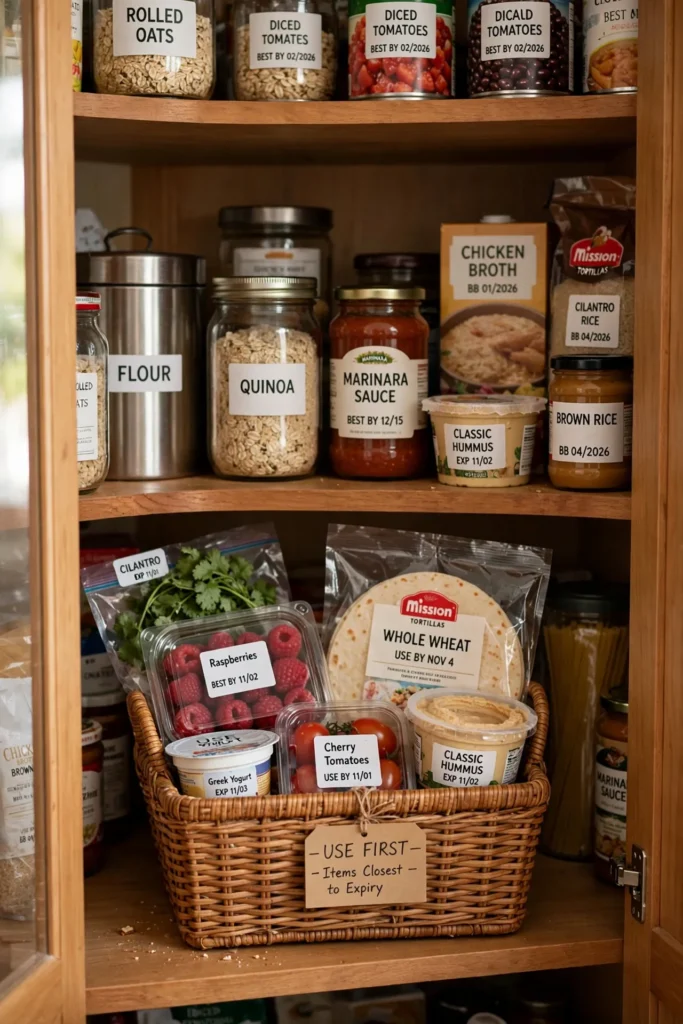
10. Keep a “Use First” Basket by the Front
Food waste usually starts with forgetting, not overbuying. A small basket at the front of the pantry holds the items closest to expiry and the half-used packets that need finishing. Cook from that basket first, and restock it whenever you put groceries away. It is the simplest idea on this list and the one that saves the most money.
11. Line Shelves in One Calm Material
The pantry organization ideas that photograph best all share one secret: visual calm comes from repetition — one basket material, one jar style, one label color. Mixing five container types makes even a tidy pantry look busy, while a single repeated material — natural wood, white ceramic, clear glass — reads as organized even before you look closely. Pick the material that matches your kitchen, as with the warm wood and white palette of these farmhouse kitchen ideas, and repeat it without exception.
12. Give Canned Goods a Single Row Each
One row per category — tomatoes, beans, soups, vegetables — with labels facing out, turns a can shelf into a tiny shop shelf. When a row gets short, it is your shopping list writing itself. Resist the urge to double-stack rows unless you use a riser; a hidden second row is just a forgotten row with extra steps.
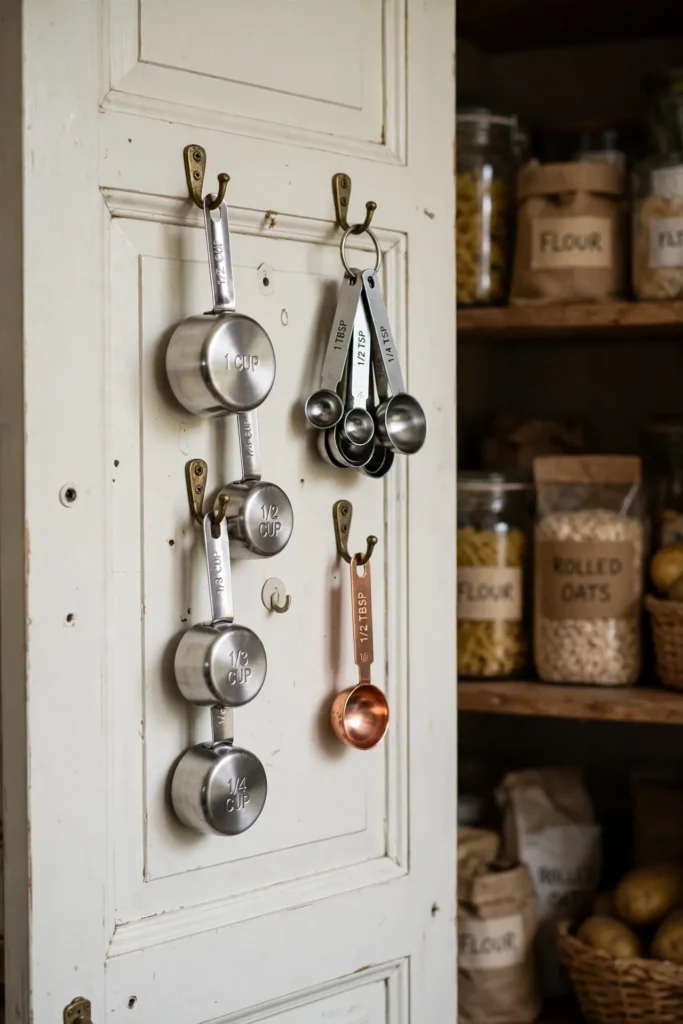
13. Hang Measuring Tools Inside the Door
Measuring cups and spoons vanish into drawers exactly when you need them. A small hook rail inside the pantry door keeps the set together, visible, and one step from the ingredients it measures. It also frees a drawer for something that actually needs drawer space, which is a quiet win for the whole kitchen.
14. Separate Bulk Buys From Daily Stock
Bulk bags belong on a high or low shelf, not in the daily flow. Keep one working jar of each staple at hand and refill it from the bulk supply, which stays sealed and out of the way until needed. This keeps the pretty, usable part of the pantry small and calm while the economy-size reality lives quietly elsewhere.
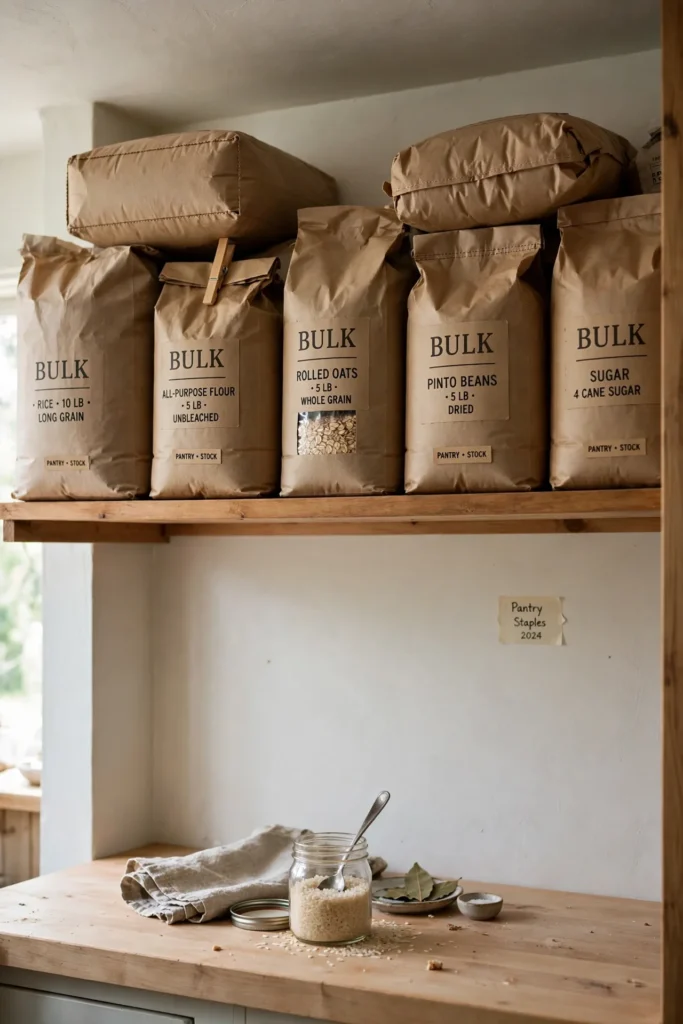
15. Make One Shelf the Breakfast Station
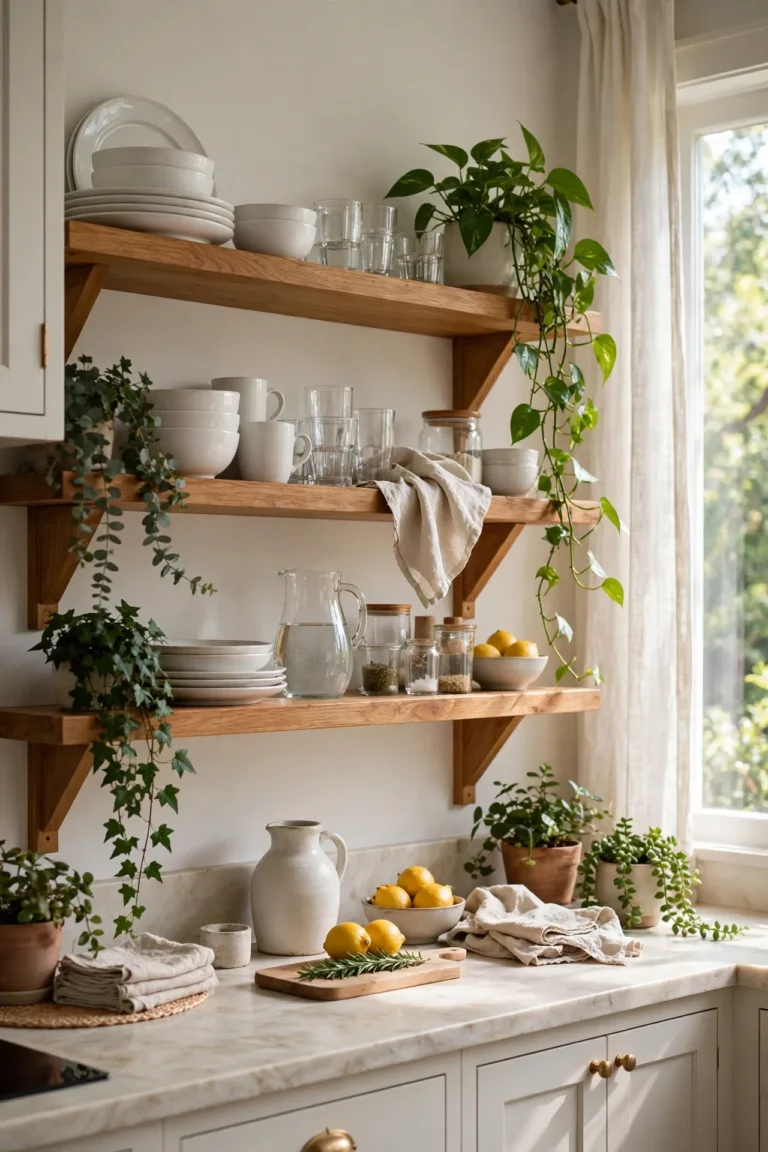
Cereal, oats, coffee, tea, and honey on one shelf turns the morning into a single stop, especially before anyone is fully awake. If your kitchen has open shelving, this shelf is a good candidate for display-worthy jars — the same honest, everyday-beauty logic behind these styled open shelving ideas. Keep the breakfast shelf at the height of whoever makes breakfast most often.
16. Use Clear Bins for Backstock
Backstock in opaque boxes gets forgotten; backstock in clear bins gets used. One bin per category, labeled on the front, stacked no more than two high, means you can see what is spare without opening anything. When a bin empties, that category goes on the shopping list — no guessing, no duplicate buying.
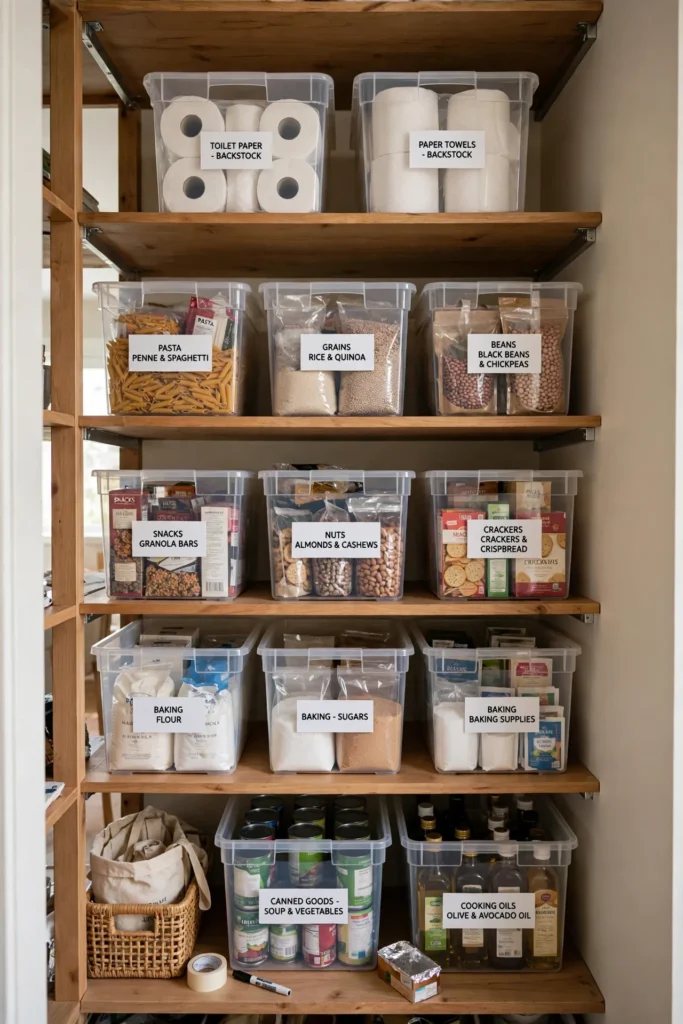
17. Keep Heavy Items Low and Light Items High
It sounds obvious until you watch someone lift a bulk bag of rice from a top shelf. Heavy staples — rice, flour sacks, canned cases — live between knee and waist height, where they are safest to lift. Light, rarely used things — holiday supplies, specialty equipment — earn the top shelves. Your back will notice the difference within a week.
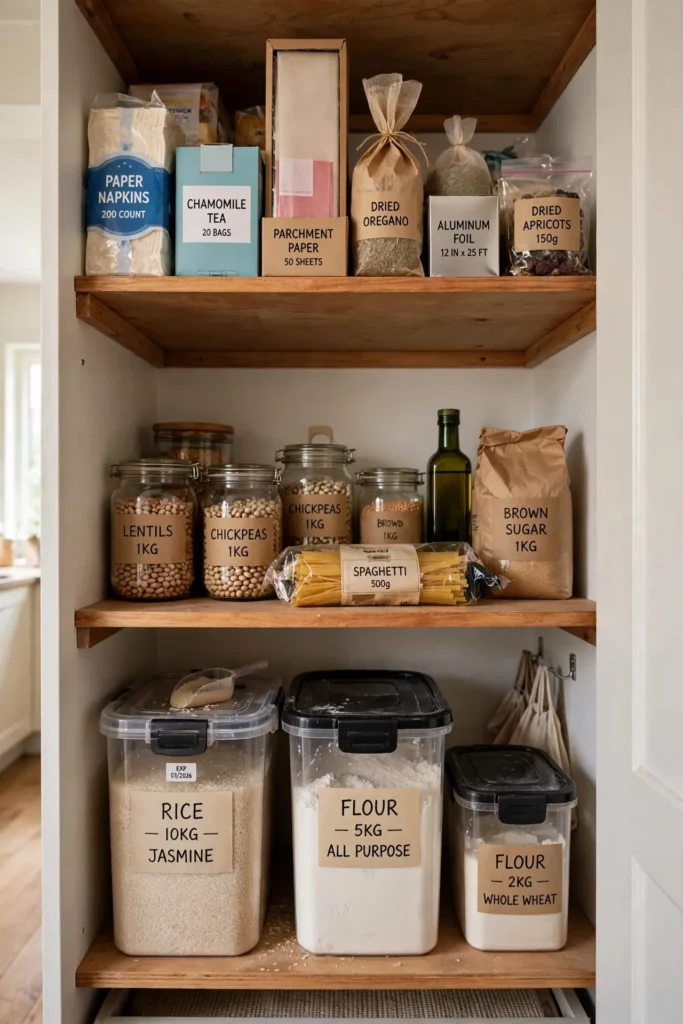
18. Reset the Pantry in Ten Minutes a Week
No system survives without maintenance, but maintenance does not need to be a project. Once a week, while you put groceries away, pull anything expired into the use-first basket, push everything to the front of its zone, and wipe one shelf. Ten minutes weekly beats a three-hour overhaul every six months, and it keeps the pantry photo-ready without ever trying to be.
19. Leave One Shelf Beautifully Empty
The most organized pantries have breathing room. Leave one shelf — or one section of a shelf — deliberately empty, and it becomes the landing spot for new groceries, the overflow during holidays, and the space that stops the whole pantry from feeling crammed. Empty space is not wasted space; it is the margin that keeps the system working when life gets busy.
Frequently Asked Questions
Should I decant everything into matching jars?
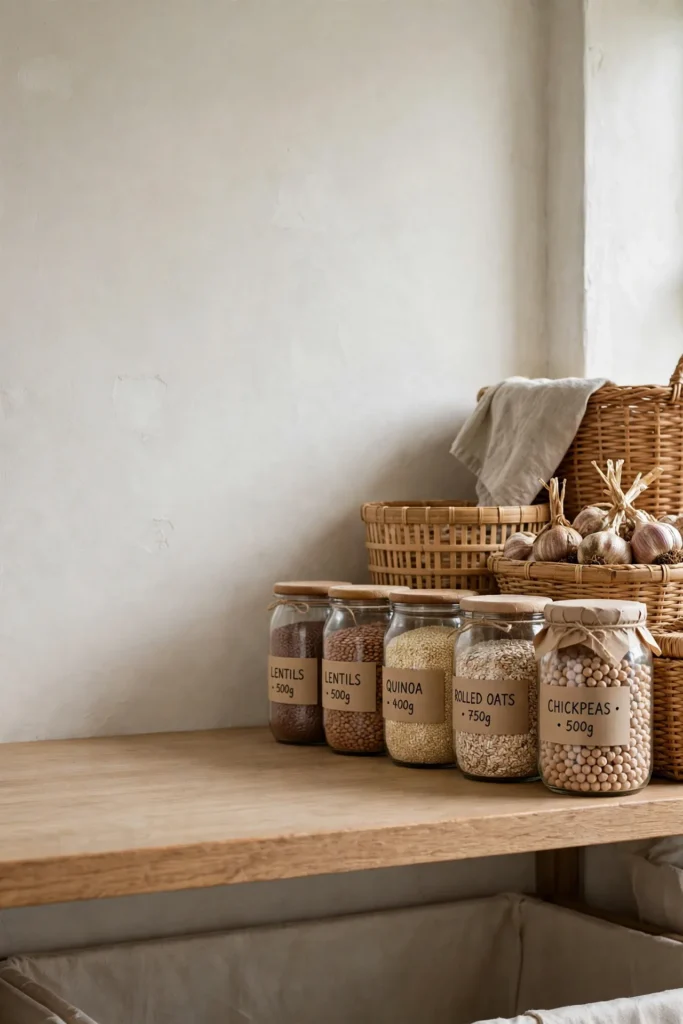
No — decant only the staples you use at least weekly, like flour, sugar, rice, and oats. Decanting rarely used items wastes containers, time, and freshness, since the original packaging often seals better. A pantry with five beautiful jars and honest packaging elsewhere looks better and works better than a wall of jars you resent refilling.
How do I organize a very small pantry?
The best pantry organization ideas for a small space use the door, the vertical space, and zones. A door rack adds a whole shelf without construction, shelf risers double one shelf, and zoning by meal means you only ever open the section you need. In a small pantry, every item must earn its place — if you have not cooked with it in three months, it probably does not belong there.
What containers are best for pantry organization?
Clear, airtight, square containers stack best and let you see contents and levels. Glass suits dry staples you use often; lightweight plastic suits high shelves and kids’ zones. Whatever you choose, keep one style per category — mixed shapes waste shelf space and make the pantry look cluttered even when it is tidy.
How often should I clean out the pantry?
A ten-minute weekly reset plus a full empty-and-check every three to four months is plenty. The weekly reset catches expiry and drift; the seasonal clear-out catches duplicates, stale spices, and the back corners that weekly tidying never reaches. Tie the big clear-out to a season change so it becomes a habit, not a chore you keep postponing.
Can a pantry be both beautiful and practical?
Yes, when beauty follows use. The prettiest pantries work because every beautiful choice — clear jars, matching baskets, labels — also makes cooking faster. Start with function (zones, visibility, reach), then choose one calm material and one label style, and the beauty arrives on its own. A pantry that only looks good in a photo will be messy again within a month.
Make It Yours
Start with one zone this weekend — the shelf that annoys you most — and try three of these pantry organization ideas on it: empty it, zone it, and label what goes back. Once that shelf stays tidy for two weeks without effort, extend the system one shelf at a time. A pantry that works for your cooking, in your space, beats any perfect pantry photo — and this one will still look good when you open the door tomorrow morning. Save your favorites to your pantry board on Pinterest so you can find them when you restock.