20 Kitchen Backsplash Ideas for 2026
The backsplash is the hardest-working wall in the kitchen: it catches every splash and sits at eye level while doing it, so it quietly decides whether the room reads dated or designed. This year’s kitchen backsplash ideas lean warmer, taller and more handmade — full-height stone slabs, rippling zellige tile, stacked layouts, and colors borrowed from the garden. Whether your budget is a full renovation or a free weekend and a box of peel-and-stick tiles, there is a version here that fits. Start with how you cook, then pick the surface that can keep up.
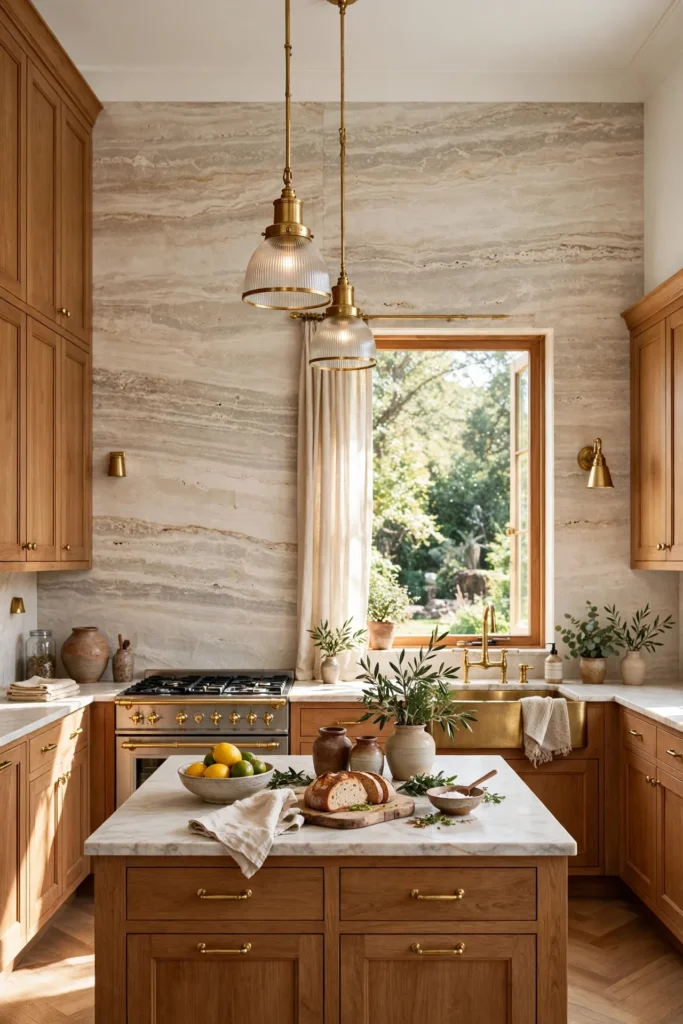
Read This Before You Choose a Backsplash
Choose the material for the cook you are, not the one in the photos. Daily pasta-sauce chefs need glazed, wipeable surfaces and fewer grout lines; occasional cooks can afford porous stone, crackle glazes and texture. Be honest here and every idea below gets easier to judge. Steam, oil and tomato are the three critics your backsplash will face weekly.
Decide the height before the material. Kitchen backsplash ideas in 2026 run tall: to the underside of the cabinets at minimum, increasingly to the ceiling behind the range or behind open shelves. Height is the cheapest design upgrade in the category, because even a plain tile looks architectural when it refuses to stop at the old four-inch line.
Grout is a design decision, not an afterthought. A grout color matched to the tile reads calm and seamless; a contrasting grout turns the same tile into a grid pattern. On a standard subway tile, grout alone can swing the wall from farmhouse to graphic modern. Buy two grout samples and test both against your tile and counter before the installer arrives.
Finally, sample in place. Tape tiles and stone pieces to the actual wall and live with them through a day of changing light and a night of your under-cabinet LEDs. Backsplashes are vertical, lit from above and seen at an angle — a combination no showroom reproduces. An evening of looking beats a decade of almost-right.
1. Run a Full-Height Slab Up the Wall
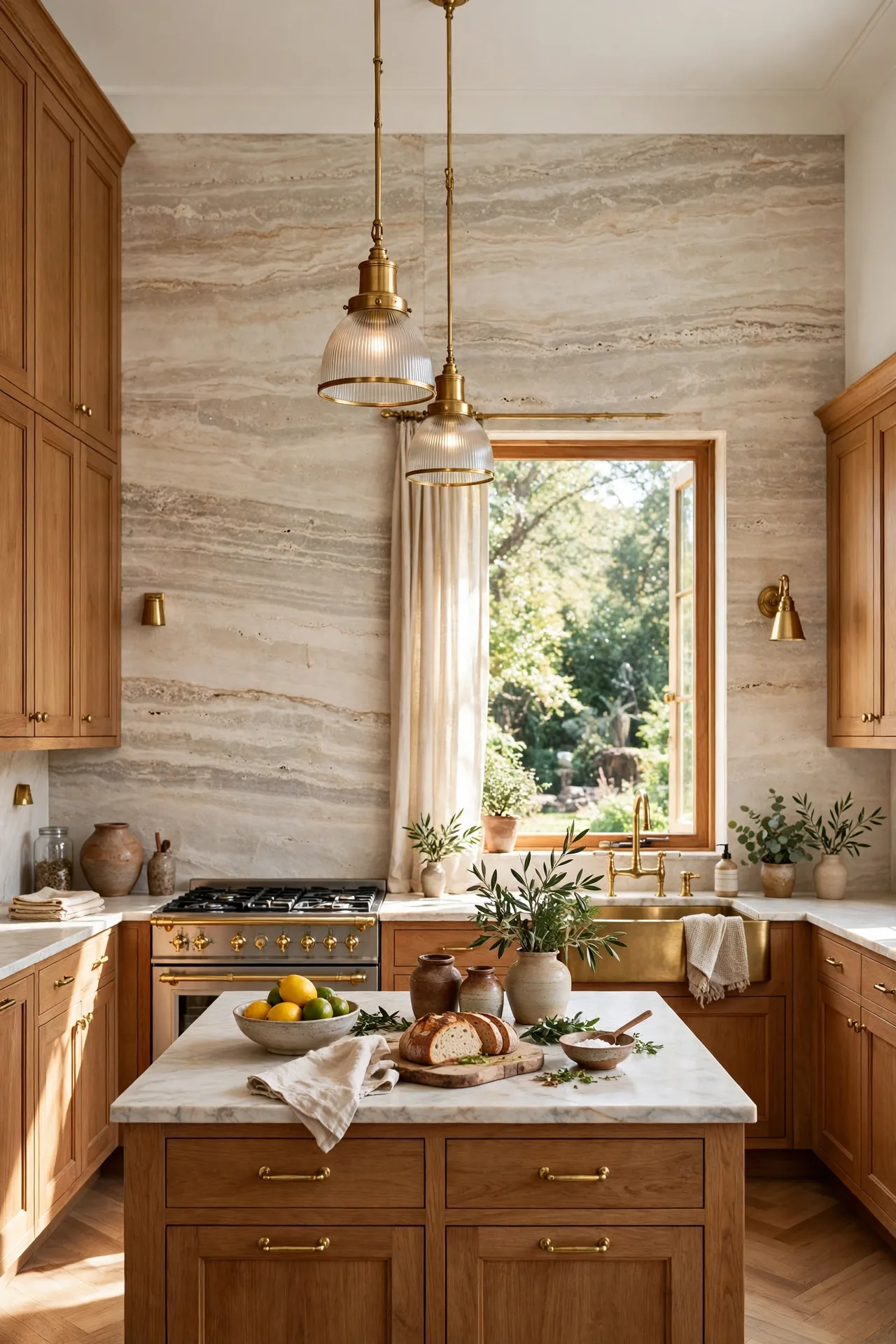
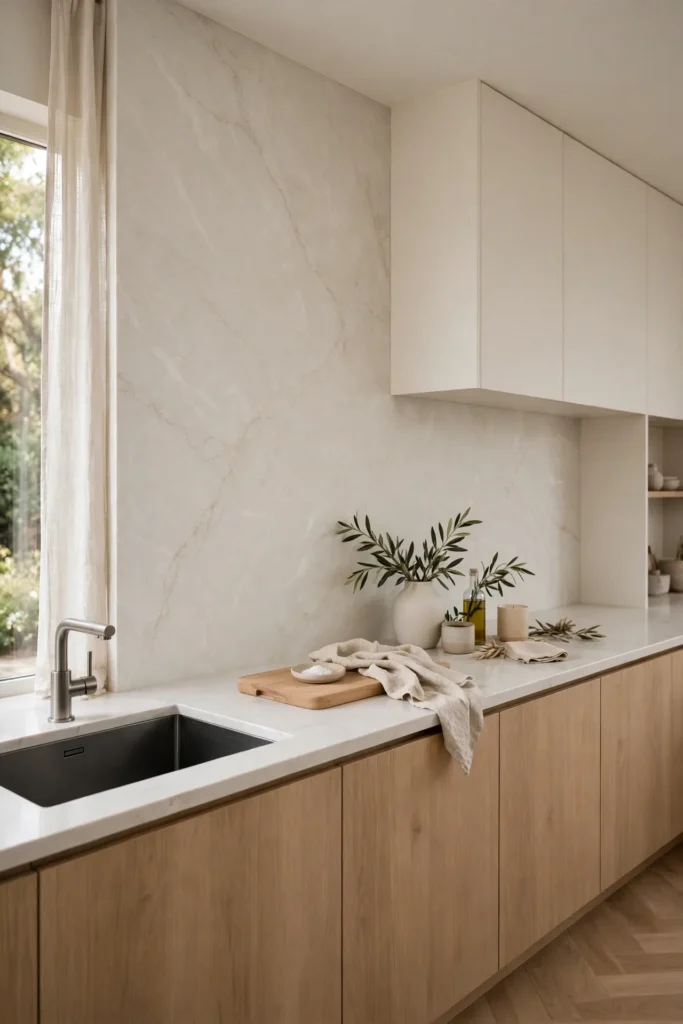
The defining backsplash of 2026: the countertop material continues up the wall in one continuous slab, no grout lines, no visual seams. It is the look topping the year’s trend roundups — the renovation experts at Sweeten put the slab first in their 2026 backsplash designs worth planning around. Quartz and quartzite make it practical; marble makes it art. Plan seams, outlets and the hood junction early, because a slab forgives nothing improvised on install day.
2. Choose Handmade Zellige Tile
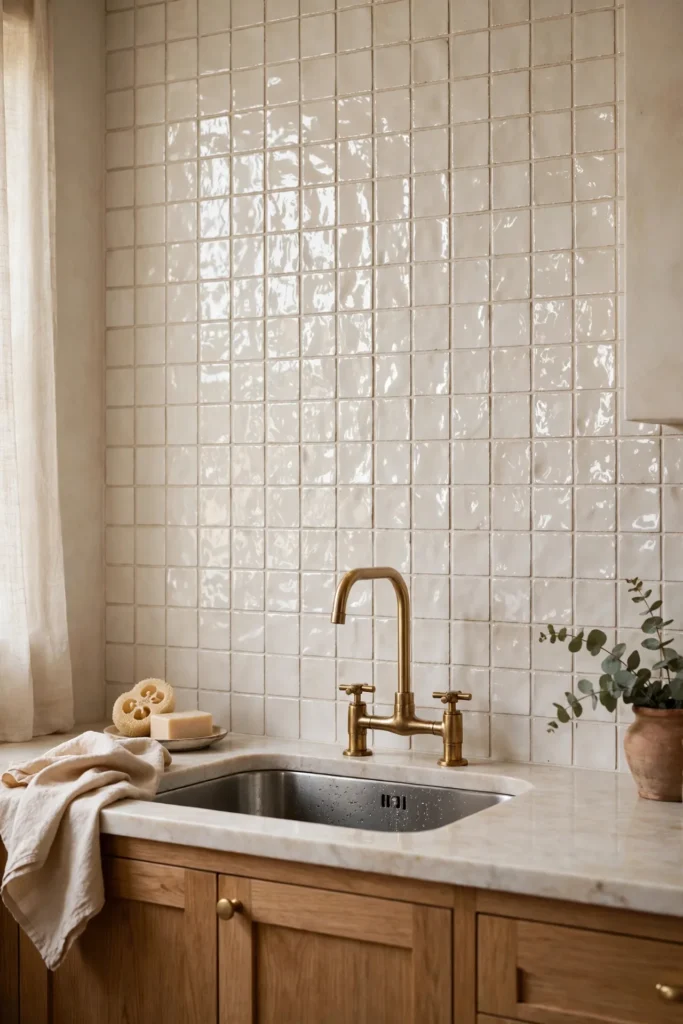
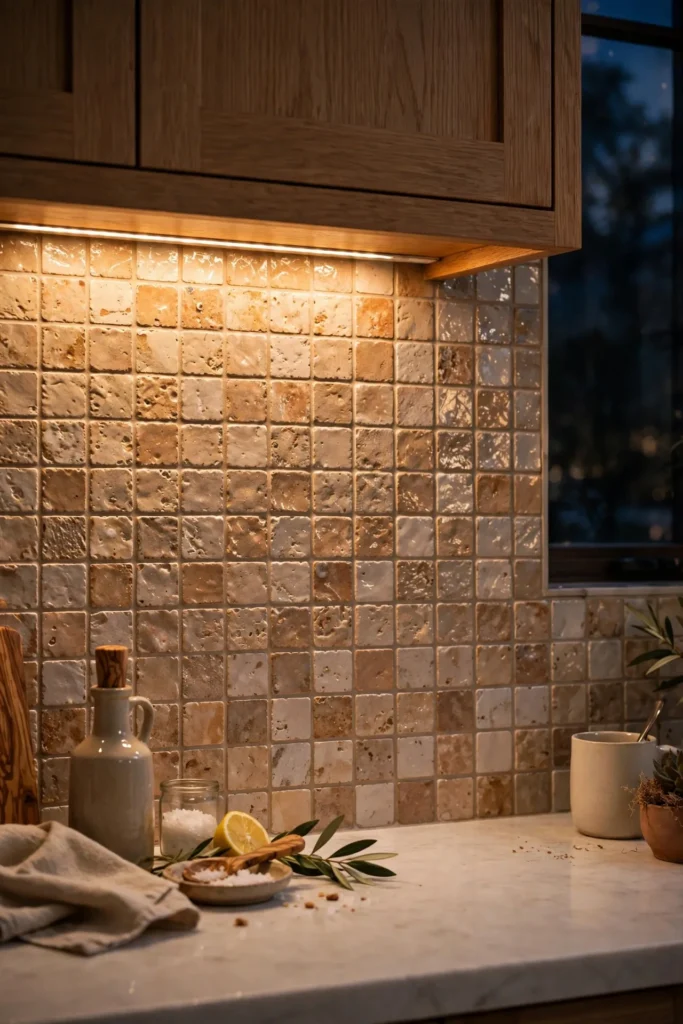
Zellige is the handmade Moroccan tile whose edges ripple and whose glaze shifts from piece to piece, so the whole wall shimmers gently as light moves. It turns plain cabinets into a styled composition without a single pattern. Choose warm white for calm or a soft color for character, keep grout tight and tonal, and know the real thing wants sealing and a skilled installer; porcelain zellige-look tiles deliver 90 percent of the effect with almost none of the upkeep.
3. Let Bold-Veined Stone Be the Artwork
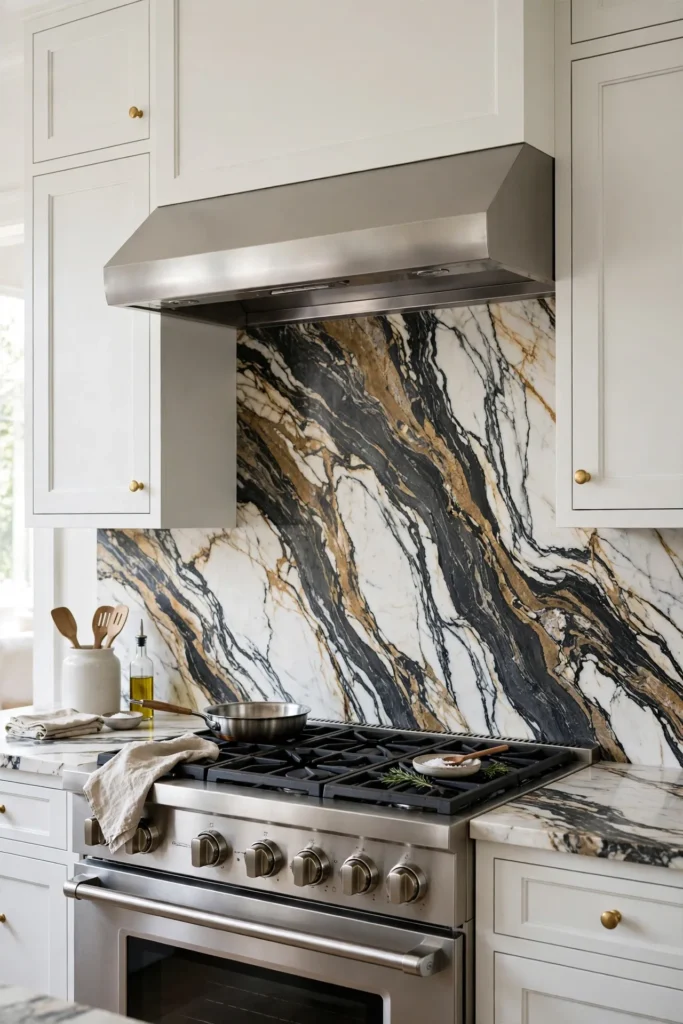
A slab or large-format tile in dramatically veined marble or quartzite turns the backsplash into the room’s one piece of abstract art. The rules are simple: strong stone demands quiet cabinets, plain hardware and simple counters nearby, so the veining performs solo. Bookmatching — mirroring the veins at a seam — doubles the effect behind a range. Keep a sample at home first; stone you love in a warehouse can shout in a small kitchen.
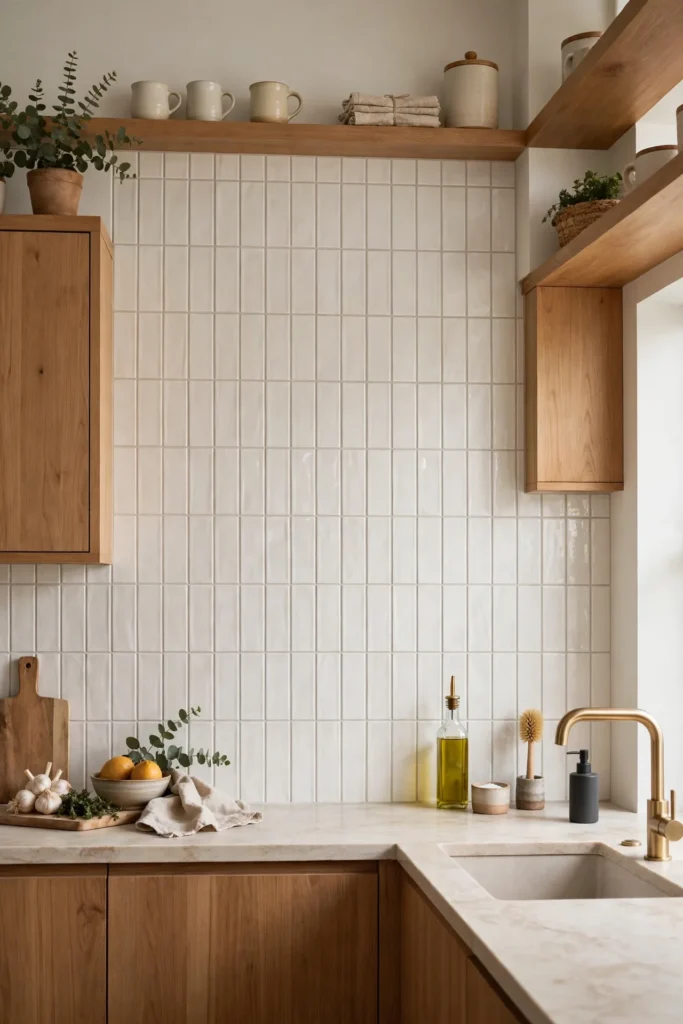
4. Stack Subway Tile Vertically
Subway tile is not leaving; it is standing up. The vertical stacked layout — tiles in straight columns instead of the classic offset — reads modern, draws the eye to the ceiling, and costs exactly the same as the traditional pattern. Warm off-white and cream glazes keep it friendly. In a galley kitchen, run the stack horizontally in long rows to stretch the wall instead. Same tile, same budget, entirely different room — of all the kitchen backsplash ideas in this list, this may be the cheapest transformation per dollar.
5. Lay It in Herringbone
Herringbone remains the pattern that makes standard tile look custom. The zigzag adds movement and a tailored finish, especially in a soft white or pale stone tile with matched grout. Contain it for maximum effect: herringbone on the range wall only, with simple stacked or offset tile on the remaining walls, gives the kitchen a focal point without a full wall of visual noise — and cuts the layout labor where it matters least.
6. Try a Checkerboard Layout
Checkerboard tile — alternating squares of two colors — has cycled from diners and bistros into 2026 kitchens, usually in softer pairings than black and white: cream with sage, ivory with clay, stone gray with white. In marble it reads classic European; in ceramic, cheerful and graphic. Keep the squares large (four inches or more) so the pattern feels calm, and let everything else in the room stay simple.
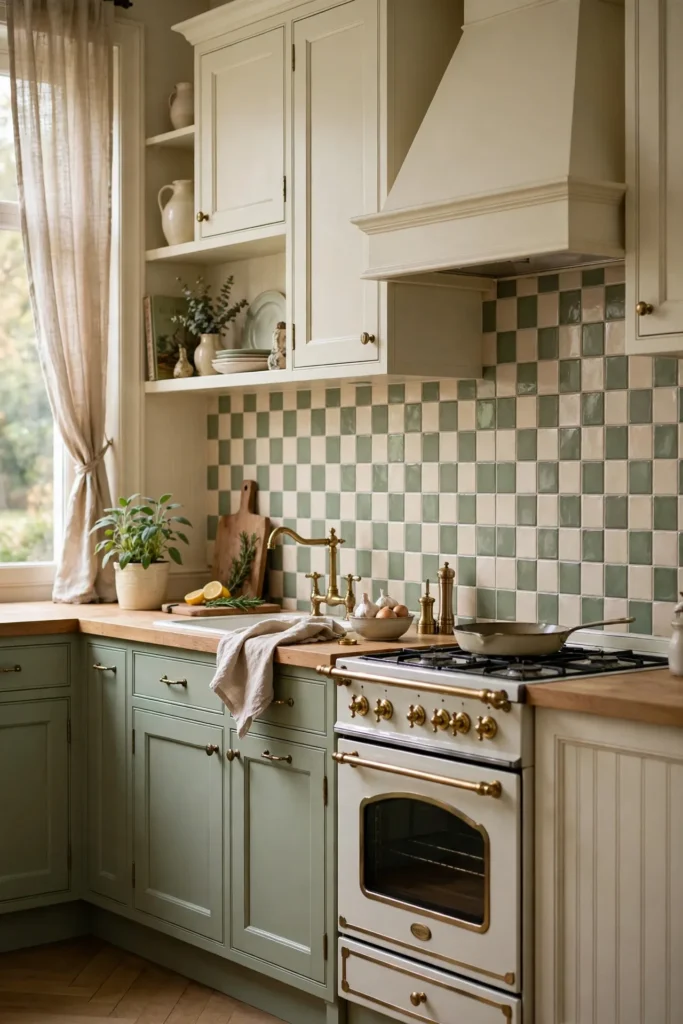
7. Go Green With Sage Tile
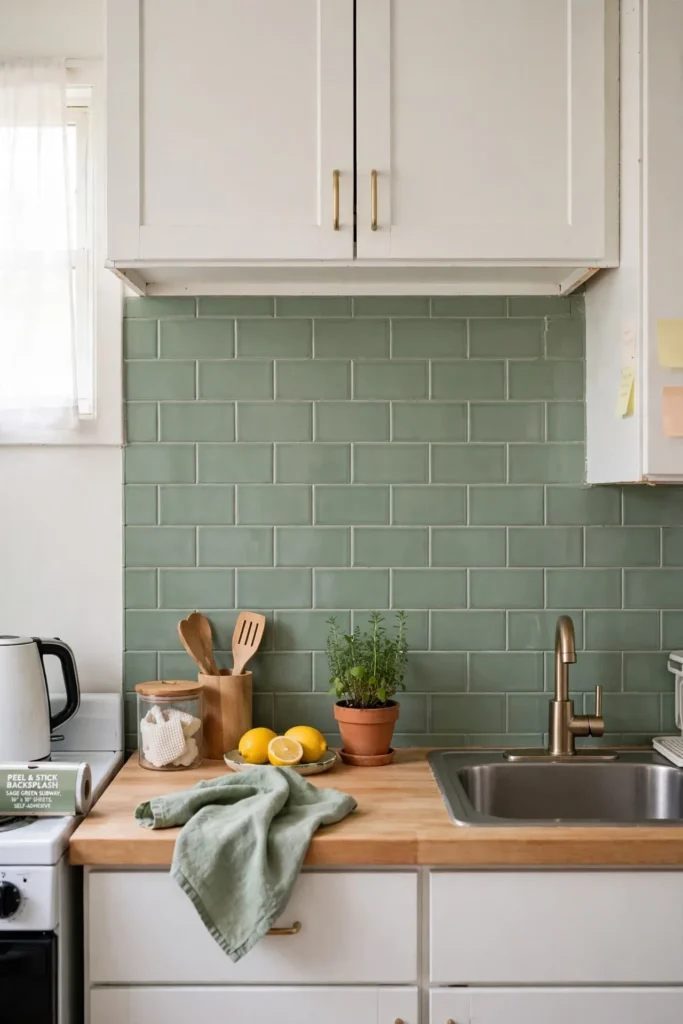
Sage is the color story of the moment, and tile is its easiest entry point: sage zellige, sage subway, or a muted green ceramic brings the garden calm without repainting a single cabinet. It pairs with white or wood cabinetry, brass or black hardware, and every warm counter. If the full color commitment tempts you further, these sage green kitchen ideas show how the tile version grows into cabinets, islands and two-tone schemes.
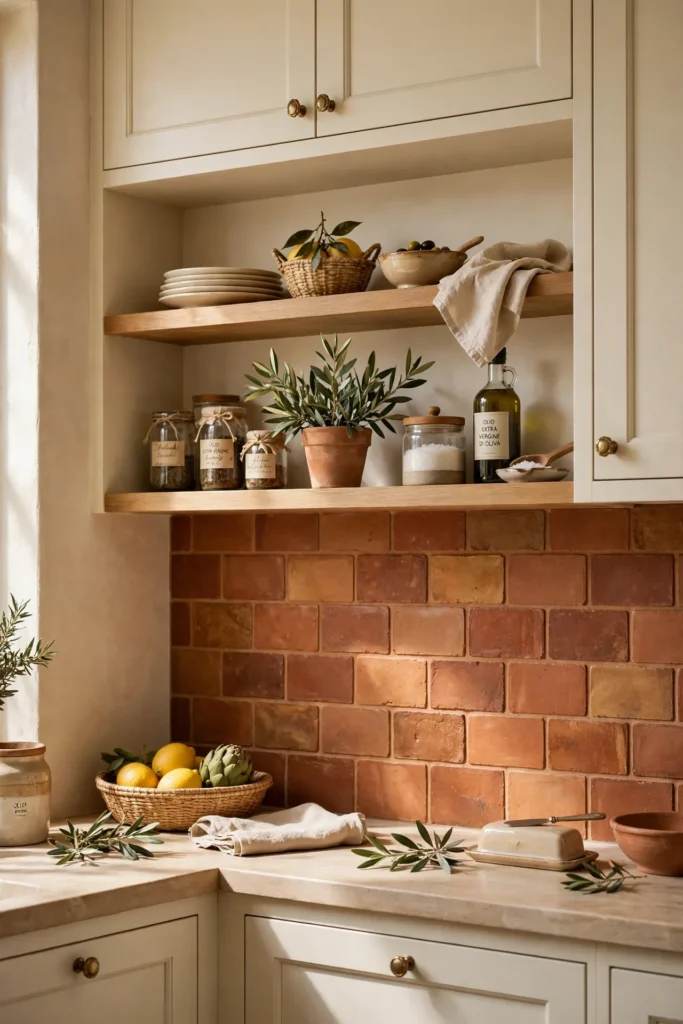
8. Warm Up With Terracotta and Clay Tones
Terracotta, clay and washed brick-red tiles are the warm half of the 2026 palette, bringing Mediterranean sun to kitchens that feel too gray. Handmade-look clay tiles vary in tone, which keeps a whole wall from reading flat. They love white oak, cream cabinets, black accents and aged brass. Seal natural terracotta properly behind the range, or choose porcelain in clay tones and skip the maintenance entirely.
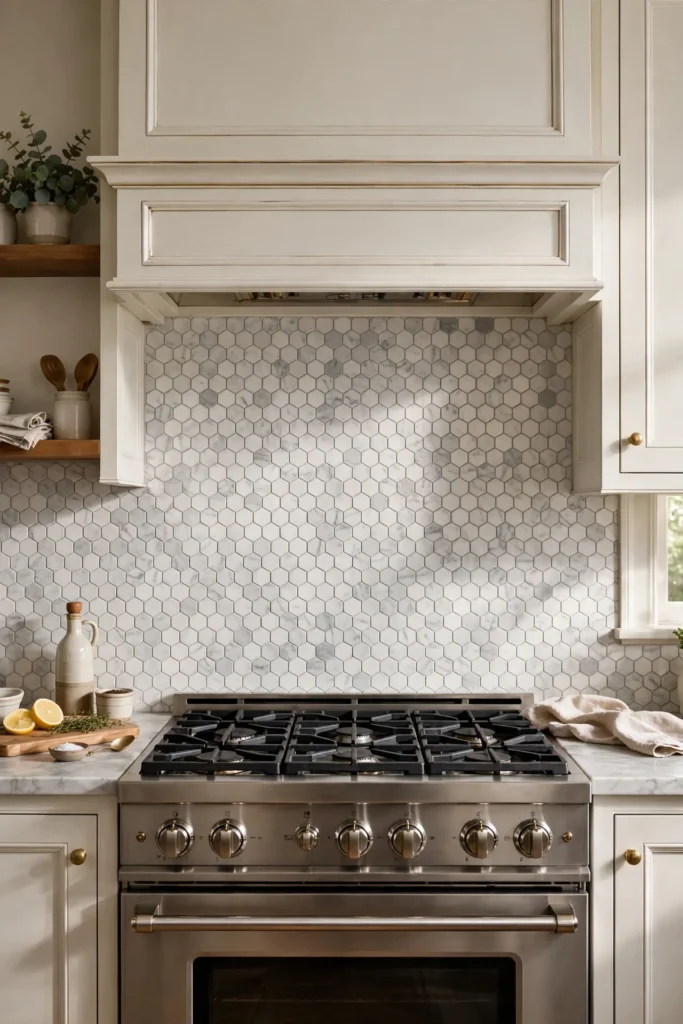
9. Pattern a Marble Mosaic
Small marble mosaics — hexagons, basketweave, lantern shapes, herringbone minis — deliver pattern at a scale that suits backsplashes, and the natural stone keeps the pattern quiet. They are the traditional choice behind ranges in classic kitchens for a reason: the many grout lines actually help disguise splashes between cleanings. Seal the stone, choose gray-toned grout, and the wall ages gracefully instead of looking tired.
10. Roll Out Penny Rounds
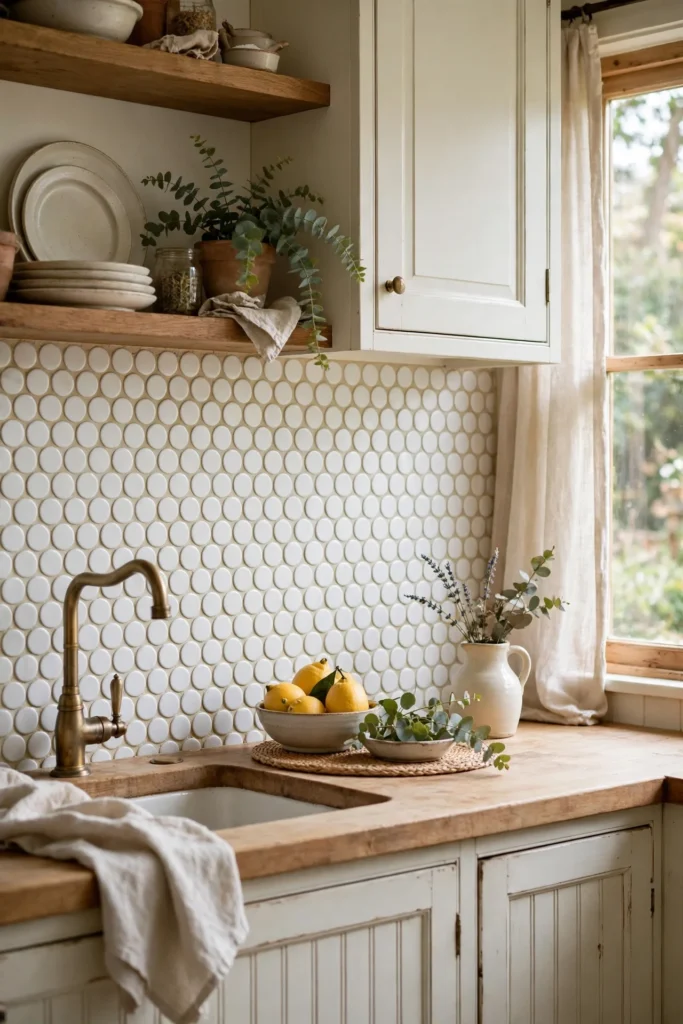
Penny round tiles bring a soft, dotted texture that suits vintage, cottage and modern kitchens equally, because the shape is playful but the scale is small. White pennies with light grout read as texture; colored pennies — deep green, navy, clay — read as a gentle pattern. They curve happily around corners and into niches, and porcelain versions shrug off steam and scrubbing. A sheet-mounted install makes this a realistic DIY weekend.
11. Paint Beadboard for a Cottage Budget
Beadboard is the budget classic: inexpensive panels, one coat of scrubbable satin paint, and a kitchen gains instant cottage texture. It shrugs off splashes better than folklore suggests, provided seams are caulked and the paint is a quality kitchen enamel. It is also the natural partner to farmhouse schemes — the same beadboard logic appears across these farmhouse kitchen decor ideas, where painted paneling keeps the whole room feeling hand-made rather than showroom-made.
12. Expose or Add Brick
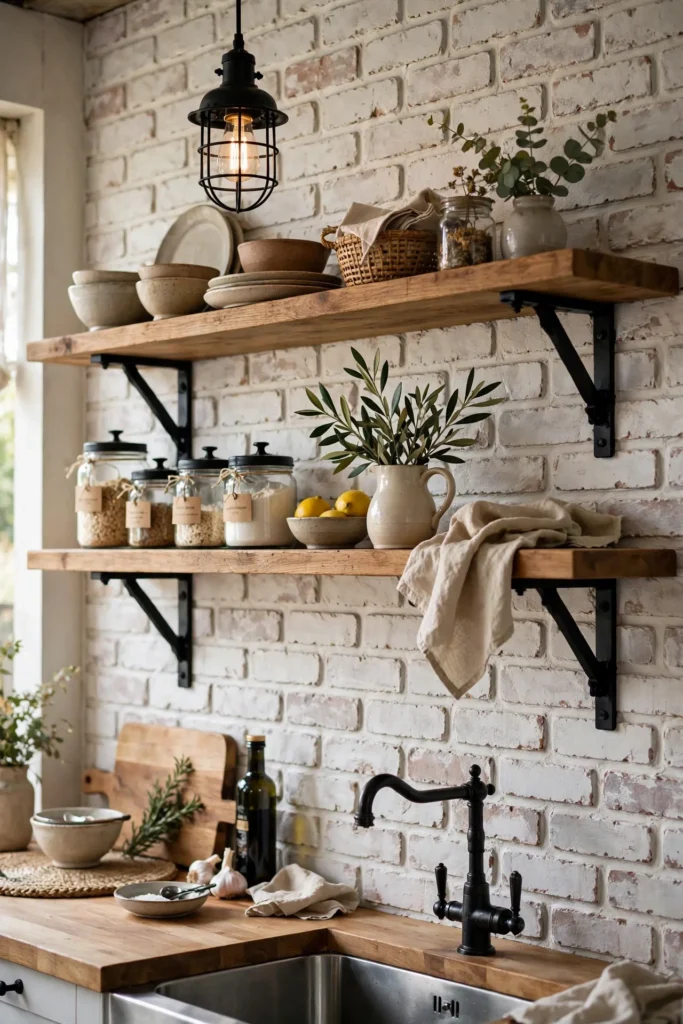
Brick — original, veneer, or brick-look tile — gives a backsplash instant age and warmth, and its rough texture hides a multitude of splashes. Whitewashed brick brightens loft style; natural red brick anchors farmhouse and industrial schemes. The honest warnings: brick is porous, so seal it well behind sinks and ranges, and its texture collects grease faster than smooth tile. Many owners compromise — brick on the dry walls, smooth tile in the splash zone.
13. Sheet Stainless Steel Behind the Range
Professional kitchens put stainless where the heat is, and a stainless panel or full sheet backsplash brings that no-nonsense shine home. It wipes clean in seconds, reflects light into the cooking zone, and pairs naturally with pro-style ranges. Keep it to the range wall if a full metal wall feels like a diner, and choose a brushed finish — polished stainless shows every fingerprint you have ever made.
14. Try Tongue-and-Groove or Shiplap, Painted Hard
Painted shiplap or tongue-and-groove boards run vertically or horizontally give a backsplash soft shadow lines and farmhouse ease at a low material cost. The non-negotiables: exterior-grade or moisture-resistant boards, every seam sealed, and two coats of hard-wearing satin or semi-gloss. Behind a heavy-frying range, pair the boards with a stainless or glass splash panel at the burners and enjoy the look without the scrubbing penance.
15. Add Antiqued Mirror Tiles
Antiqued mirror backsplash tiles bounce light around small and window-poor kitchens while their foxed, smoky finish hides water spots that would shame plain mirror. The effect is glamorous but soft — more vintage bistro than disco. Use it on a sink wall or a dry bar run before committing it to the greasiest zone, and pair with warm metals so the reflection glows rather than glares.
16. Peel-and-Stick for Renters and First Tries
Modern peel-and-stick tiles are a legitimate material, not a compromise poster: gel and vinyl versions mimic subway, zellige and mosaic with real texture, install in an afternoon, and leave with you (or pull off cleanly) at lease end. They are also the smartest audition tool in this list — live with a sage subway for six months, then invest in the ceramic version with confidence. Keep them away from direct high heat unless the product is rated for it.
17. Take the Tile to the Ceiling
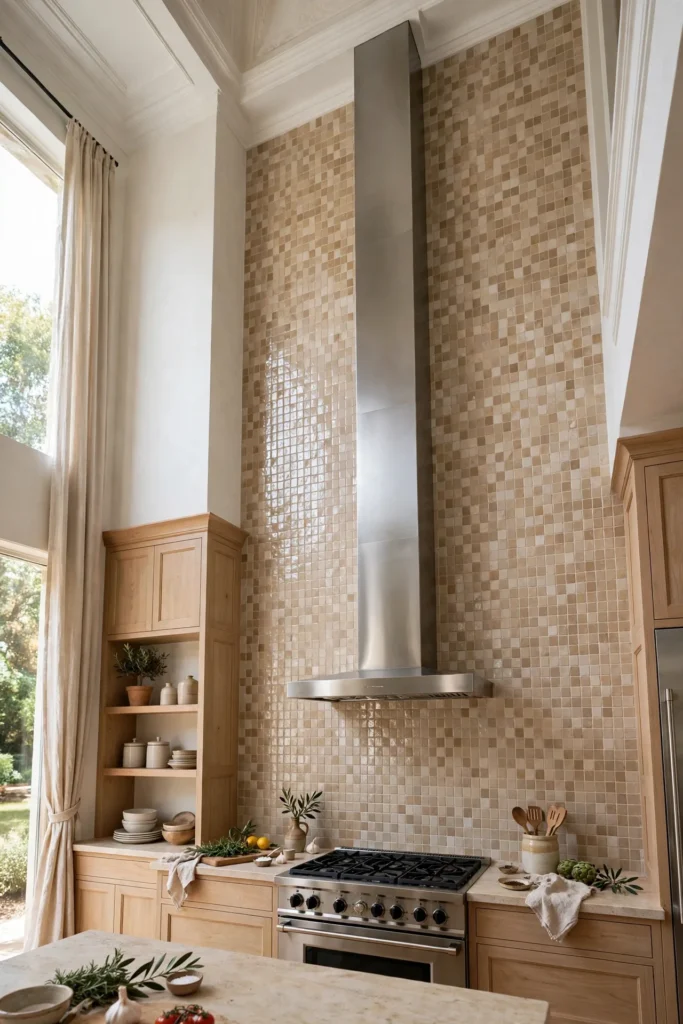
Whatever material you choose, consider its tallest version: tile or stone carried to the ceiling behind the range, or wrapping a whole window wall. The move makes ceilings feel higher, eliminates the awkward paint band above standard backsplash height, and turns the cooking wall into architecture. It works with open shelving especially well, since shelves against a fully tiled wall look intentional rather than leftover. Budget note: the extra rows are cheap; the wow is not proportional.
18. Tile the Wall Behind Open Shelves
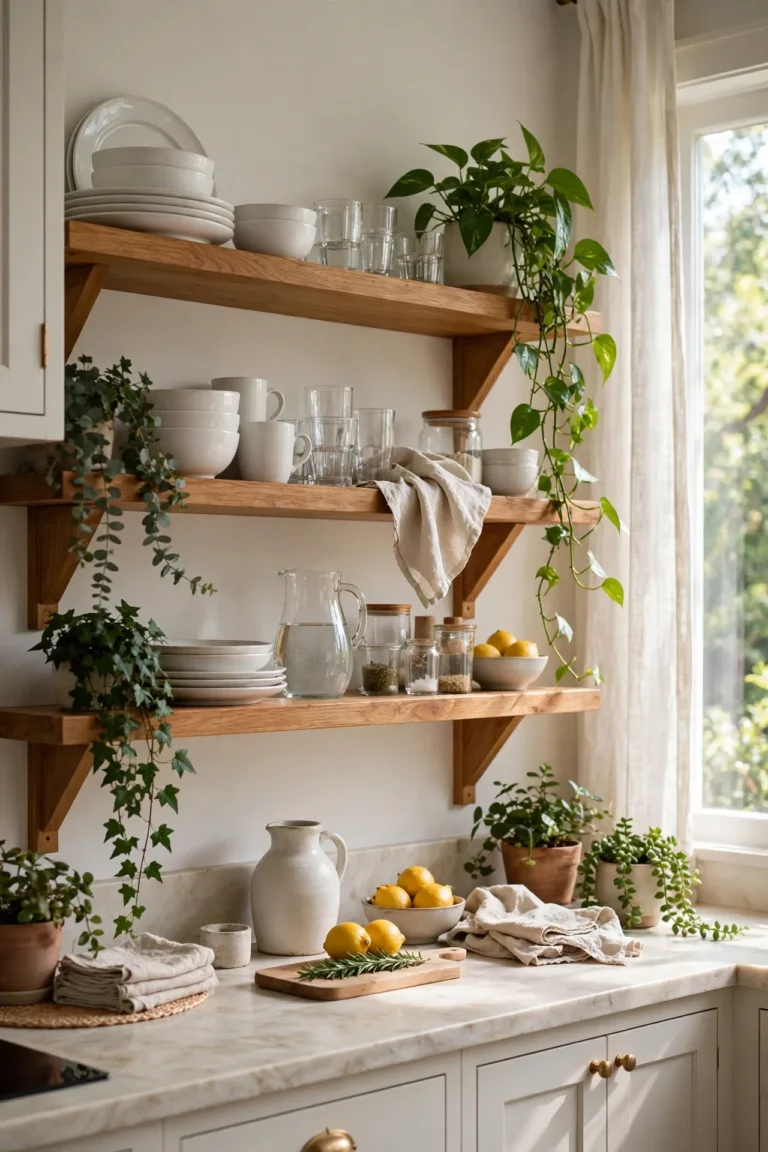
If your kitchen has or wants open shelves, the backsplash becomes the backdrop for everything you display — which means it should be beautiful, wipeable and continuous behind the shelves rather than stopping at them. A calm field tile or a slab section lets dishes and jars star. The shelf heights, spacing and styling that make this look work are covered step by step in these open shelving kitchen ideas.
19. Scatter Hand-Painted Accent Tiles
A plain field of tile becomes personal with a handful of hand-painted accents — Delft-style blue-and-white, tiny florals, or a maker’s patterned tiles — placed at the range, the sink, or in a loose rhythm across the wall. Vintage and handmade tiles mix happily with new field tile if the sizes match. This is the backsplash equivalent of embroidery on a plain dress: small effort, unmistakable signature.
20. Finish With Light That Grazes the Surface
The last idea is not a material but the thing that makes materials matter: under-cabinet lighting aimed to graze the backsplash. Texture — zellige ripple, stone veining, brick, beadboard shadow lines — only appears when light skims across it. Warm white strips or pucks, a dimmer, and one evening test before the electrician leaves. Many kitchens that look flat in photos are simply backsplashes waiting for their light.
Frequently Asked Questions
What is the most popular kitchen backsplash for 2026?
Two looks lead: full-height slab backsplashes that continue the countertop up the wall, and handmade-look zellige tile in warm whites and soft colors. Beyond those, the broader direction of kitchen backsplash ideas in 2026 is warmer, taller and more textured — stacked subway layouts, sage and terracotta tones, and coverage that reaches the ceiling instead of stopping at the old four-inch strip.
Which backsplash material is easiest to clean?
Smooth slab surfaces — quartz, porcelain slab, stainless steel and glass — are the easiest, because they have no grout lines to scrub. Among tiles, large-format glazed porcelain or ceramic with tight, matched grout is the practical winner. Natural stone, crackle glazes and handmade tile are all manageable with proper sealing, but they ask for gentler cleaners and a reseal on schedule.
How much does a kitchen backsplash cost?
Materials span a wide range — roughly $5 per square foot for basic ceramic tile up to $150 for premium installed stone slab, with peel-and-stick and beadboard at the low end and zellige, marble and bookmatched slab at the top. Installation labor often equals or exceeds the material cost for tile, which is why layout choices (stacked versus herringbone) and height decisions belong in the budget conversation from the start.
Should my backsplash match the countertop or the cabinets?
Neither is a rule; contrast with intention is. A slab backsplash matches the counter by definition and reads calm and seamless. Tile usually contrasts gently with both cabinets and counters, borrowing one tone from each. The mistake to avoid is a near-match — a tile that almost matches the counter looks like an error, while a clear contrast or an exact match both look planned.
Can I install a kitchen backsplash myself?
Yes, for the friendlier materials: sheet-mounted mosaics, penny rounds, simple stacked subway, beadboard and peel-and-stick are all realistic weekend projects with rented tools. Save the professionals for slab stone, true zellige (its uneven thickness needs an experienced hand), and any wall that needs electrical or plumbing moved. A hybrid many owners use: DIY the field walls, hire out the range wall.
Make It Yours
Your backsplash only has to satisfy two judges: the cook who will scrub it and the eyes that will cross it a hundred times a day. Pick the material that fits your cooking, run it taller than feels safe, and let grout and light finish the design. When one of these kitchen backsplash ideas starts looking like your kitchen, save your favorites to your kitchen board on Pinterest so the samples, the layout and the budget notes are all waiting when your free weekend arrives.