18 Shared Kids Bedroom Ideas That Work
Two kids, one room, and a daily negotiation over floor space, closet shelves, and who gets the wall by the window — if that sounds familiar, these shared kids bedroom ideas are built for real family life, not a showroom. The best shared rooms do two jobs at once: they give siblings a place to play and sleep together, and they give each child a corner that feels unmistakably theirs. The ideas below cover beds, storage, study zones, and fair rules, so you can pick the combination that fits your room size, your kids’ ages, and your budget.
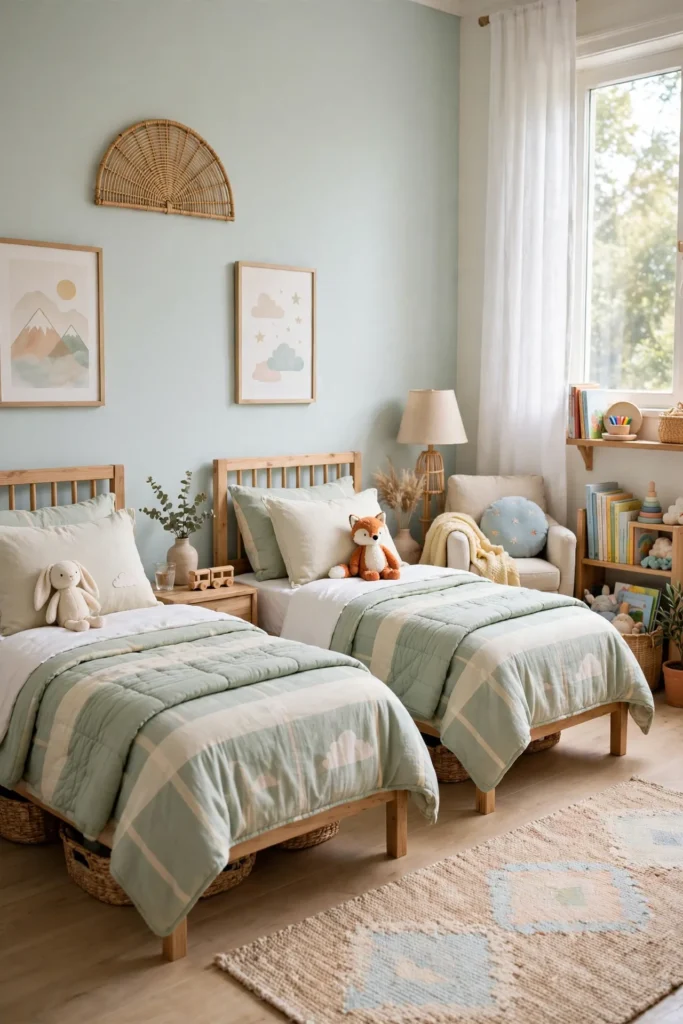
Read This Before You Share a Bedroom
Start with a floor plan, not furniture. Measure the room, mark the door swing, the closet, and the window, then sketch where each bed will go before you buy anything. A layout that looks charming online can block a closet door or leave no path to the light switch, and those are the details kids complain about every single day.
Next, decide what is shared and what is personal. Beds, lighting, and floor space usually need clear ownership, while toy storage, bookshelves, and play areas can belong to both kids. When each child knows exactly which drawer, shelf, and hook is theirs, half the arguments disappear on their own.
Plan for growth, too. A five-year-old and a nine-year-old have very different needs, and both will outgrow today’s setup faster than you expect. Choose bed frames, desks, and storage that can be rearranged or passed down, and keep the expensive pieces neutral so a new bedding set or wall color can refresh the whole room later. Pottery Barn Kids’ shared bedroom guide makes the same point: simple, classic furniture adapts as kids grow, while pillows and bedding are easy to swap.
Finally, let both kids choose something. It does not have to be big — a lamp color, a poster, a pillow — but a room only feels fair when both children can point to a choice they made. The ideas below are written so you can mix, match, and hand each child a few decisions along the way.
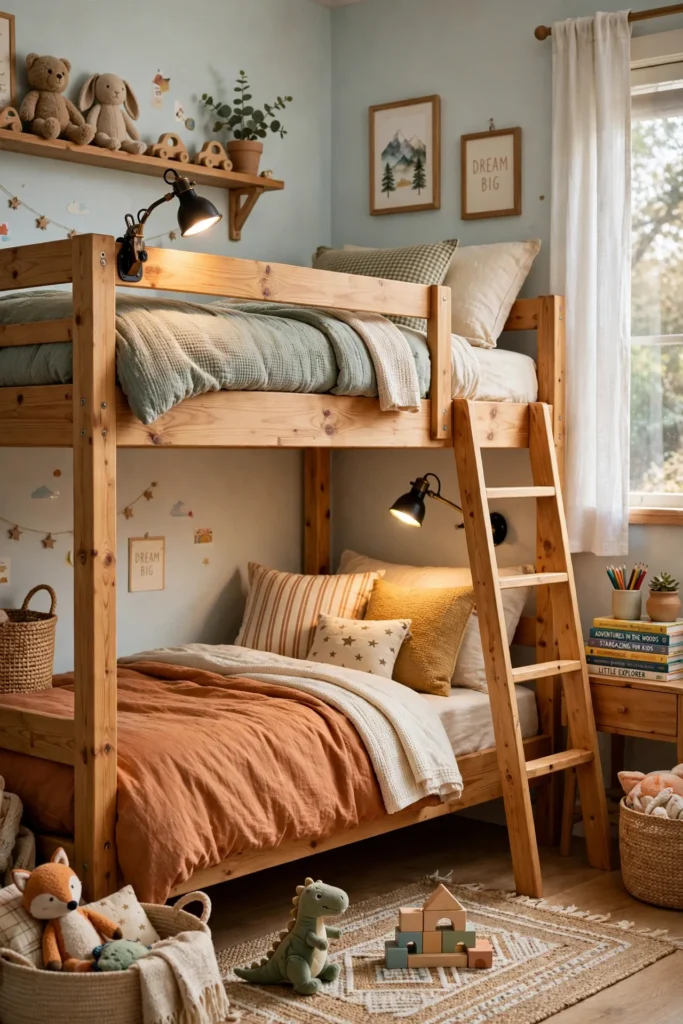
1. Classic Bunk Beds That Free the Floor
Bunk beds are the classic answer for a reason: they sleep two kids in the footprint of one bed and hand the rest of the room back for play. Look for a sturdy frame with a full guardrail on the top bunk, a ladder that does not wobble, and enough headroom that the top sleeper can sit up without hitting the ceiling. Keep the area under the bottom bunk clear for a rolling storage bin, and hang a small clip light on each bunk so both kids can read without disturbing each other.
2. Parallel Twin Beds With a Shared Nightstand
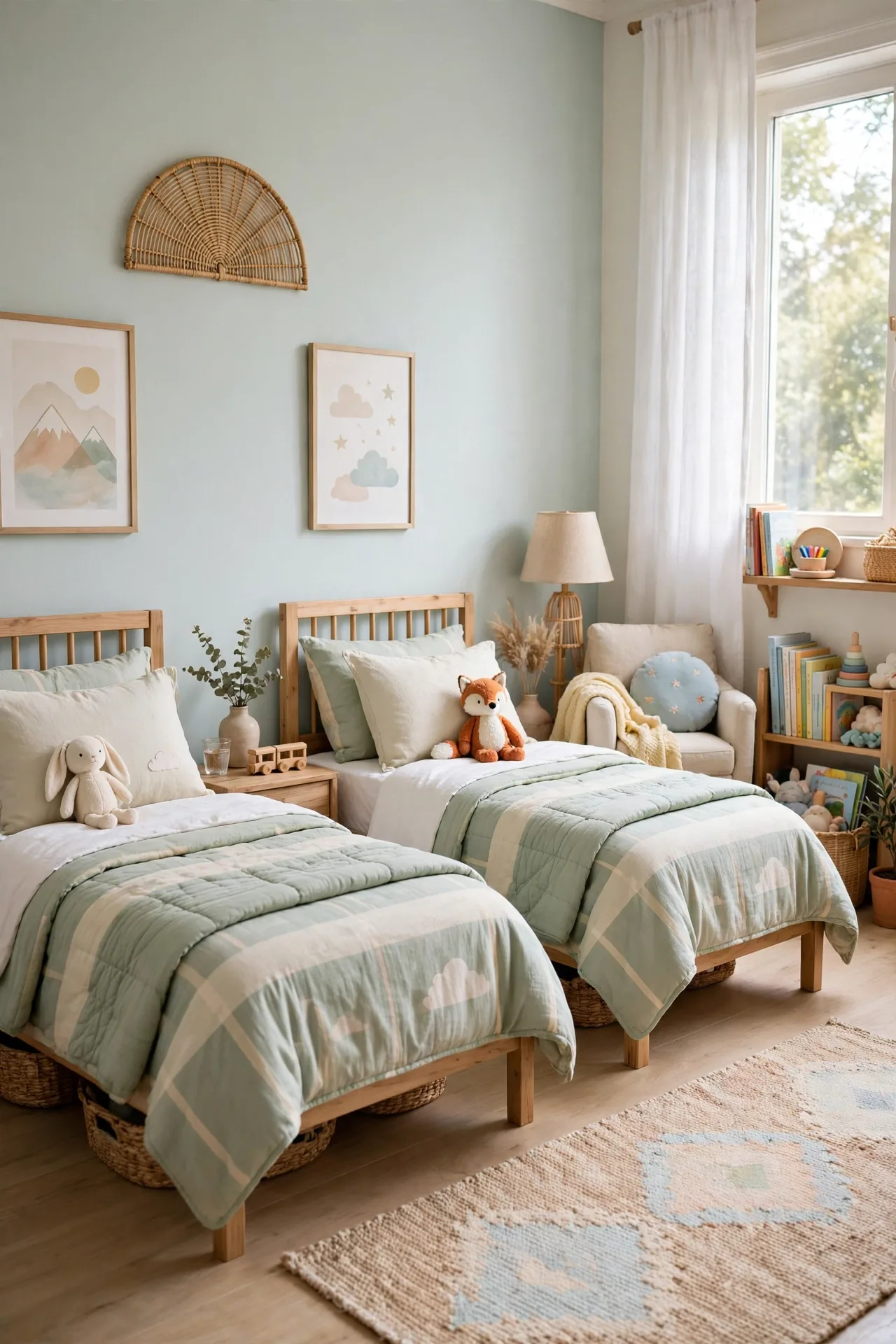
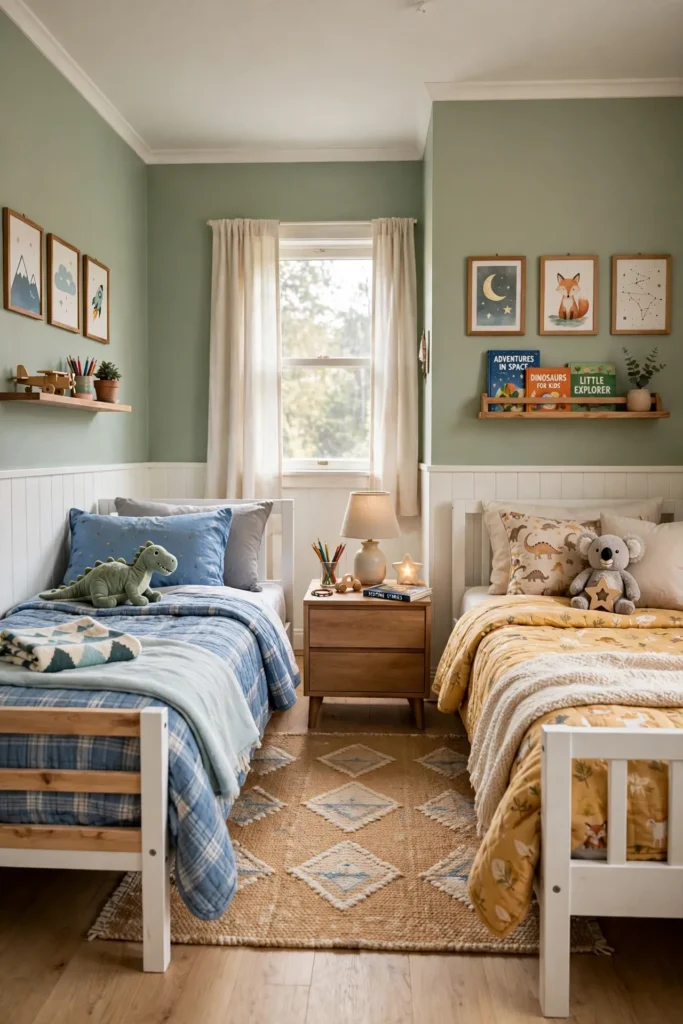
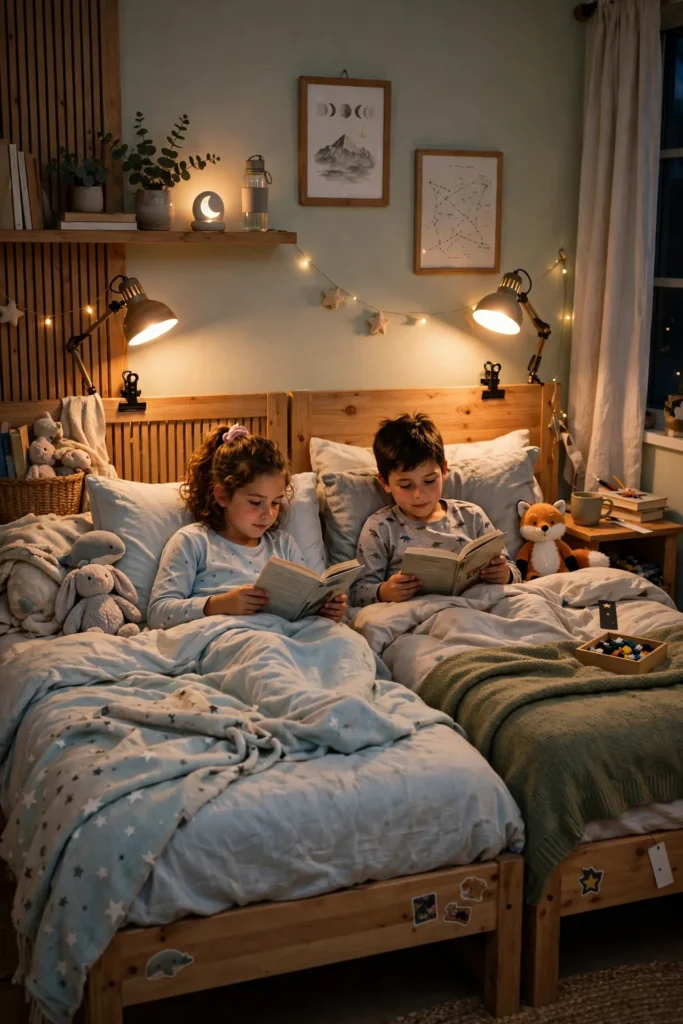
If the room is wide enough, two twin beds pushed against opposite walls with a shared nightstand between them is one of the calmest shared kids bedroom ideas you can try. Each child gets their own wall to decorate, their own side of the room, and a clear boundary that needs no explaining. A single nightstand in the middle holds a shared lamp and alarm clock, while a small basket on each bed keeps books and chargers on the right side of the bed, every time.
3. An L-Shaped Layout for Awkward Rooms
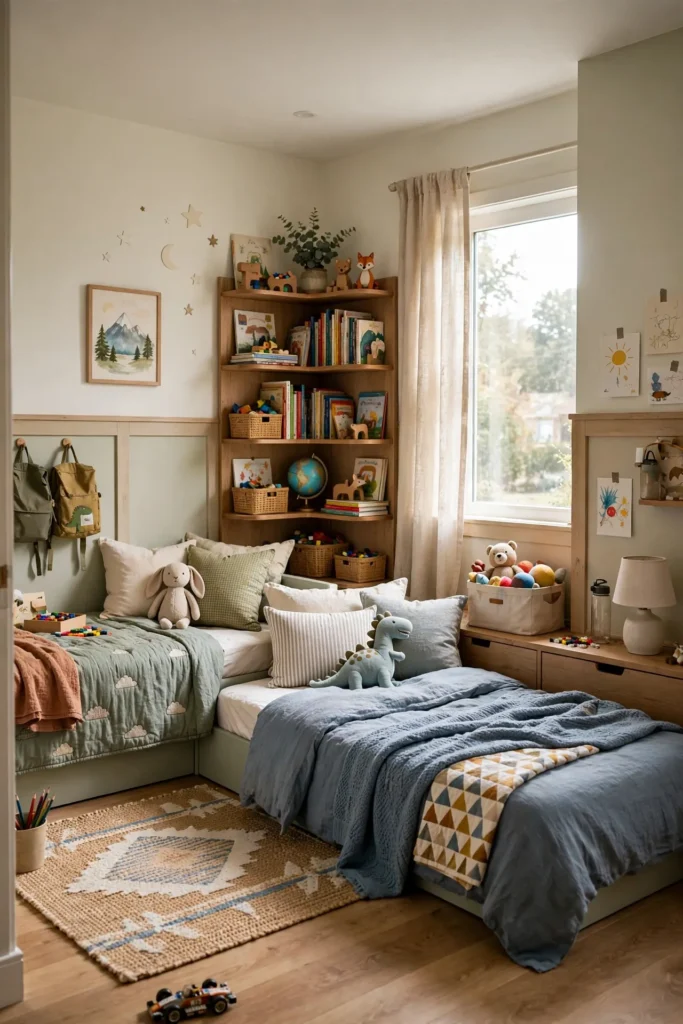
Long, narrow, or oddly shaped rooms often work better when the beds sit at a right angle instead of side by side. Place one bed against the long wall and the other against the short wall, and the corner between them becomes a natural spot for a shared bookshelf or a small desk. This layout also breaks up the sightline across the room, so each child feels a little less watched while they read or play, which matters more than adults usually guess.
4. Color Zones Instead of a Dividing Wall
You do not need a partition to give each child their own zone. Paint or wallpaper one bed wall in each child’s chosen color, then repeat that color in their bedding, their storage bin, and their wall hooks. The room still reads as one calm space from the doorway, but from each bed, the world looks personal. Keep the shared pieces — the rug, the curtains, the dresser — in a neutral tone so the two color zones do not fight each other.
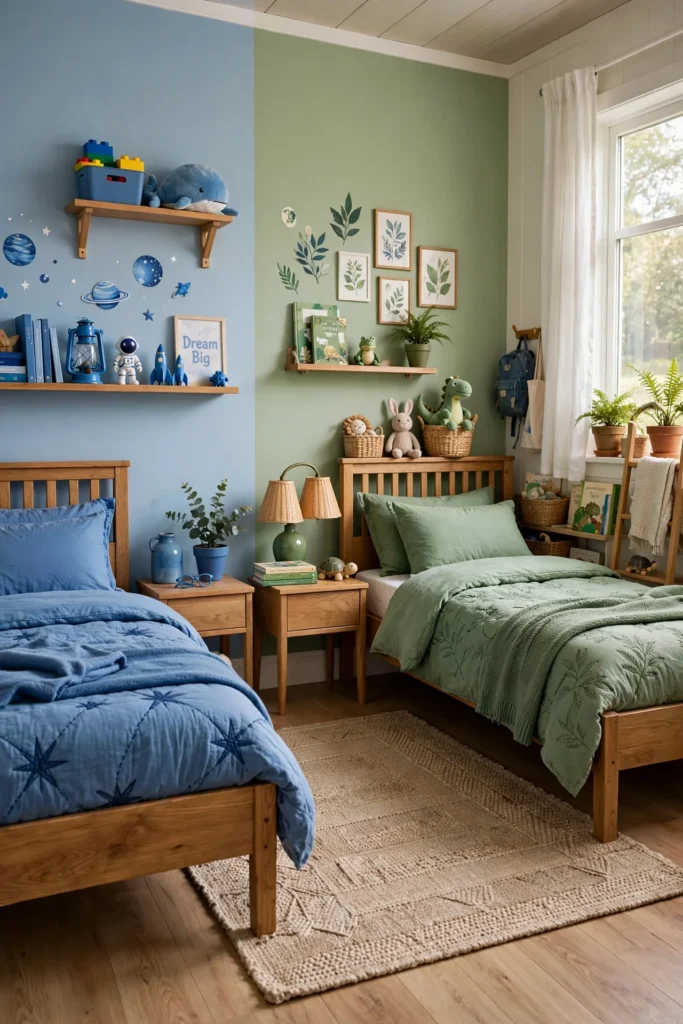
5. One Long Desk for Two Homework Stations
A single long desk along one wall beats two small desks squeezed into corners. Each child gets a defined half, a desk lamp, and a drawer or caddy for supplies, and you only run one cable for a shared lamp or charger strip. A small divider, a desk organizer, or even a strip of washi tape down the middle marks the boundary without building a wall. Add a pinboard above each half so school art and reminders stay on their owner’s side.
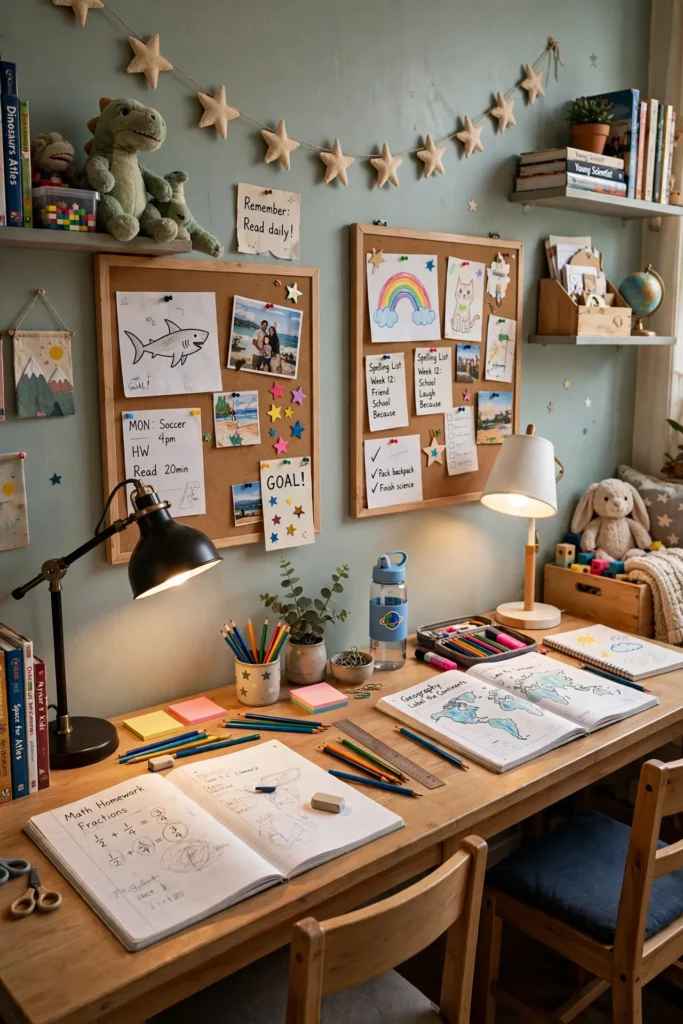
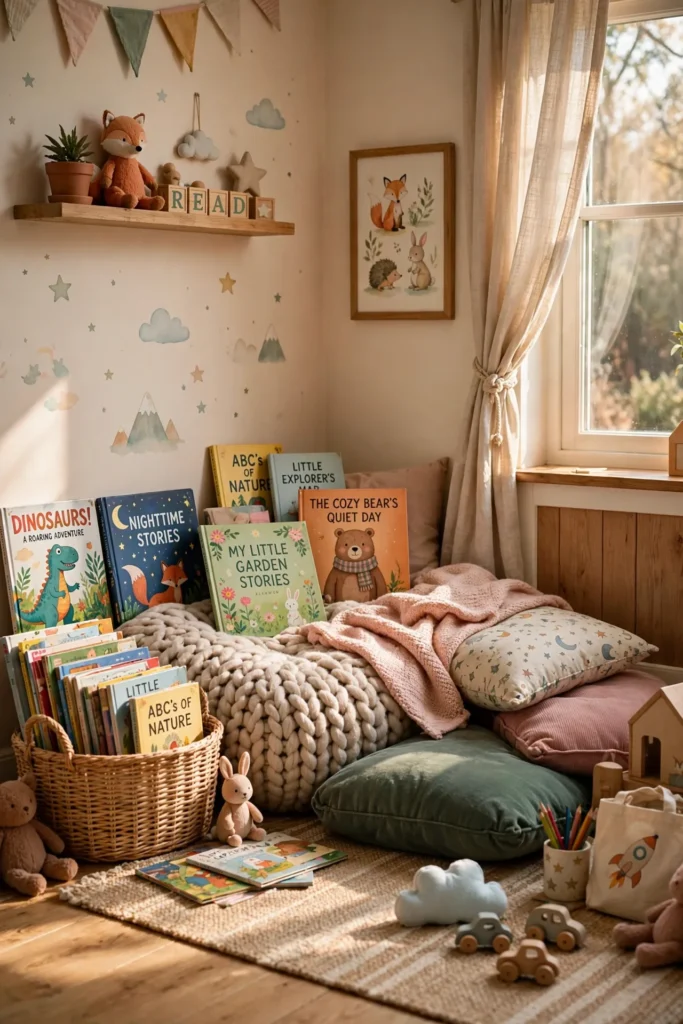
6. A Reading Nook They Share on Purpose
Not everything in the room needs to be split down the middle. A beanbag corner, a floor cushion pile, or a window seat with a basket of books gives siblings a place they actually want to share, and that shared spot makes the divided parts feel fairer. If you are reworking the whole space, browse these bedroom makeover ideas for layout tricks that work just as well in a kids’ room, like moving the reading corner near the best natural light.
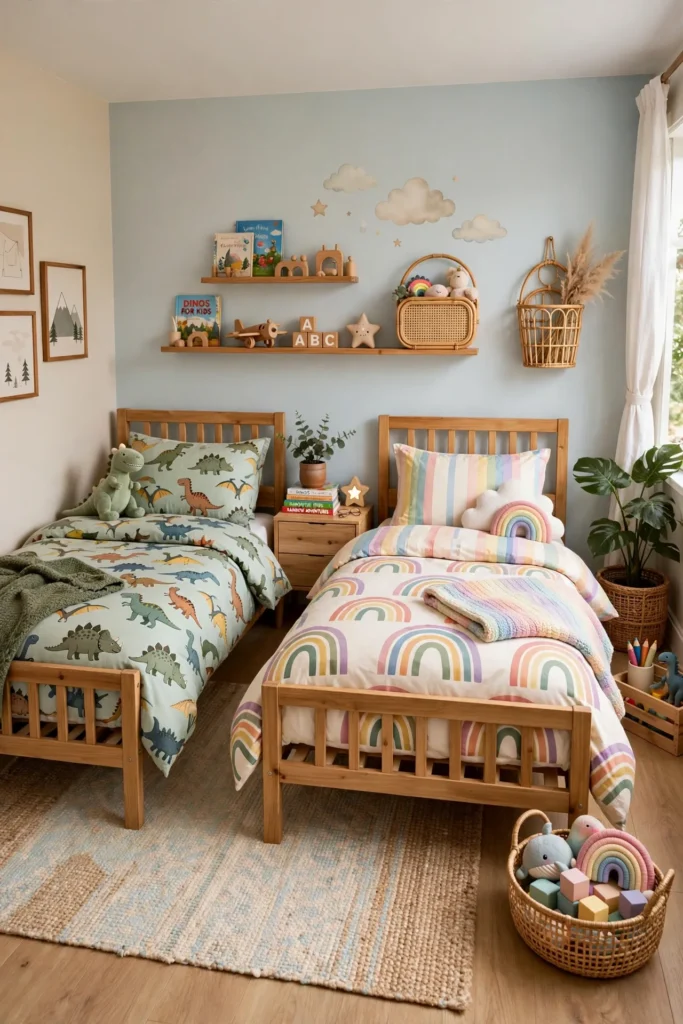
7. Matching Frames, Different Bedding
Identical bed frames with different bedding is the easiest way to make a shared room look pulled together while letting each child feel seen. The matching frames keep the room calm and photograph beautifully, and the bedding is where personality lives — dinosaurs on one bed, rainbows on the other, and nobody has to compromise. This is one of those shared kids bedroom ideas that also saves money, because you can swap just the bedding when tastes change instead of replacing furniture.
8. A Storage Wall That Ends the Toy Wars
Most sibling fights are really storage fights, and a full storage wall solves more of them than any rule chart. Use low open cubbies for shared toys, labeled bins for each child’s belongings, and one high shelf for things that need a grown-up’s permission. When every toy has a labeled home, cleanup takes five minutes and “that’s mine” arguments get much shorter, because the answer is written on the bin.
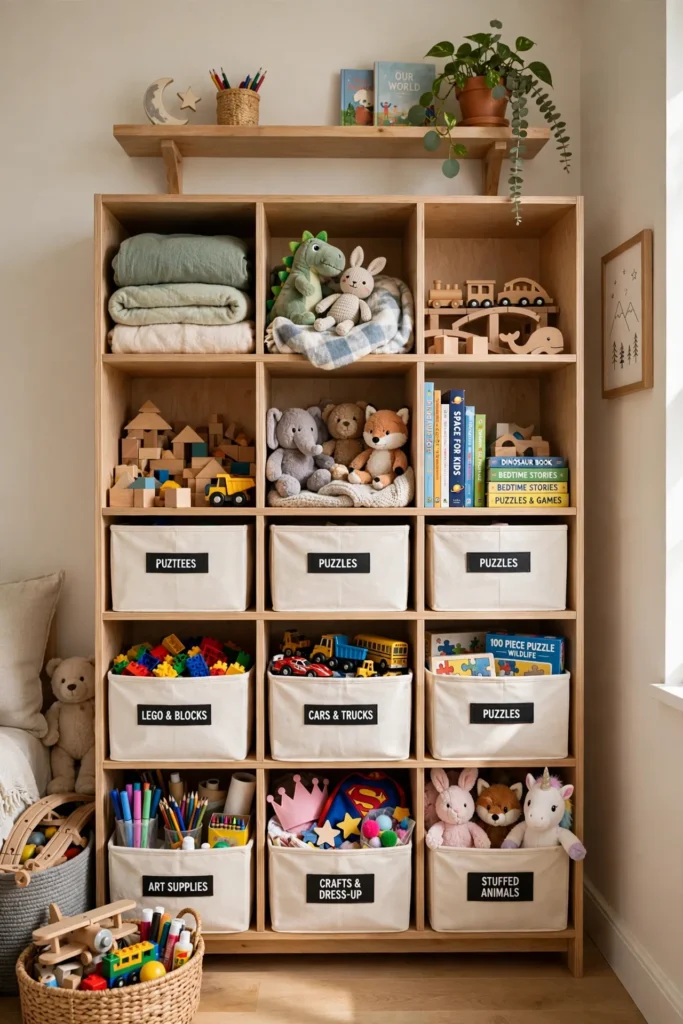
9. Trundle Beds for Sleepovers and Small Rooms
A trundle bed hides a second mattress under the first, which makes it brilliant for small rooms and for the friend who always stays over. During the day the room feels like a single bedroom with open floor space, and at night it sleeps two without any rearranging. Choose a trundle with smooth-rolling casters and a mattress that is easy for a child to pull out alone, or the grown-ups will be doing it every single night.
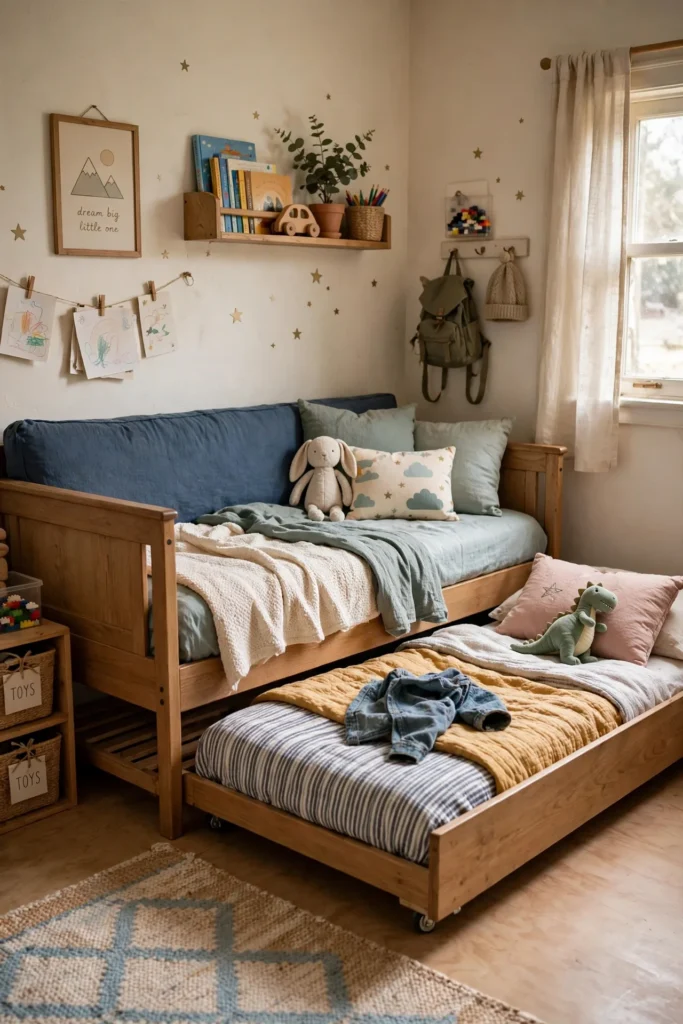
10. Split the Closet Fairly, Down the Middle
Walk into the closet before you promise anything about fairness. Give each child one side, one hanging rod section, and the same number of shelves, and use different colored hangers or bins so ownership is obvious at a glance. If the closet is tiny, move out-of-season clothes to a labeled bin elsewhere and keep only this week’s clothes inside. A closet that is visibly split fairly causes far fewer morning arguments than a bigger closet with vague rules.
11. Personal Bedside Caddies for Small Treasures
Every child has small treasures — a torch, a notebook, a favorite rock — and a bedside caddy keeps them safe without taking over the room. Hang a fabric pocket organizer on each bed frame or place a small caddy on each side of the shared nightstand. The rule is simple: what fits in your caddy is yours, and nobody borrows from it without asking. It is a small thing, but for kids, a private pocket of their own in a shared room feels enormous.
12. A Shared Gallery Wall With Two Sides
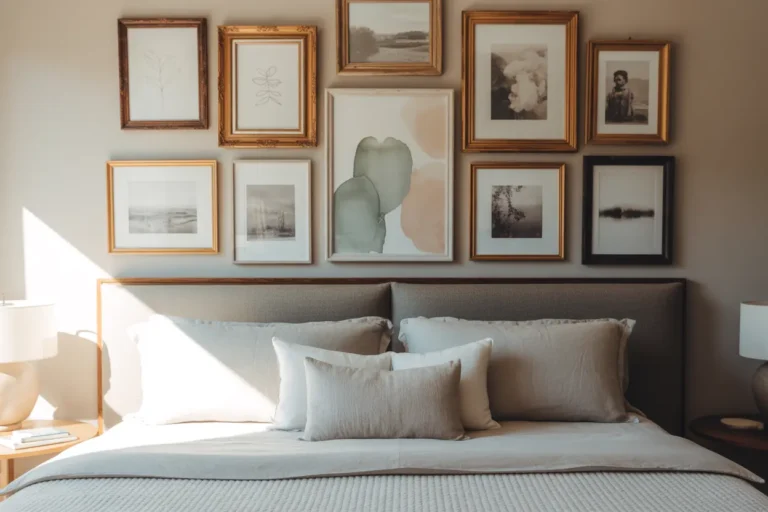
Art is where kids’ rooms become personal, so give the gallery wall a clear structure: one side per child, same frame style, different art. Matching frames keep the wall looking intentional, and each side tells its own story. Let kids rotate their own art whenever they want — a clip frame or a wire with clips makes swaps easy without new holes in the wall. For a calmer backdrop behind all that color, these timeless bedroom ideas show how neutral walls let kids’ art do the talking.
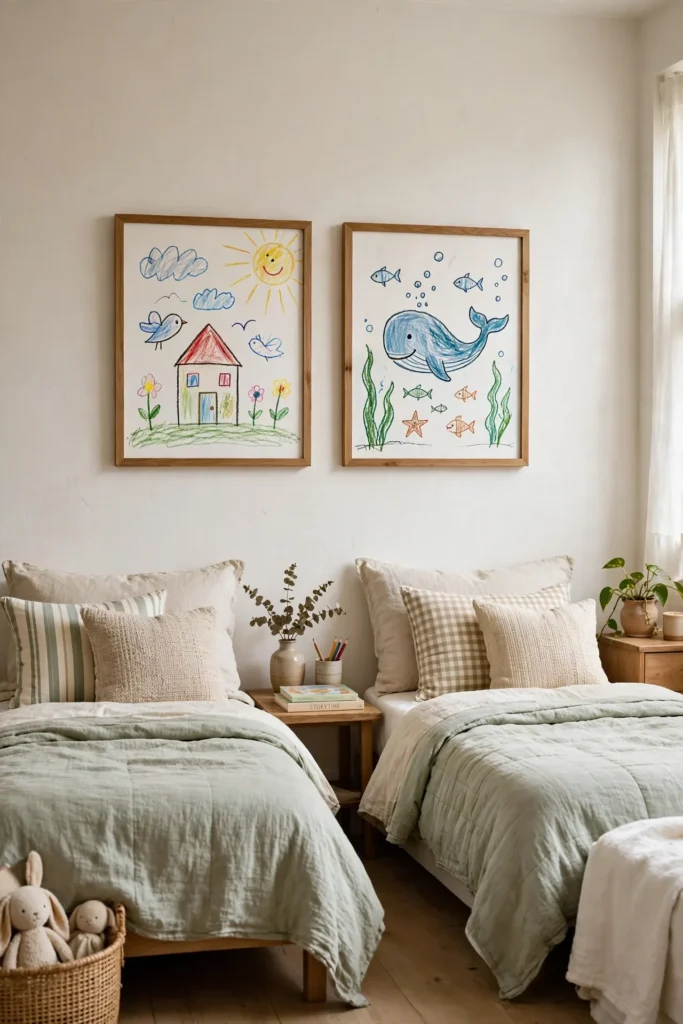
13. Curtain Nooks for a Little Privacy
A ceiling-mounted curtain track around one bed creates a cozy nook a child can close when they want quiet, and it costs far less than any partition. Use a light fabric that still lets air through, and agree on the house rule together: a closed curtain means “please knock,” not “stay out forever.” Kids who can close a curtain when they need space argue less about needing a room of their own, because they already have a small version of one.
14. Under-Bed Drawers for Clothes and Games
Under-bed drawers turn dead space into the easiest storage in the room. One child gets the drawers under their own bed, so there is never a question about whose clothes are where, and bulky items like board games and spare bedding finally have a home that is not the middle of the floor. Label the drawer fronts if the beds look identical, and choose drawers that roll smoothly on your flooring — a drawer a child cannot open alone is just decoration.
15. A Calm Color Palette With Pops of Personality
When two strong personalities share one room, a calm base color is your best friend. Soft white, warm beige, or pale grey on the walls and big furniture lets each child’s bedding, art, and accessories bring the color without the room turning chaotic. If one child loves bold color and the other loves pastels, the calm base is the compromise that makes both sides look good. Even grown-up rooms follow this rule — these dark moody bedroom ideas show how one strong color choice, used with restraint, can carry a whole room.
16. Toy Rotation Bins to Keep the Floor Clear
Toy rotation is the quiet trick behind tidy shared rooms: keep half the toys in labeled bins in a closet or another room, and swap them every couple of weeks. Kids play longer with toys that feel fresh, the floor stays walkable, and you stop buying storage to hold toys nobody touches. Let each child pick which of their toys go into rotation, and keep one small “always out” basket per child for the current favorites that never get packed away.
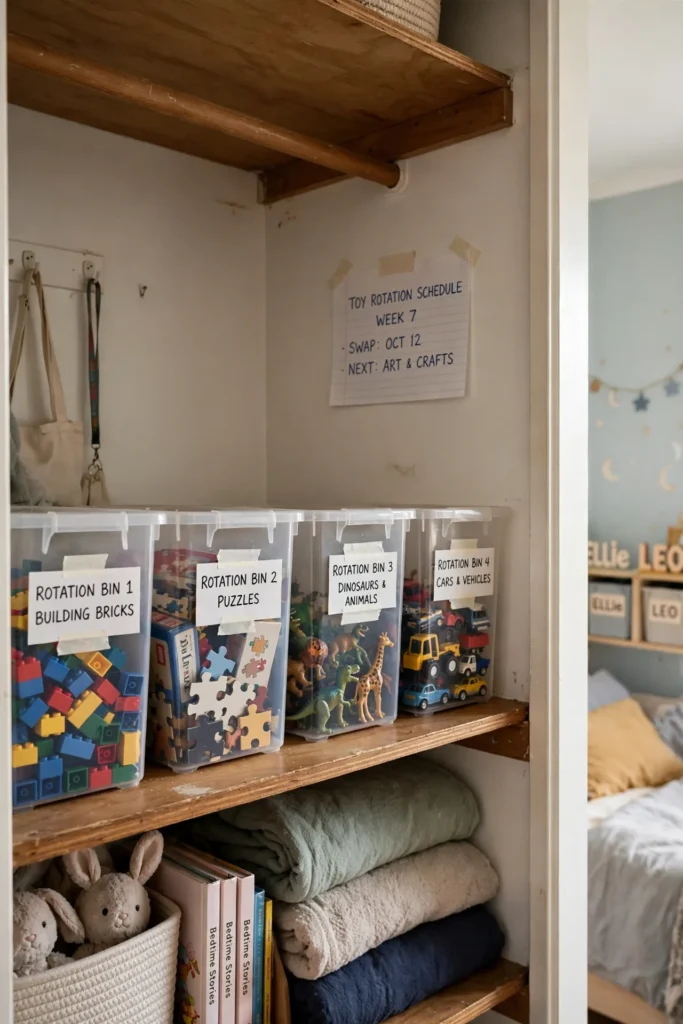
17. Fair Rules Written Together, Posted on the Wall
The best shared kids bedroom ideas are not furniture at all — they are agreements kids helped write. Sit down together and agree on five simple rules: ask before borrowing, lights out at the same time, each child tidies their own zone, and so on. Write them on a small poster, let both kids sign it, and hang it where everyone can see it. Rules kids helped create are rules they actually defend, and a posted agreement ends the daily renegotiation that wears parents out.
18. A Bedtime Routine That Works for Both Ages
When siblings are different ages, bedtime is the hardest part of sharing a room. Stagger the routine instead of the bedtime: the younger child gets stories first while the older one reads with a clip light, then lights go out together. A shared wind-down playlist, matching pajama baskets, and a “last call” for water and bathroom trips before lights out all help. Within a week, the routine becomes the habit, and bedtime stops being the moment the room-sharing experiment falls apart.
Frequently Asked Questions
What age gap works best for kids sharing a bedroom?
There is no perfect gap — siblings two years apart and siblings six years apart both share rooms happily. What matters more is routine: similar bedtimes, similar noise tolerance, and a layout that gives each child a private corner. A bigger age gap usually just means the older child needs a later wind-down, which a clip light and a staggered routine handle well.
How do you stop siblings fighting over space in a shared room?
Make ownership visible. Give each child a labeled drawer, shelf, bedside caddy, and side of the closet, and write the few shared rules down together. Most fights fade once kids can see what is theirs, because the argument is usually about fairness, not about the object itself. A weekly five-minute tidy-up together also keeps small messes from becoming big grievances.
Are bunk beds safe for younger children?
Bunk beds are safe when they are used the right way: the top bunk is generally for children aged six and up, the guardrail should run the full length of the bed, and the ladder should be sturdy and easy to climb in the dark. Keep the area around the bed clear, ban rough play on the top bunk, and check the bolts every few months. For younger kids, parallel twin beds or a trundle are the safer starting point.
How can a small room fit two kids comfortably?
Use vertical space and multi-purpose furniture. Bunk or loft beds free the floor, wall shelves replace a bookcase, and under-bed drawers swallow clothes and games. Keep only this season’s clothes in the closet, rotate toys, and choose one shared desk instead of two. Small rooms work fine for two kids when every piece of furniture does at least two jobs.
How do you give each child privacy in a shared bedroom?
Privacy in a shared room comes from small boundaries, not walls. A curtain around one bed, a bedside caddy nobody else opens, a personal shelf, and a “knock first” rule for closed curtains all add up. Let each child decorate their own bed wall, and agree as a family that personal drawers and journals are off-limits. These little zones are what turn good shared kids bedroom ideas into a room both kids genuinely like living in.
Make It Yours
Pick three ideas from this list to start with — one bed layout, one storage fix, and one rule you write together — and let each child choose their own bedding or wall color this weekend. A shared room does not need to be perfect to work; it needs to feel fair, and fairness is built one labeled bin and one personal choice at a time. If you found an idea your kids will love, save your favorites to your board on Pinterest so you can find them again when you start decorating.