21 Sweet Baby Nursery Decor Ideas
Setting up a first nursery is equal parts joyful and overwhelming, because the room has to work for night feeds, naps, nappy changes and quiet play, all while still feeling like a calm place you actually enjoy spending time in. The good news is that a beautiful nursery is rarely about buying everything at once. These baby nursery decor ideas focus on a calm base, a few pieces that earn their place, and small, personal touches that make the room feel finished without making it busy.
Read This Before You Decorate the Nursery
Start with safety and sleep, then style around them. Place the crib away from windows, cords, blinds and anything a standing baby could reach, keep the sleep surface bare apart from a fitted sheet, and choose paint and finishes that are low in odour and easy to wipe clean. A room that is safe first is a room you can relax in,.
Next, pick one palette and let it run through the whole room: wall colour, bedding, rug and curtains in the same family, with one or two accents repeated rather than a new colour in every corner. A tight palette is what makes a small room feel larger and a busy room feel restful, and it also makes future swaps easy, because a new blanket or print only has to match the palette, not reinvent it. That discipline is what keeps baby nursery decor ideas feeling calm rather than cluttered, even in a room full of tiny things.
Finally, plan the room around three zones before you buy decor: sleep, change and feed. The crib zone stays quiet and uncluttered, the changing zone keeps everything within arm’s reach, and the feeding corner gets the comfortable chair, a small table and a soft light. When those three zones work, the decorating on top of them is the fun part, not a fix for a room that fights you at 3 a.m.
1. Start With a Soft Neutral Palette That Can Grow
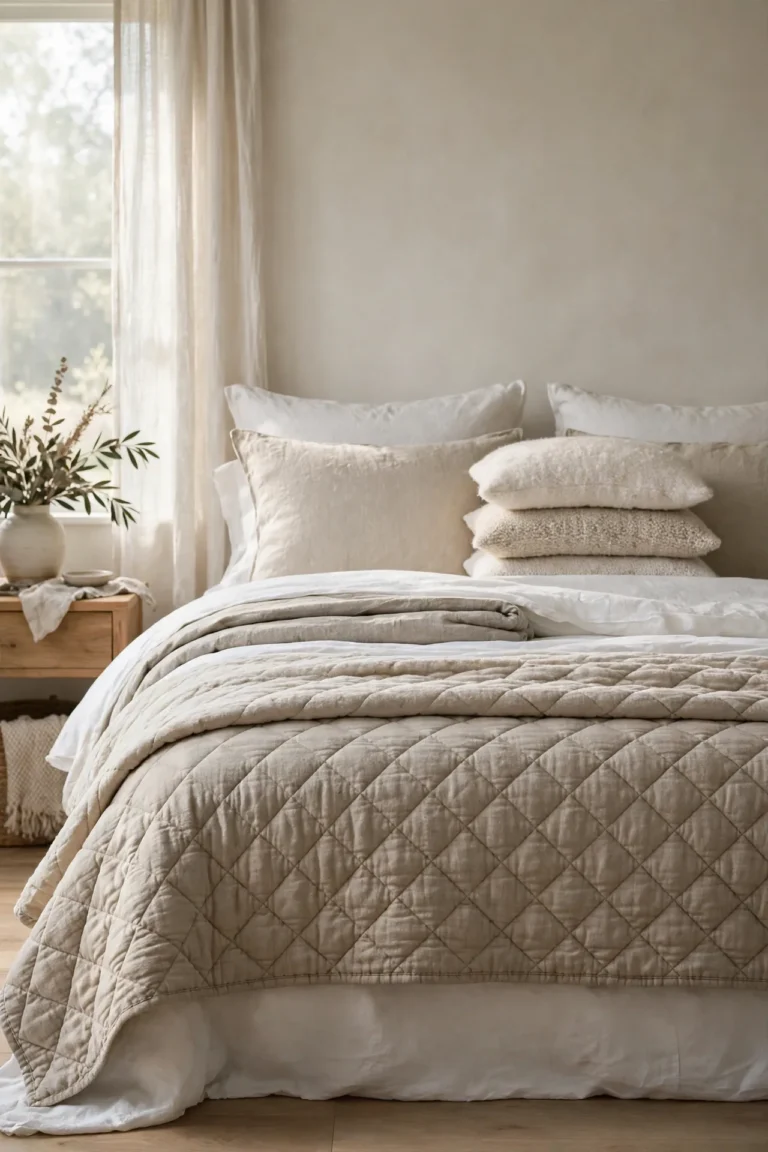
Warm white, oatmeal, pale sage or soft greige on the walls gives you a nursery that feels calm on day one and still suits a toddler room later, because you are not locked into one loud theme. Layer the neutrals with texture instead of colour, so a new blanket or print is a small swap, not a whole-room change.
2. Give One Wall a Gentle Pattern
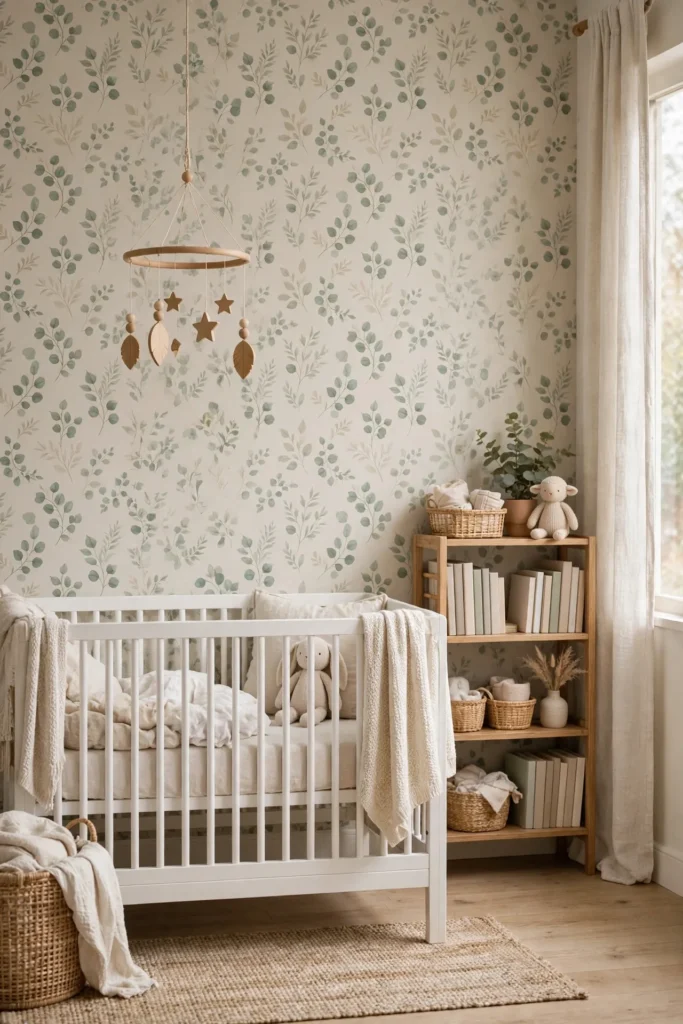
A single patterned wall, behind the crib or behind the glider, adds character without closing the room in, and peel-and-stick wallpaper makes it a renter-friendly weekend job. Choose a small, soft pattern, tiny stars, arches, gingham or a faint botanical print, in colours already in your palette, so the wall feels like a backdrop rather than a shout.
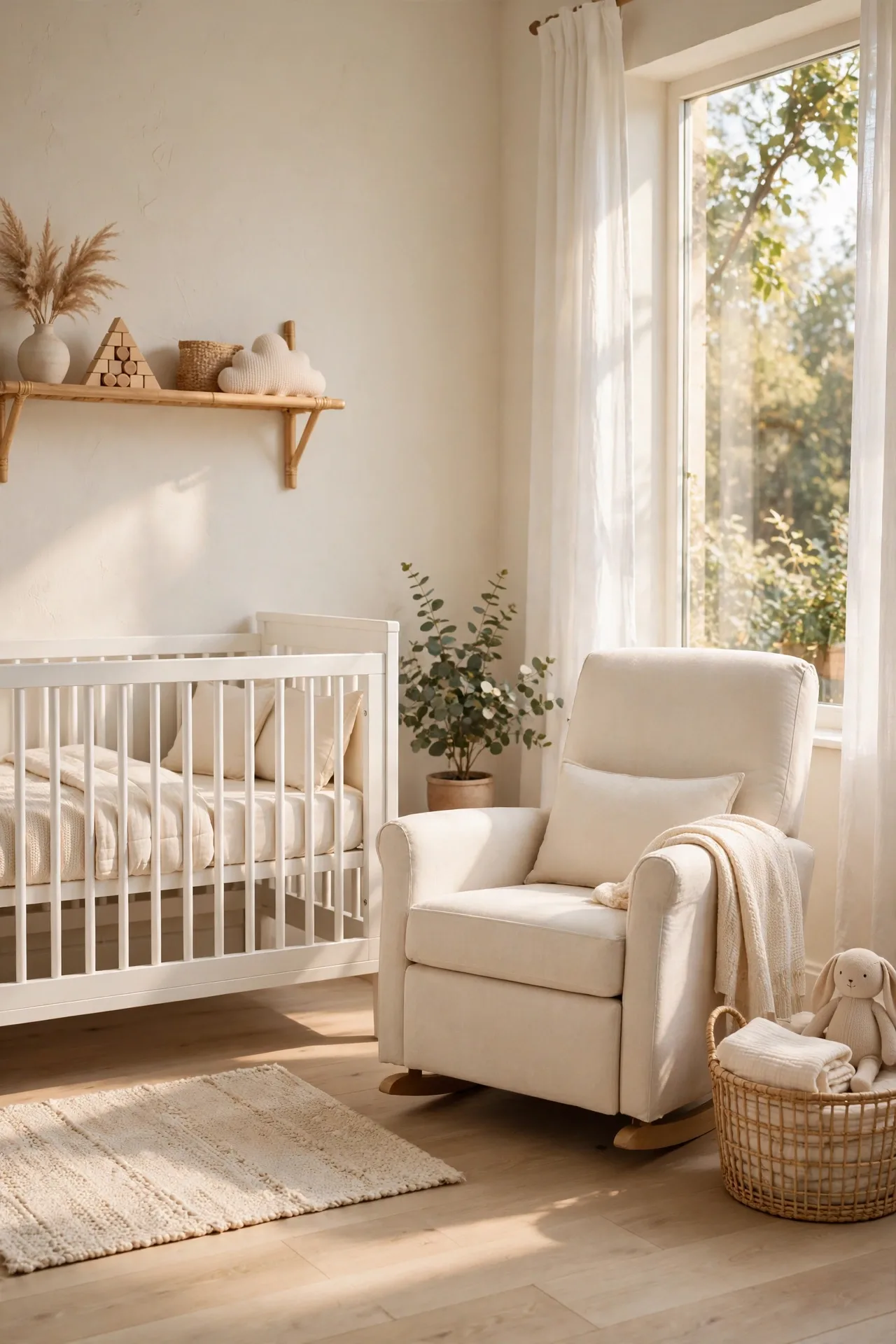
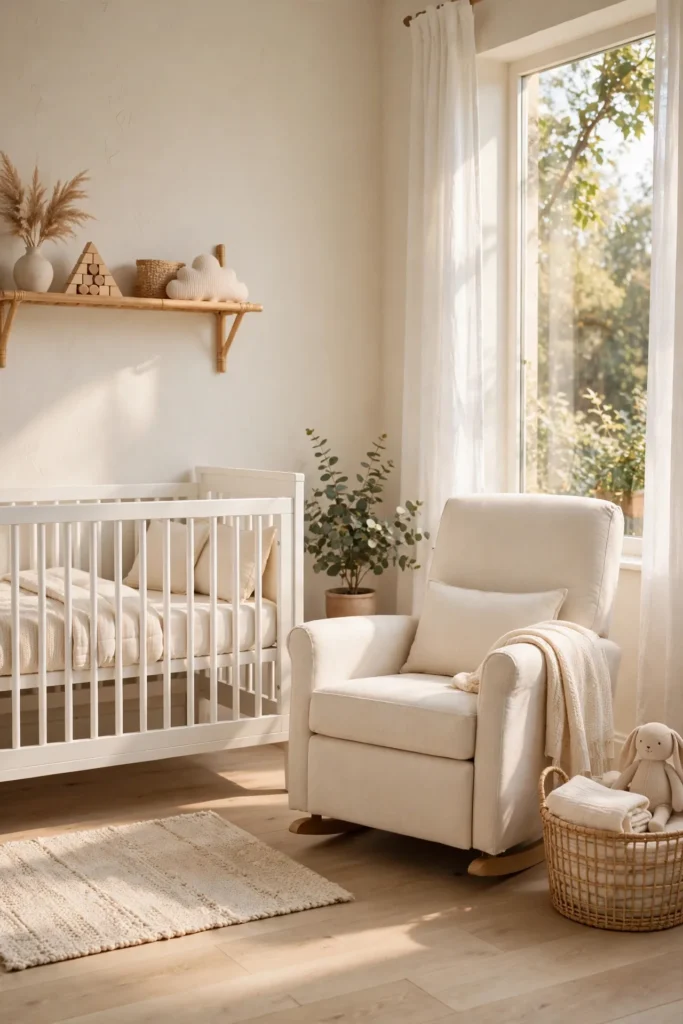
3. Let a White Crib Anchor the Room
A simple white or pale wood crib is the easiest anchor a nursery can have, because it suits almost every palette and never competes with bedding, art or curtains. Dress it plainly: a fitted sheet, a breathable sleep sack for warmth, and nothing loose in the sleep space. The crib then reads as clean and calm in photos and, more usefully, stays a safe, uncluttered place for actual sleep.
4. Build a Feeding Corner You Will Love at Night
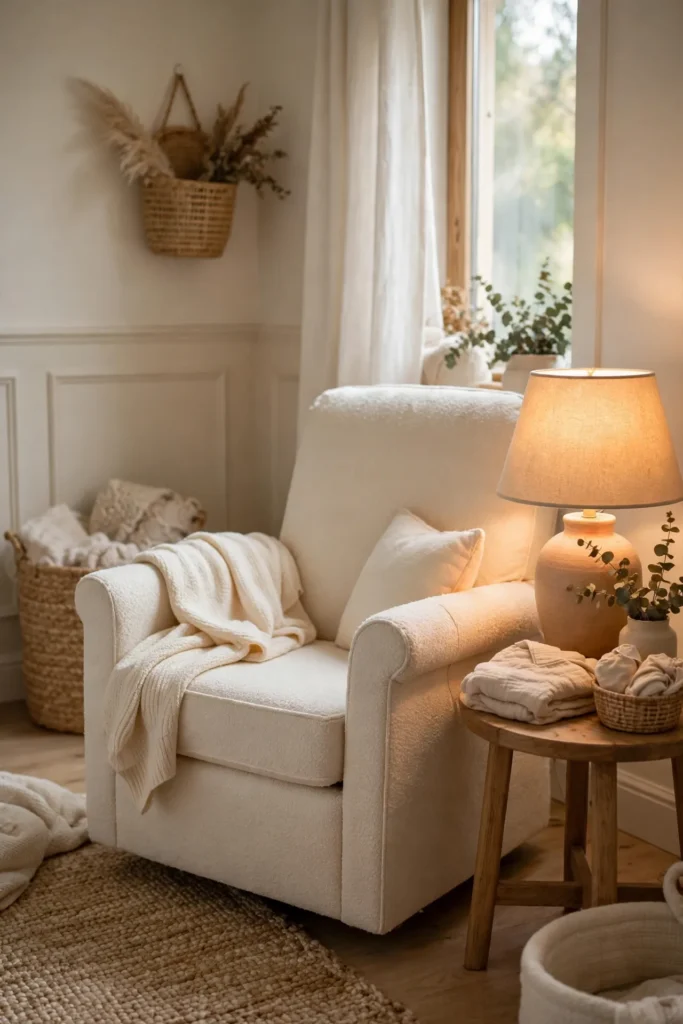
The glider or rocking chair is the most-used seat in the whole house for months, so choose comfort over looks alone: good back support, arms at a height that lets you hold a bottle without hunching, and fabric you can spot-clean. Add a small side table, a footstool and a warm, dimmable lamp.
5. Layer the Lighting for Sleep and Night Feeds
One bright ceiling light is the enemy of a good nursery, because it wakes everyone up at exactly the wrong hour. Layer instead: a dimmable ceiling light for daytime, a warm table lamp for evening wind-down, and a very low nightlight for night feeds and changes. Warm bulbs, kept low and shielded, let you see what you are doing without flooding the room, and dimmers turn the whole lighting plan into one simple habit.
6. Hang Book Ledges at Baby Height Later, Adult Height Now
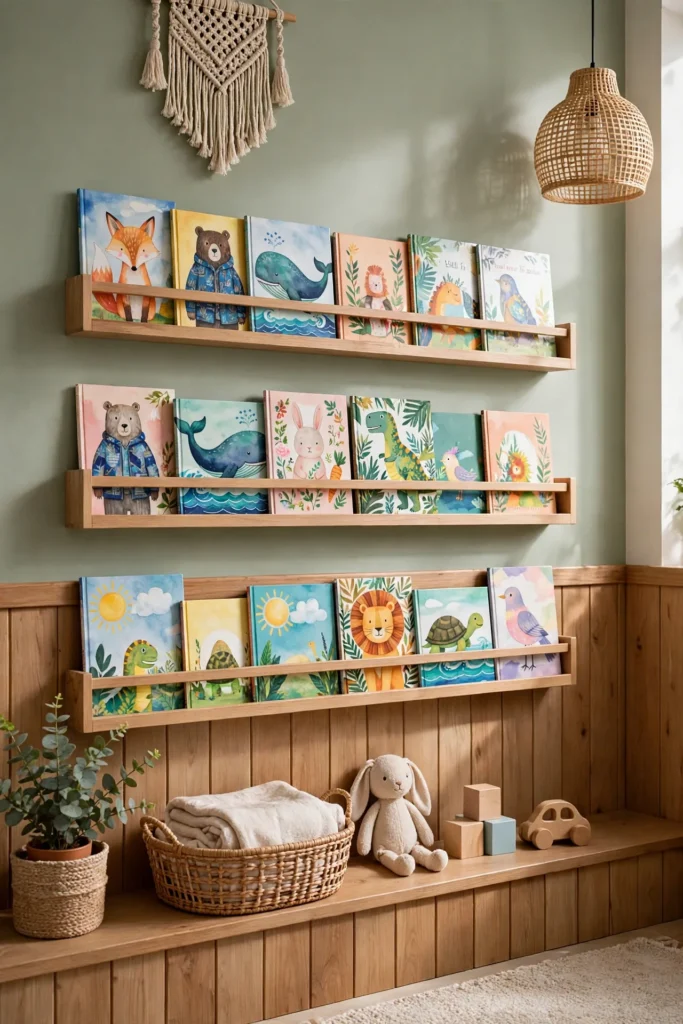
Picture ledges are the nursery’s hardest-working wall decor, because they display books face-out like a tiny library and can be restyled in minutes as tastes change. Hang the first row at your eye level for now, with the prettiest covers facing out, and add a lower row later when your child can choose their own bedtime story.
7. Add a Name Sign or Personal Print Above the Crib
Nothing makes a nursery feel like it belongs to one particular baby quite like their name on the wall, whether it is a wooden cut-out, a framed print or a hand-painted sign. Hang it high enough that it stays well out of reach, and keep the rest of that wall simple so the name is the clear focal point.
8. Choose a Rug That Invites Floor Time
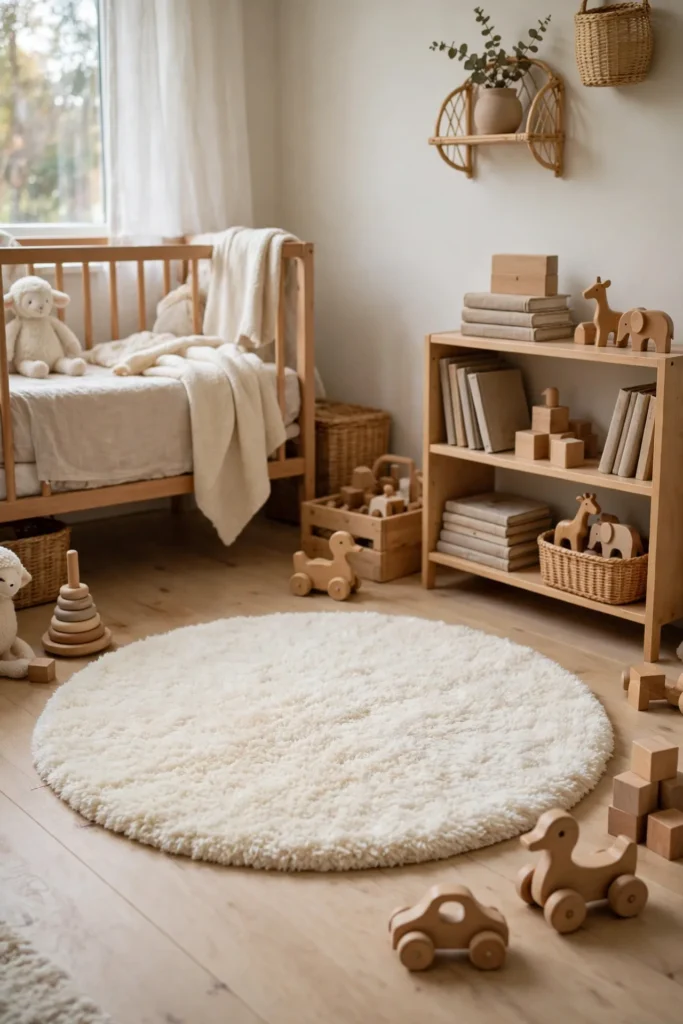
A nursery rug is not just decoration; it is the floor for tummy time, first rolls, first sits and a hundred read-aloud sessions, so pick one that is soft, low-pile and washable. A round rug softens a boxy room, while a larger rectangle under the crib and glider ties the zones together. Keep the pattern simple and the pile short. That is why so many baby nursery decor ideas start on the floor, with the rug.
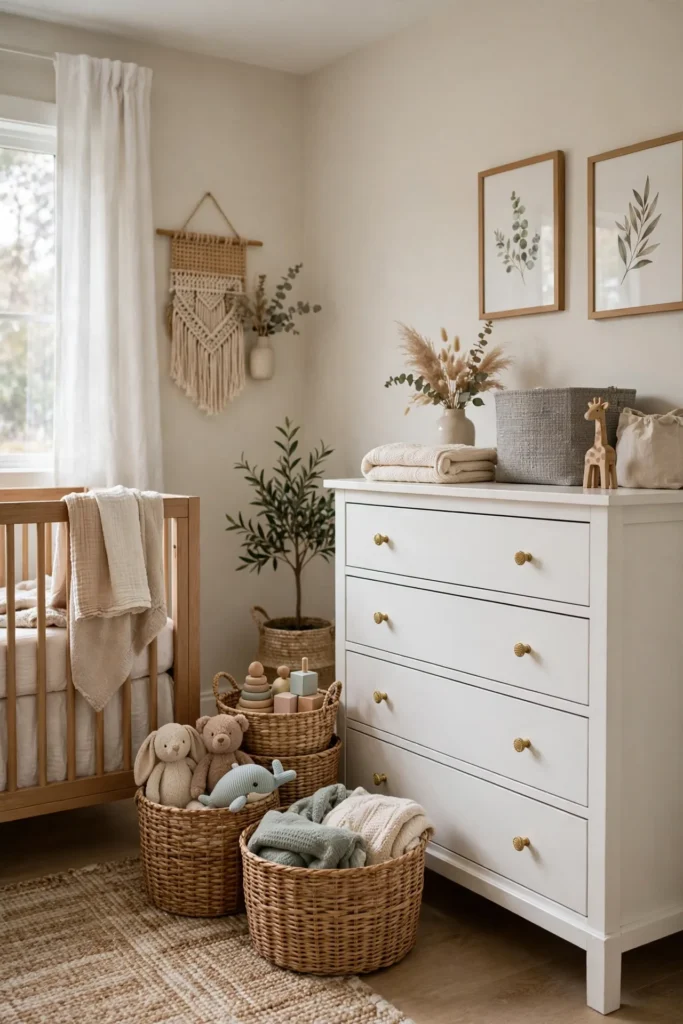
9. Turn a Dresser Into a Changing Station
A sturdy dresser with a changing topper beats a single-purpose changing table, because it stays useful for years after nappies are done. Corral the supplies on a tray or in a small caddy, nappies, wipes, cream and a spare outfit, so everything is within reach but nothing slides around. Keep the top styled simply, one small plant out of reach or a framed print on the wall above, and the changing zone reads as part of the room, not a storage depot.
10. Use Baskets as the Whole Storage System
Baskets are the nursery storage system that actually gets used, because they are light, soft-edged and easy to carry from room to room. Use one large basket for toys, a medium one for blankets, and small ones inside drawers and on shelves for socks, hats and tiny accessories. Matching natural-fibre baskets keep the room looking calm even when it is full.
11. Layer Blackout Curtains Over Sheers
Daytime naps live or die by light control, and the simplest fix is two layers: sheer curtains for soft daytime light and blackout curtains or a blackout lining for naps and early bedtimes. A soft, washable fabric in the room’s palette keeps the window looking finished, and the room stays dark enough for sleep without feeling like a cave during the day.
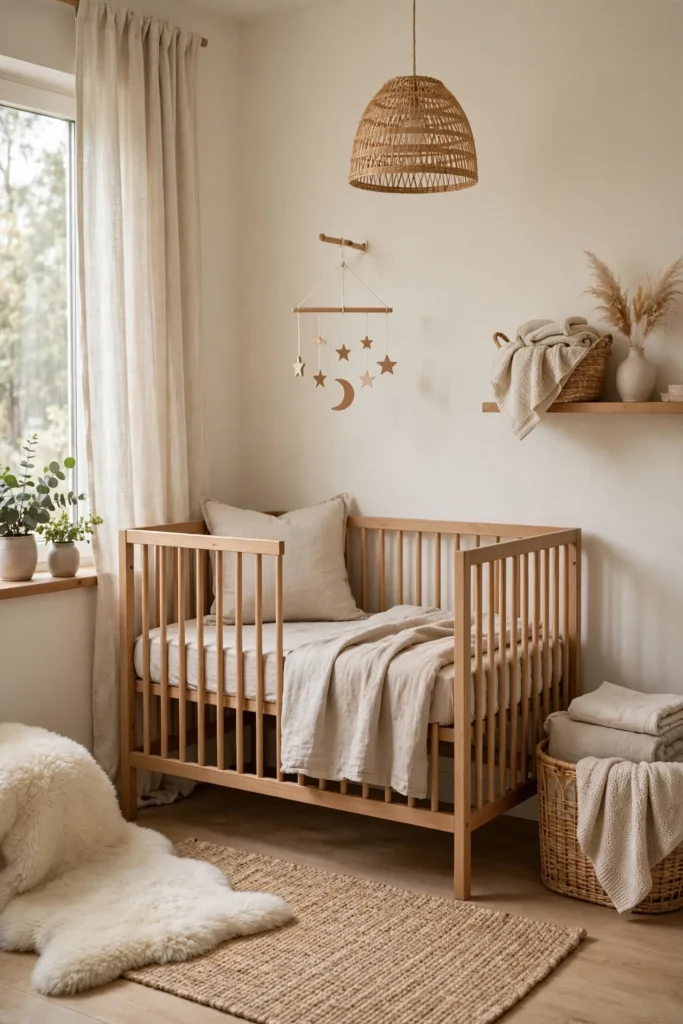
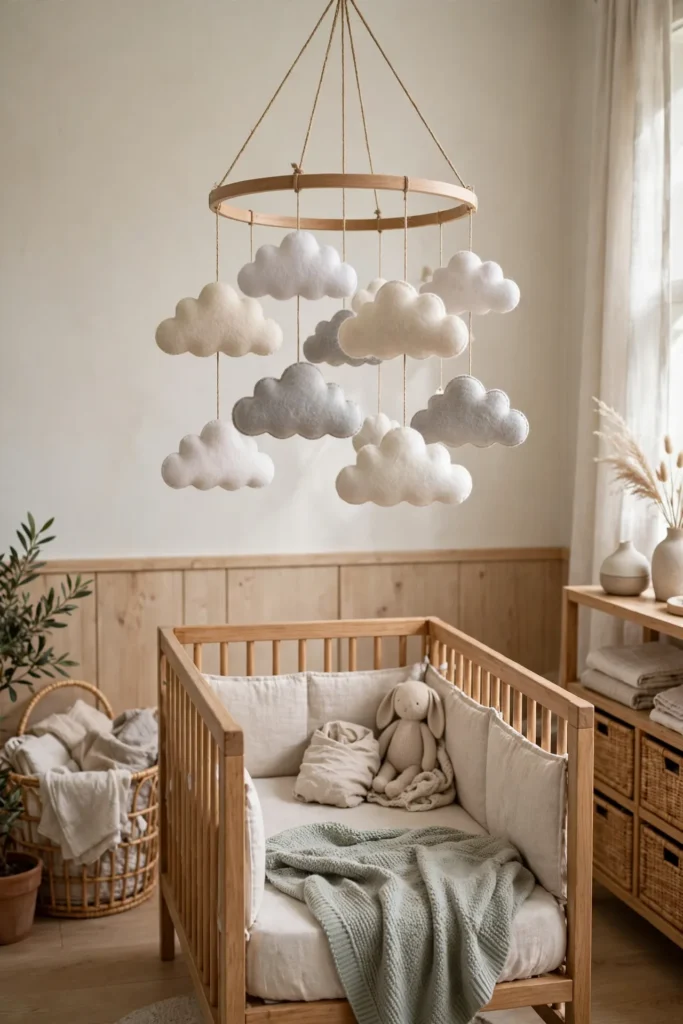
12. Hang a Mobile Safely Out of Reach
A mobile adds gentle movement and a focal point for a baby lying in the crib, but its placement matters more than its style: hang it from the ceiling, not the crib rail, well out of reach, and remove it once your baby can push up on hands and knees. Felt animals, soft clouds or simple wooden shapes in the room’s palette all work, and a slow, quiet mobile suits sleep far better than a bright, noisy one.
13. Carve Out a Tiny Reading Nook
You do not need a whole corner to make reading a ritual: a floor cushion or a small toddler chair, a basket of board books and a soft light are enough to mark the spot. Place it near the book ledges so the books and the seat live together, and keep the nook low and inviting rather than formal. Many baby nursery decor ideas treat this corner as an afterthought, yet it is the spot you will use every single day. The habit matters more than the furniture, and a nook that is easy to flop into will be used far more than a beautiful chair nobody sits in.
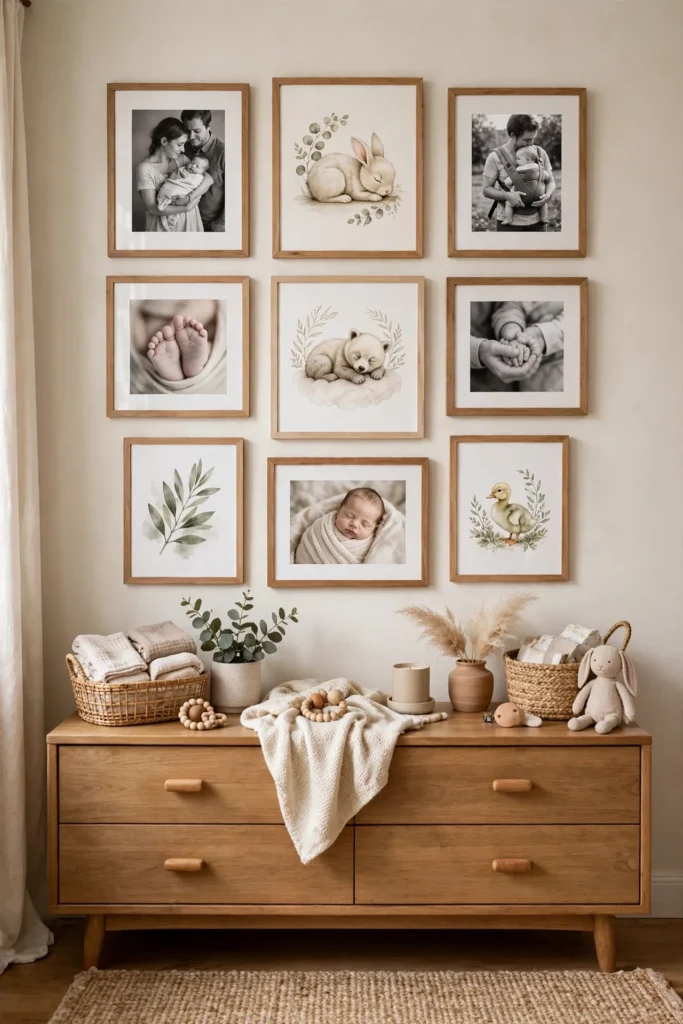
14. Build a Gallery Wall of Meaning, Not Just Prints
A nursery gallery wall works best when it mixes shop-bought prints with things that actually mean something: a family photo, a first footprint print, a page from a favourite storybook, a small embroidered piece. Keep the frames in one family, all wood or all white, and the spacing even, so a mix of sizes still reads as one composed wall. Leave one frame empty or easy to swap, because the wall should be able to grow with the baby it celebrates.
15. Try a Gentle Woodland Theme
A woodland theme is popular for a reason: soft greens, warm browns and cream, with foxes, deer or trees as accents, feel calm rather than cartoonish when kept small. Use the theme in three places only, bedding, one wall print and a toy or two, and let the rest of the room stay neutral.
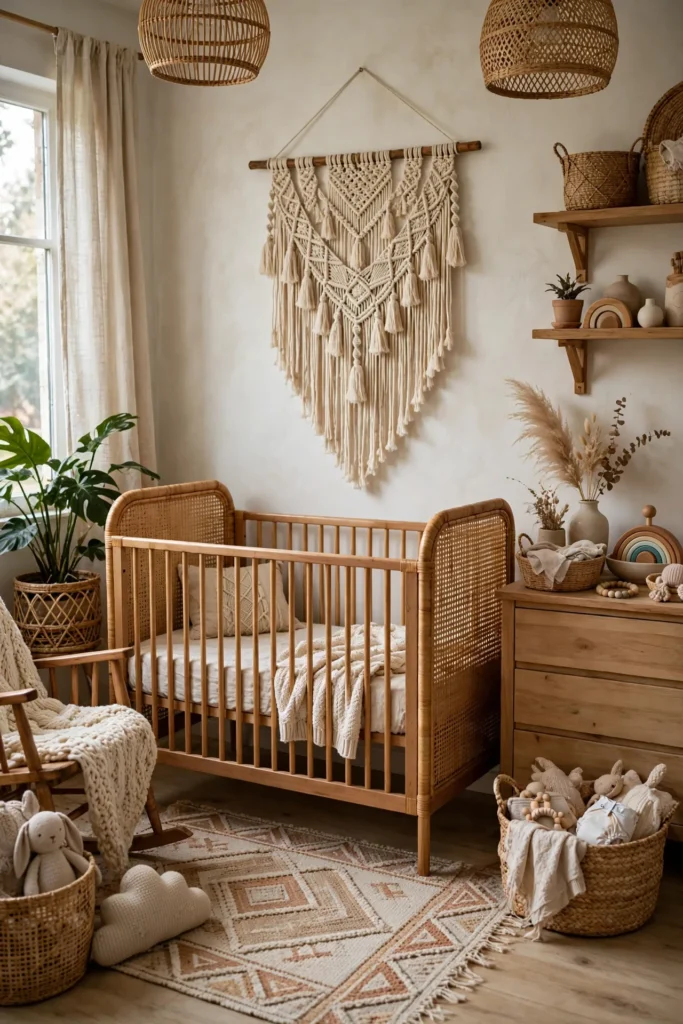
16. Add Boho Texture With Rattan and Macrame
Rattan, macrame, woven cotton and natural wood bring warmth to a pale nursery without adding colour, which is why boho texture suits small rooms so well. A rattan bassinet basket, a macrame wall hanging, a woven pendant light or a cane-front dresser each add one layer of texture; two or three together are plenty. Keep the textures in the same warm family so the room feels collected, not cluttered, and balance them with plain bedding so the eye has somewhere to rest.
17. Weave in One Heirloom or Vintage Piece
One older piece, a rocking chair passed down, a vintage dresser, a handmade quilt or a wooden toy, gives a new nursery instant soul that shop-bought rooms often lack. Check any vintage furniture for safety first, stable joints, no peeling paint, no drop-side rails, and place it where it will actually be used, not just admired.
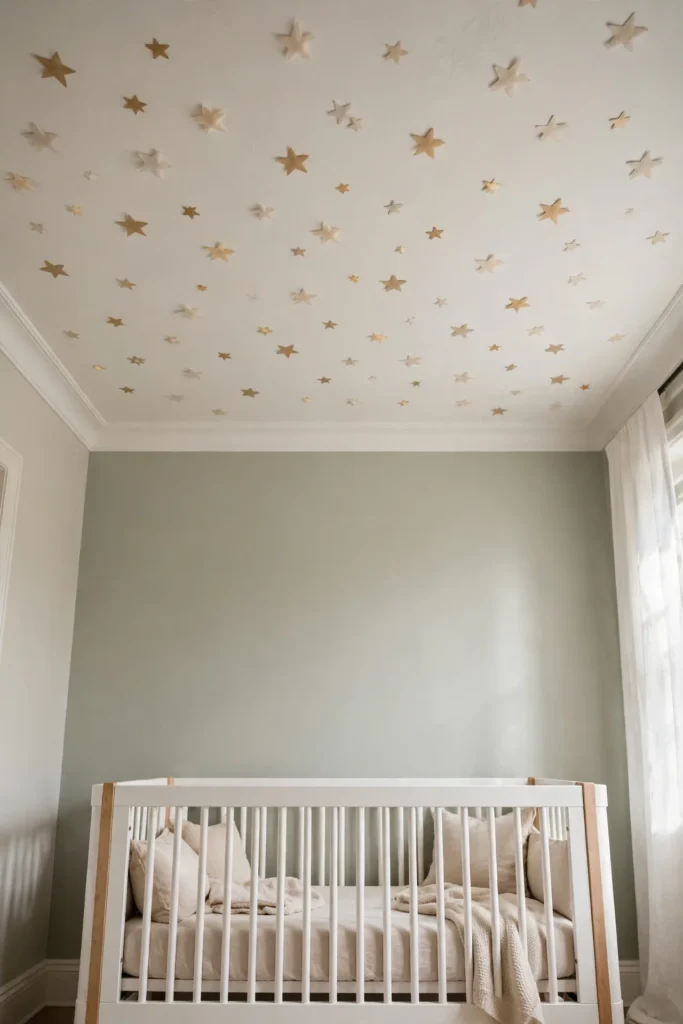
18. Paint the Ceiling or Add Soft Star Decals
Babies spend a lot of time looking up, so the ceiling deserves more thought than plain white. A very pale tint, a soft arch painted above the crib wall, or removable star and moon decals give the ceiling gentle interest without overstimulating the room. Keep the shapes soft and the colours muted, and the ceiling becomes a quiet view for a baby lying awake, rather than another loud feature competing for attention.
19. Display Toys as Decor on Open Shelves
Stuffed animals, wooden toys and pretty rattles do not need to be hidden; displayed in small groups on open shelves, they add colour and personality at no extra cost. Group by colour or size, leave breathing space between groups, and rotate the display every few weeks so the shelves always look fresh. Edit ruthlessly: five toys on a shelf look styled, fifteen look like a shop, so keep the rest in baskets.
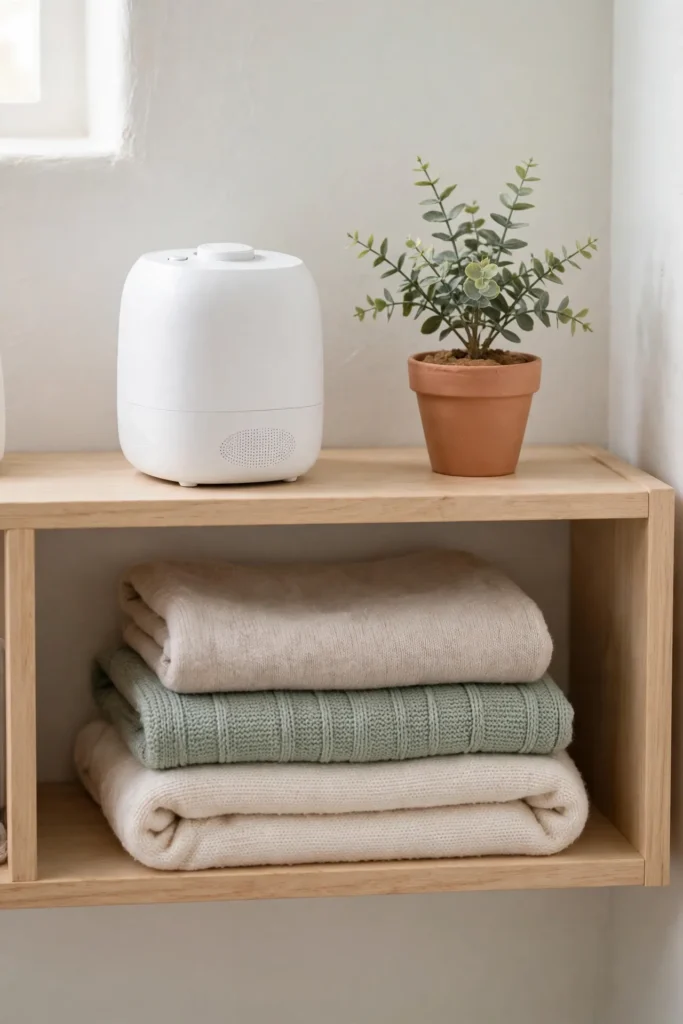
20. Keep a Calm Corner for Sound and Air
A white-noise machine, a small humidifier and a tidy charging spot for the monitor are unglamorous, but styling them well keeps the nursery calm instead of cluttered with cables. Place them on one shelf or tray, hide cords behind furniture, and choose white or wood finishes that blend with the room.
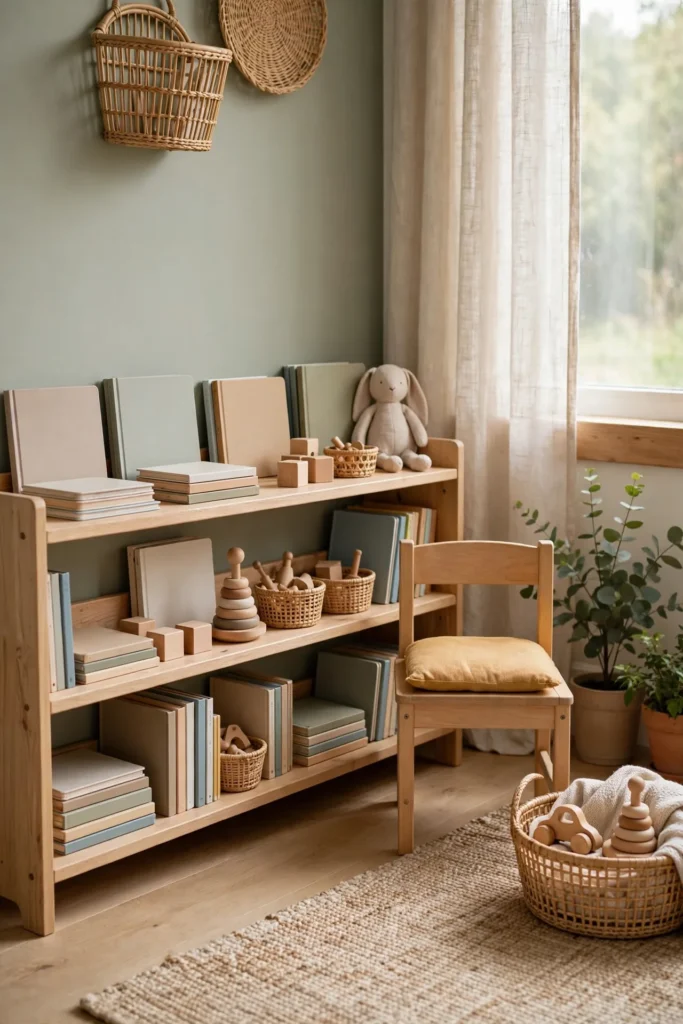
21. Plan a Grow-With-Me Corner From the Start
The smartest nursery move is planning for the toddler it will become: low open shelves a small child can reach, an art display rail where pictures swap easily, and a small table and chair that will outlast the crib years. This corner can start as a display shelf and a basket of books, then grow into an art table and a reading seat without any redecorating.
Frequently Asked Questions
What is the best colour for a baby nursery?
Soft, muted colours work best: warm white, pale sage, soft beige, dusty blue or blush, all in low-contrast combinations that keep the room restful. Bright, saturated colours can be fun as small accents, a blanket, a print, a toy, but large areas of strong colour tend to feel stimulating in a room built for sleep.
How do I decorate a small nursery without making it feel crowded?
The best baby nursery decor ideas for small rooms all share one trick: use the walls and the vertical space: book ledges, high shelves and wall hooks store and display without touching the floor, and a tight palette makes the room read as one calm space. Choose furniture that does two jobs, a dresser that changes nappies, a glider with storage beside it, and keep the floor clear except for the rug. If something has no home, it probably does not belong in a small nursery yet.
When should I start decorating the nursery?
Most parents start in the second trimester, when energy is steadier and there is time to paint, air the room out and assemble furniture without rushing. Paint early so fumes clear well before the baby arrives, order the crib and glider first since delivery times vary, and leave the styling, art, baskets and books, until last, when the big pieces are in place and you can see what the room actually needs.
What nursery furniture do I actually need?
Start with four pieces: a safe crib, a comfortable feeding chair, a dresser or changing station, and storage for clothes and nappies. Everything else, a bookshelf, a toy basket, a rug, a lamp, makes life easier but can be added over time.
How can I make a nursery feel personal on a budget?
Personal touches cost the least and matter the most: a framed name print, family photos, a handmade blanket, books you loved as a child, and a few favourite toys on display. For more inspiration on choosing pieces that last beyond the baby years, Pottery Barn Kids has a nursery decor collection worth browsing for ideas, and within this site, timeless bedroom ideas show how a calm palette carries a room from nursery to big-kid bedroom. Small, meaningful pieces beat a full themed set every time.
Make It Yours
Your nursery does not need to be finished before the baby arrives; it needs to be safe, calm and ready for those first sleepy weeks, and the rest can grow with you. Start with the palette, set up the sleep, change and feed zones, and add the two or three touches that make you smile every time you walk in, whether that is the name on the wall, the book ledges or the glider in the corner. For a longer view of how bedrooms evolve, bedroom makeover ideas and small vanity bedroom ideas offer the same calm, layered approach for later rooms. These baby nursery decor ideas are a starting point, not a shopping list, so pick the ones that fit your room and your routine. When you spot a look you love, save your favorites to your nursery board on Pinterest so your plan is waiting for you when you are ready to finish the room.